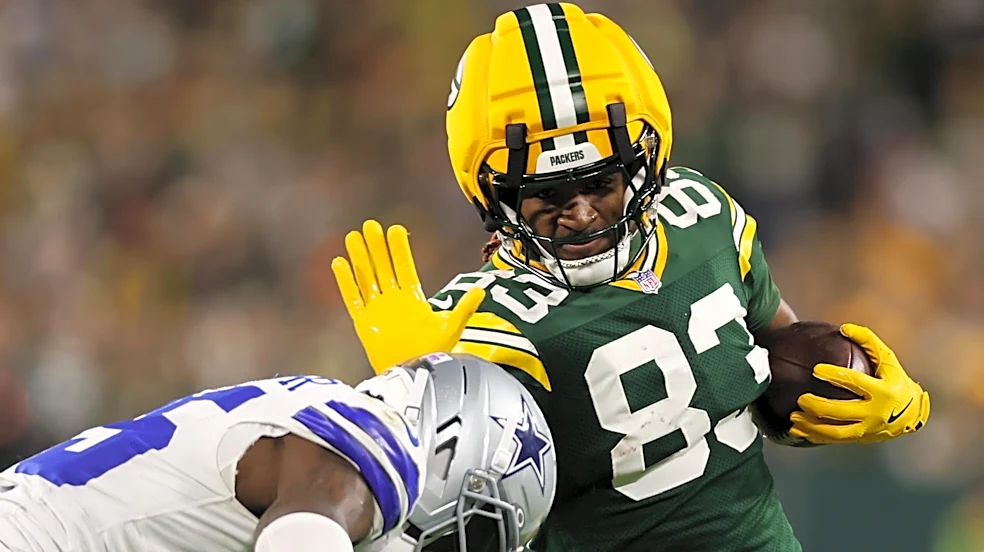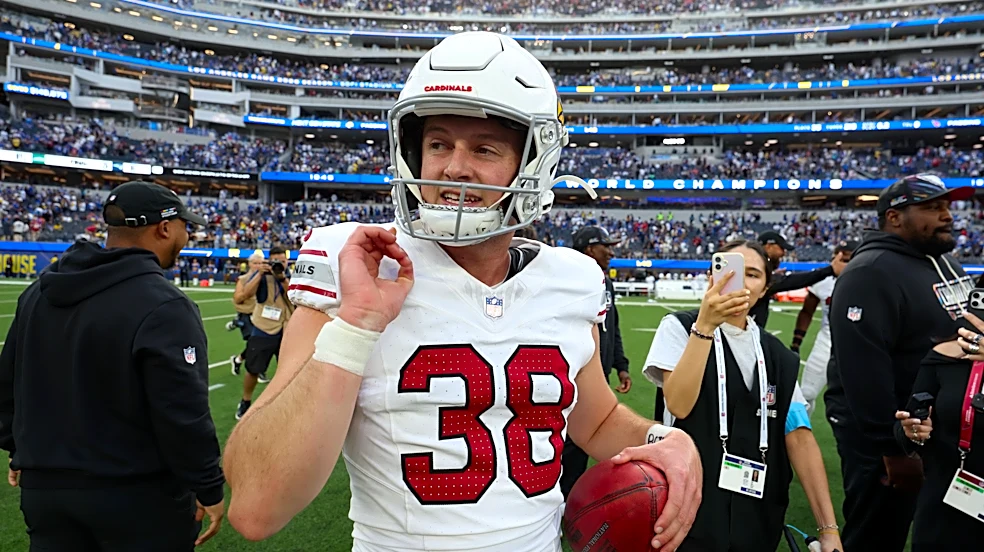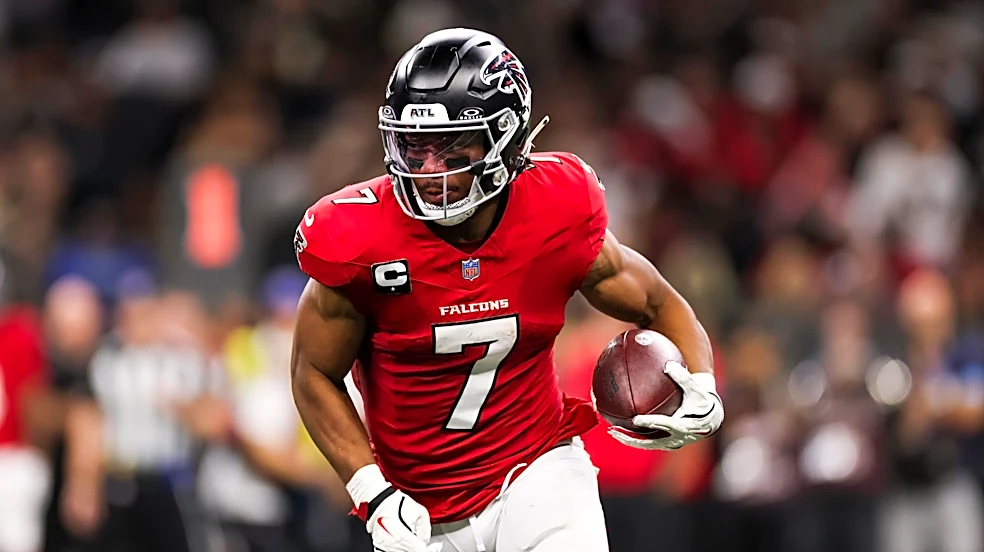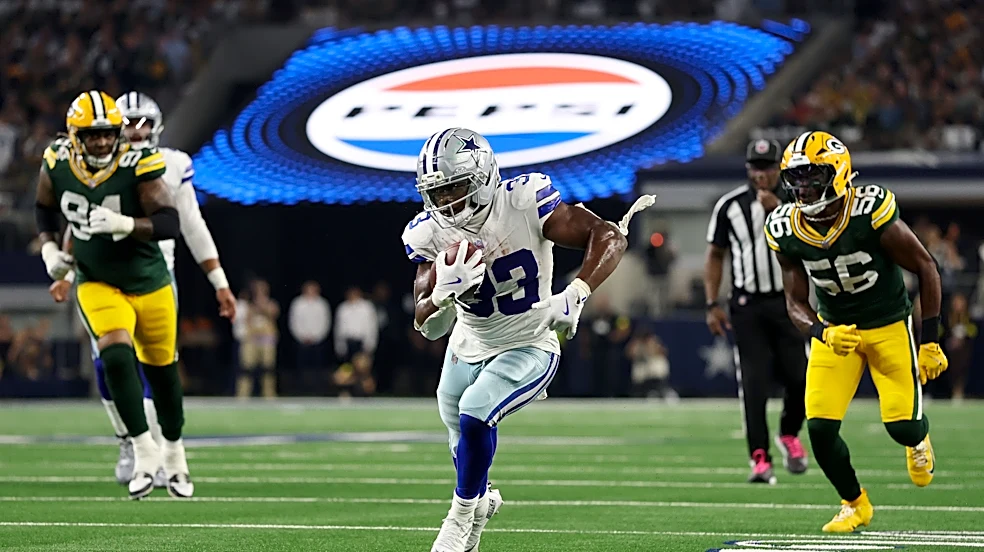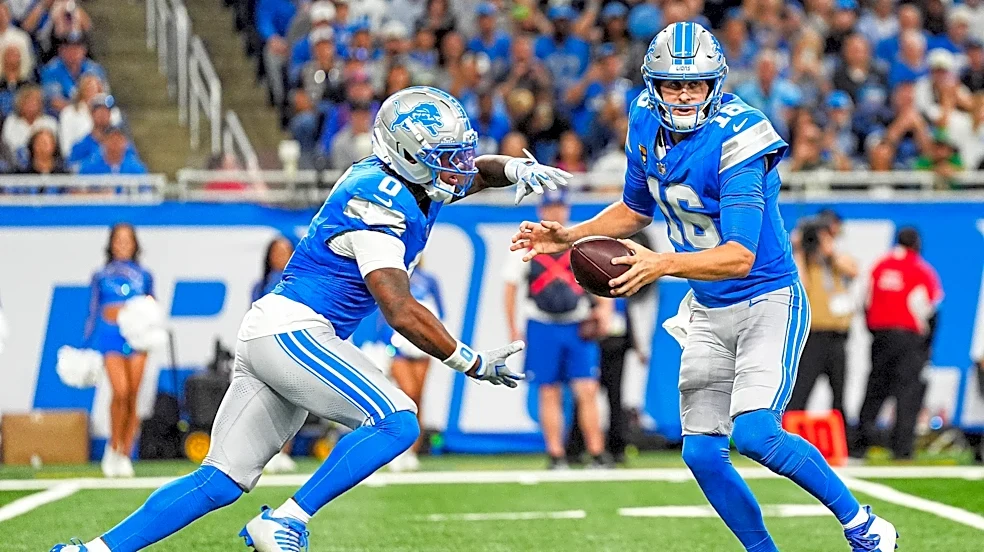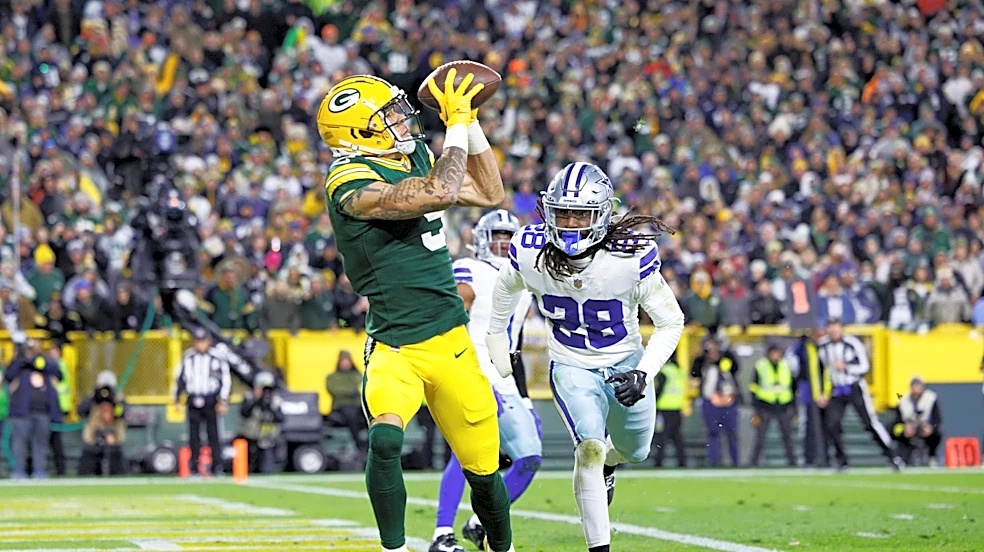



The Detroit Lions (3-2) will take on their first divisional opponent in Week 7 as the Green Bay Packers (4-2) come to Ford Field Sunday afternoon fresh off two big wins.
Let’s just get straight to the point and talk about the elephant in the room. All eyes will be on the Lions defense—and particularly the secondary—as it takes on the Packers’ passing attack. Headed into Week 6, the Packers boasted the fourth-highest explosive play rate in passing offense while the Lions defense checked in at 17th,
despite giving up a league-high 297.4 passing yards per game.
The mission of this film study is to generate a scouting report aimed at diagnosing what patterns and tendencies, if any, the Packers have shown in their deep passing game and what that means for the Lions defense.
So I watched all 32 of the Packers’ pass attempts of 20+ air yards and came away with some interesting insights.
Packers’ aggression comes overwhelmingly in comfortable game scripts
The first and most critical tendency to take note of is that, per NFL Pro, of the 32 passes of 20+ air yards or more attempted this season, only four have come while trailing their opponent. In fact, all four of these passes came in a single game: Week 3 against the Atlanta Falcons. Digging even deeper, two of the four occurred after the two-minute warning in the fourth quarter, when the Packers were down by a score of 35-14. Further, all four pass attempts were incomplete.
Okay, but surely this could be misleading, and the Packers have just played with either a tie or lead in many games, much like we say on “Sunday Night Football” against the Dallas Cowboys?
Not really. Quarterback Jordan Love has attempted 60 passes this season while the team has been behind in score. I’ll do the math for you. That is only a 6.67% deep pass rate while trailing. Compare that to 16 deep passes attempted while the Packers are playing with the lead on 103 total passing attempts with a lead. That’s 15.5%.
Okay, but surely this is just a small sample size trend, right?
Not really. To further magnify the situational shift in play calling, the Packers have attempted short passes of under 10 air yards 64 times on 103 pass plays (62.2%) with the lead compared to 44 times on 60 pass plays (73.3%) while trailing.
Head coach Matt LaFleur clearly has a tendency toward paradoxical aggression. He tends to take risks when he’s living in advantageous game scripts, but his focus shifts to a low-risk approach when the game script pressure turns up. This creates a perception of the deep passing game being a strength, but the reality is it’s more of a “kill shot” tool, and when it rains, it pours.
Compare that to Lions offensive coordinator and Drew Petzing and Jared Goff, who have executed the same number of deep passes of 20+ air yards or more (6) when trailing in score as when leading in score, showing no situational tendency so far in 2026’s early sample size.
For the Lions to avoid falling victim in the explosive passing game, the key to winning here is to score early and play with a lead.
Packers’ aggression comes overwhelmingly in certain down-and-distances
The second critical tendency to take note of is that, per NFL Pro, the Packers rarely throw the deep ball in short-to-medium yards-to-go situations, especially on second down.
Of the 32 passes of 20+ air yards or more, they break down in the following downs and distances:
- first-and-10 (11)
- third-and-long (7+ yards) (9)
- second-and-long (7+ yards) (6)
- third-and-medium/short (0-6 yards) (4)
- second-and-medium (4-6 yards) (2)
- second-and-short (0-3 yards) (0)
The key insight here is that LaFleur’s play calling tends not to take advantage of “waste” downs, which I would categorize as the second-and-short/medium range to take shots down the field. Of the two deep passes noted in second-and-medium situations, both were against Dallas in Week 6 and were second-and-6s from inside the Dallas 26-yard line.
It is interesting that LaFleur likes to take risks predominantly with the lead, but does not feel comfortable taking the same risks in advantageous down-and-distance situations.
Packers’ deep ball success is feast or famine
The third critical insight in the Packers’ deep passing game is that its success is remarkably feast or famine. Overall, Jordan Love has completed 10-of-32 (31%) deep passes of 20+ air yards. But six of those 10 completions came in a single game: Week 5 against the Chicago Bears, where Love went 6-for-8 on deep passes. In three games, Love did not complete a single deep pass (0-for-3 vs the New York Jets, 0-for-7 vs the Atlanta Falcons, and 0-for-6 vs the Dallas Cowboys).
Without the Week 5 explosion week, the Packers are just 4-for-26 (15.8%) on deep passes on the season. So what happened against the Bears?
Five of the eight deep passes against Chicago came on first-and-10 situations, four of which were play-action passes.
Below is the first. This is a simple two-man fade-out combination route. If the quarterback sees Cover-3, the out is opened under the outside fade. But in this case, the Bears are in Cover-2, where the deep, field-side safety is responsible for the outside fade. The Bears safety is caught with dirty eyes in the backfield and flat-footed, a huge missed execution play leading to the Green Bay touchdown that should not have been so easy. If the Lions rookie Keith Abney gets more snaps at the free safety spot this week, expect the Packers to test his eyes.
A key point in the above clip is that the play design is also a simple single read for Jordan Love. On the two-man route concept, it’s not a strenuous progression with both routes to the same side of the field.
Similarly, below is another simple single read concept with the core routes all to the field-side of the formation. LaFleur is not asking a lot of Love with either of these concepts. To his credit, Love executes this with great timing and ball placement before Bears’ rookie safety Dillon Theineman (31) can close the gap in the zone.
Overall thoughts
The Lions’ passing defense has not been great against deep passes this year, giving up 12 completions on 22 attempts. But outside of the Bears game, the Packers are not an unstoppable force in this area either.
In addition to the tendencies discussed already, it’s clear that Love has his favorites, with 14-of-32 deep targets going to Matthew Golden and 10-of-32 going to Christian Watson. It will be interesting to see if defensive coordinator Kelvin Sheppard deploys any similarly unique coverages against the Packers as he did against the Arizona Cardinals.
Lastly, Love does not seem to be impacted one way or the other when it comes to handling pressure in his deep passing ability, as he is 4-of-16 while under pressure and 6-of-16 while kept clean.
Score early. Play with a lead. Don’t play with dirty eyes.