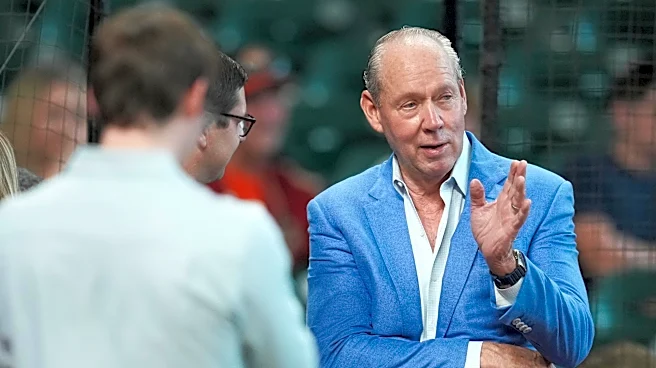



Jim Crane’s reputation for control could make Houston’s search for new leadership far more difficult than anyone wants to admit.
The two most important positions in the Houston Astros organization are either open or facing uncertainty, and the scary part is that they may also be two of the least attractive jobs in Major League Baseball.
Think about that for a moment.
We’re talking about an organization that has enjoyed one of the most successful runs in modern baseball history. A franchise with multiple
World Series appearances, two championships, a passionate fan base, and a reputation for winning. On the surface, the opportunity to become the next general manager or manager of the Houston Astros should be one of the most coveted positions in the sport.
But there’s one major problem:
Jim Crane.
With Dana Brown’s departure as general manager and uncertainty surrounding Joe Espada’s future as manager, the Astros should be positioned to attract some of the brightest minds in baseball. Experienced executives and proven managers should be lining up for interviews, while young, innovative candidates should view Houston as the perfect opportunity to establish themselves on the biggest stage.
Unfortunately, I don’t believe that’s the reality.
The biggest obstacle facing the Astros isn’t necessarily the roster, the payroll, or even the organization’s depleted farm system. It’s the reputation of an owner who, in my opinion, has become far too involved in baseball decisions and far too controlling of the people he hires to make them.
Let’s be clear. Jim Crane owns the Houston Astros. He has every right to run his organization however he sees fit. He’s invested hundreds of millions of dollars into the franchise, and nobody can take away the success the Astros have enjoyed under his ownership.
But there’s a significant difference between being an involved owner and being an owner who makes it difficult for the baseball people he employs to actually do their jobs.
That distinction could become the single biggest issue facing this organization moving forward.
Why Would an Established Candidate Want These Jobs?
We will probably never know everything that happened behind closed doors with Dana Brown, Joe Espada, or even Dusty Baker before them. We don’t know every disagreement, every personnel decision, or how much authority each man actually had.
Baseball is a small world. Executives talk. Managers talk. Agents talk. Reputations travel quickly throughout the industry. Does anyone really believe that experienced baseball executives and managers aren’t going to do their homework before considering an opportunity in Houston?
If you’re an established general manager with a proven track record, why would you leave a comfortable situation to take a job where you might not have the final say on the decisions you’re ultimately going to be judged for? If you’re a veteran manager who has spent decades earning the respect of players and front offices, why would you willingly enter a situation where ownership might constantly second-guess your decisions? Look no further than the friction that surrounded Dusty Baker’s final years in Houston.
Baker was a future Hall of Fame manager with a World Series championship and decades of experience. He had earned the right to manage his clubhouse and make baseball decisions based on his knowledge and instincts. Yet even with his résumé, questions persisted about the relationship between the manager and ownership.
If someone with Dusty Baker’s credentials faced those challenges, what does that tell prospective candidates about the environment they’re potentially walking into?
Established baseball people don’t need the Houston Astros job badly enough to surrender the authority and independence they’ve spent their careers earning.
That should concern every Astros fan.
The Risk for Young, Up-and-Coming Candidates
Now consider the other side of the equation.
Maybe Crane decides to go in a different direction and hire younger, emerging talent. Someone with fresh ideas, a modern analytical approach, and a desire to make a name for themselves in Major League Baseball. That sounds exciting, right? However, put yourself in the shoes of one of those candidates.
You’ve spent years working your way through an organization, building relationships, learning the business, and waiting for your opportunity to run a baseball team or manage at the major league level. Your first opportunity could define your entire career. Would you really want that opportunity to come with the possibility of being undermined by ownership, having your authority questioned, or being held responsible for decisions you didn’t necessarily make?
Because here’s the reality of professional sports: When things go wrong, the general manager and manager usually take the blame, regardless of who was actually making the decisions.
For a young executive or manager, one unsuccessful opportunity can dramatically change the trajectory of a career. It’s one thing to fail because your philosophy didn’t work, your personnel decisions were wrong, or your team simply didn’t perform. It’s something entirely different to fail because you were never given the freedom to build and lead the organization the way you believed was necessary.
That’s a risk some of the brightest young minds in baseball may not be willing to take.
Would New Leadership Want to Tear Everything Down?
There’s another question that I don’t think is getting nearly enough attention.
What happens if the Astros do hire a younger general manager with a completely different philosophy? Would that person look at the current roster and see a team that just needs a few strategic additions to compete for another World Series? Would they see an aging core, expensive contracts, limited organizational depth, and an opportunity to completely rebuild the franchise? That’s a massive difference.
The Astros have spent years building a culture where winning the division and competing for championships are expectations, not aspirations. Despite the challenges facing the organization, there is still a foundation of talent capable of competing. A new general manager looking to establish their own identity might prefer to start over rather than inherit a roster and organizational structure built by previous regimes.
That could mean difficult decisions involving established veterans, popular players, and potentially a complete philosophical shift in how the Astros construct their roster. Here’s the bigger question: Would Jim Crane actually allow that person to execute such a plan? Would we simply be right back where we started, with another general manager carrying the title but not necessarily possessing the authority that should come with it?
The Astros Don’t Need Another Figurehead
For years, the Astros were considered one of baseball’s model organizations.
They developed talent, made calculated personnel decisions, embraced innovation, and built a championship culture that other franchises desperately wanted to duplicate.
However, successful organizations don’t stay successful simply because of what they accomplished in the past. They evolve. They adapt. Most importantly, they empower talented people to make difficult decisions.
That’s where I believe Jim Crane faces his biggest challenge as an owner. He doesn’t just need to find the next general manager and manager of the Houston Astros.
He needs to convince qualified candidates that they’ll actually be allowed to do the jobs they’re being hired to do.
If the perception around baseball is that Houston’s front office and dugout are ultimately controlled by the owner’s office, the Astros may discover that their impressive history and championship pedigree aren’t enough to attract the caliber of leadership this franchise needs. If the best candidates decide the potential headaches outweigh the opportunity, Houston could be left choosing from people who are willing to accept the conditions rather than those who are best qualified to lead.
That’s not how championship organizations should operate.
The Biggest Decision Belongs to Jim Crane
The Astros are at a crossroads.
They can build on the talent and winning foundation that still exists, make the necessary adjustments, and position themselves for another championship window, or they can continue down a path where instability, uncertainty, and questions about organizational authority become bigger stories than what happens on the baseball field.
The next general manager and manager will undoubtedly face enormous pressure to win. Before Jim Crane decides who those individuals should be, perhaps he needs to ask himself a much more important question.
Is he willing to hire the best baseball people available and then trust them enough to let them do their jobs?
Until that question is answered, the two most important jobs in the Houston Astros organization might also remain two of the least desirable.
For a franchise that has spent the better part of a decade setting the standard for success in Major League Baseball, that’s a troubling place to be.