

Baseball and its fans tend to revere the history of the sport. Not that there aren’t arguments in other sports, but things like Hall of Fame debates tend to linger longer than ones in other sports. There are several records that baseball fans can name by heart.
One of those is Cal Ripken Jr. and his 2,632 consecutive games played. When he was closing in on that record, his chase of Lou Gehrig’s record was national news. Gehrig himself was revered for holding that record, both for his legendary career
and the ALS battle that caused him to eventually end the streak.
The man who held the record before Ripken or Gehrig doesn’t have the level of fame that they do. However, he was a notable player in his own right, even being a teammate of Gehrig on the Yankees when The Iron Horse’s streak began.
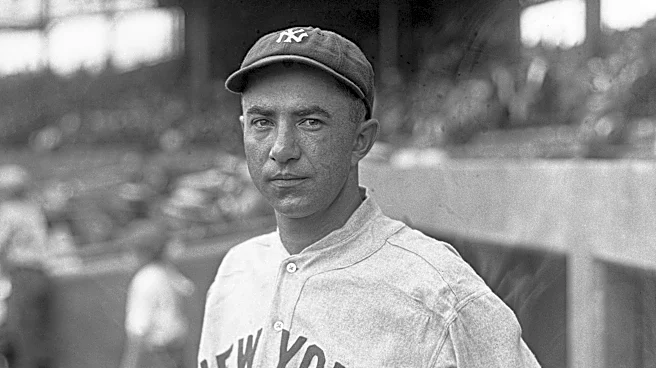
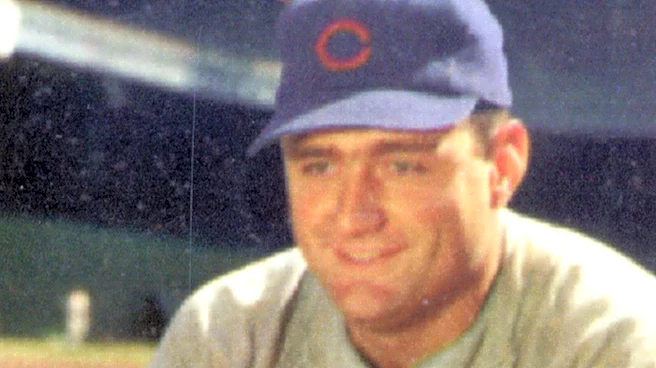
Lewis Everett Scott
Born: November 19, 1892 (Bluffton, IN)
Died: November 2, 1960 (Fort Wayne, IN)
Yankees Tenure: 1922-25
Everett Scott was born and raised in Indiana. He attended Bluffton High School in the town where he was born, graduating in 1909. Later that year, his baseball career began when he caught on the Kokomo (IN) Wild Cats. He spent the next couple years playing for various minor league teams around Indiana and Ohio. Scott was playing for a team in Youngstown, OH in 1912 when he was noticed by Red Sox co-owner Jimmy McAleer, a Youngstown native. A couple other MLB teams had taken notice, but it was McAleer and the Red Sox who ended up winning Scott’s signature.
After signing with Boston, Scott spent the 1913 season with the St. Paul Saints. After a solid season there, the Red Sox brought him up to the bigs for 1914, fending off advances from the new Federal League. Scott pretty quickly impressed and locked down the Red Sox shortstop job for the next several years.
Scott was never a particularly strong hitter, but he was solid enough for a shortstop of that era. He also gained the reputation as a sterling defender at the position. In Scott’s first season in the majors, Boston went from fourth place to second in the AL. In his second season, they won 101 games and the World Series championship. Scott helped the Red Sox to further championships in 1916 and 1918, which would be Boston’s last for quite a while. (Which we Yankee fans often liked to remind them of.)
As the Red Sox had success on the field, Scott’s desire to be rewarded off it grew. He and the team had salary disagreements at points. However, he always eventually came to terms with Boston. His salary may have played a part in both his and other notable Boston players’ departures.
When the late 1910s/early 1920s came around, the Red Sox made several notable trades with the Yankees that did not end up working out in Boston’s favor. The most notable of which was, of course, the sale of Babe Ruth. Red Sox owner Harry Frazee traded away a lot of players who had helped Boston to those three World Series title, reportedly out of a desire to shed salary to aid his other financial pursuits, mainly his career as a Broadway producer.
Eventually, Scott became one of those who went from Boston to New York. In December 1921, he and pitchers Sad Sam Jones and Bullet Joe Bush were sent to the Yankees for four players and $100,000. The deal didn’t seem lopsided at the time as Roger Peckinpaugh — who had been one of the best Yankees at that time — went the other way, but Boston famously didn’t win a World Series for a long time after that and New York soon won many of them.
With the Yankees, Scott was never a dynamic hitter, but he soon became an important player. Having served as the Red Sox captain back in Boston, he was named as the Yankees’ fill-in captain for 1922, as Ruth was set to serve a suspension. However, Scott ended up holding the role until he departed the Yankees a couple years after that.
Scott also brought his steady defense at shortstop and his reliable presence. Over the course of his time in New York, Scott reached the mark of playing in 1000 consecutive gams, and would eventually reach 1,307 while playing for the Yankees. He also played all but one inning of the 1923 World Series, as the Yankees clinched their first ever championship. Scott scored one of the runs in an eighth inning rally in Game 6, as the Yankees came back and overtook the Giants to seal the championship.
However, Scott was also starting age around that period. Manager Miller Huggins continued to put him in the lineup every day, but the wear and tear of 1300+ consecutive games eventually caught up to him. On May 6, 1925, Huggins opted to end the streak and started Pee Wee Wanninger over Scott at shortstop. Angered by the move, Scott initially left and returned home to Indiana. He eventually came back, but continued to lose playing time. His final appearance as a Yankee came on May 30th. Funnily enough, two days later, Lou Gehrig got the start at first base to begin his streak that would break Scott’s record.
Later in June, the Washington Senators selected Scott off waivers. He played 33 games there and then had brief runs with the White Sox and Reds in 1926. He continued playing in the minors for a few years after that, but eventually returned to Indiana, where he managed bowling alleys and billiard halls. Scott remained there until he passed away in 1960.
Everett Scott will never have the level of recognition that either of the two players who broke his record have. That being said, he was quite the notable player in his own right.