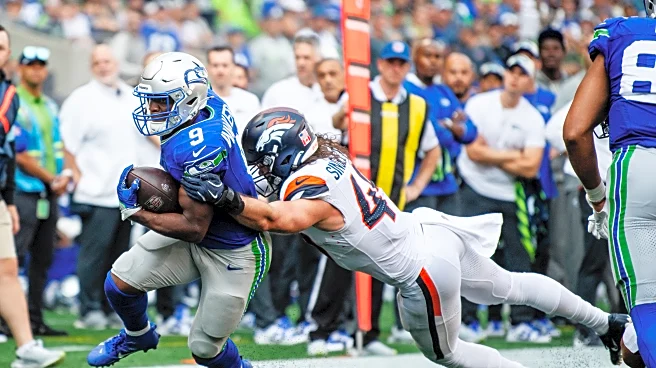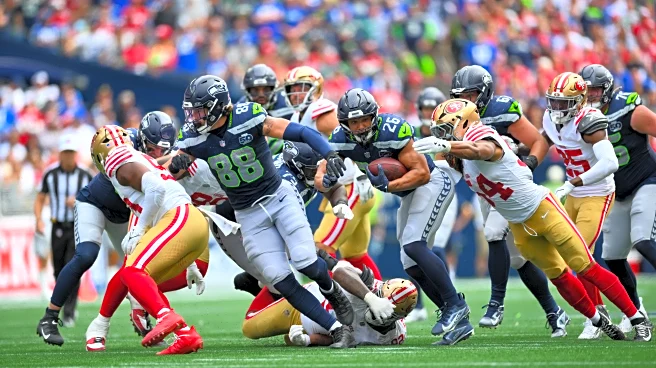

A few weeks ago, the Seattle Seahawks faced the Los Angeles Rams in what seemed to be the “NFC West final.” Well, two weeks later we have another final ahead of us. The game is very important; a victory, besides making the Seahawks the team with the most wins against opponents already qualified for the playoffs (reaching 5: Steelers, Jaguars, Texans, Rams, and 49ers), would leave the team as NFC’s top seed. A loss, besides preventing a sweep by the 49ers, would leave the team as the number 5 seed,
facing the NFC South champion.
What has changed since Week 1?
Much has changed since Week 1. The 49ers lost Nick Bosa, Mykel Williams, and Fred Warner, but gained back Malik Mustapha and Ji’Ayir Brown. There’s a possibility Trent Williams might not play either, but at the moment he’s only listed as questionable.
The Seahawks have had more upgrades than losses. Nick Emmanwori played few snaps in his debut before leaving injured; the Ty Okada we have today is a much more ready player than the one from Week 1; Riq Woolen is in his best form and in that game had one of his worst, and was crucial for the 49ers in the winning drive. We also have the reinforcements of Uchenna Nwosu, Drake Thomas (another who adapted very well to Mike Macdonald’s scheme), and Rashid Shaheed.
The Seahawks’ absences include Charles Cross, something expected since his injury on the final play against the Colts, but the big question is that his backup, Josh Jones, who had been performing well in the last two games, only practiced on Thursday and is questionable. Switching to Amari Kight would be a considerable drop in level, even if the Niners don’t have Nick Bosa, this will be a factor they will exploit.
Coby Bryant is also expected to be out, but Ty Okada seems ready to replace him. He was a player from whom not much was expected, and despite many mistakes at the beginning of the season, Mike Macdonald’s scheme has allowed him to develop and become a good backup. This should even impact the value of Coby Bryant’s contract extension, which saw Quentin Lake of the Rams receive an extension a few days ago.
Seahawks offense vs. 49ers defense: Stay on Schedule!
Against San Francisco’s defense — which ranks in the bottom third of the league in pressure rate and last in sack production — a quick game would be effective. The 49ers are comfortable rushing four, dropping into zone, and daring offenses to sustain long drives. The risk for Seattle is obvious: one penalty, one sack, or one missed assignment can derail a possession. It’s a defense that tests the patience of opponents. In other words, Darnold’s tendency to commit turnovers will be the biggest risk.
The Seahawks, who once relied heavily on vertical passes, have significantly changed their approach, especially after their first game against the Rams.
Something that will be crucial for the team is the running game. The 49ers and their late motions forced the Seahawks into one of their worst games in that aspect this season. The objective isn’t just production — it’s forcing linebackers, to trigger downhill, opening throwing lanes behind them.
The Bears had some success running down the ends of the line against the 49ers, gaining 110 yards and 2 TDs with D’Andre Swift and Kyle Monangai. If Seattle consistently creates second-and-manageable situations, it forces the 49ers out of their preferred conservative coverages.
49ers offense vs. Seahawks defense: discipline
San Francisco’s passing game is built on:
- Heavy play-action;
- Condensed formations;
- Crossers, seams, and intermediate digs
Everything is designed to look the same before the snap, then punish hesitation after it. Brock Purdy is at his best when he can throw on schedule from a defined pocket, particularly between the numbers.
Seattle’s defense is uniquely built to challenge that identity.
The Seahawks finish the season as a top-tier unit against both the run and the pass, ranking near the top of the league in yards allowed per play and limiting explosive gains. Structurally, Seattle leans on:
- Two-high shells pre-snap;
- Pattern-matching zone coverage
- Strong leverage on primary receivers
Seattle is willing to concede underneath completions if it means eliminating deep crossers and explosive play-action shots. Against San Francisco, that forces Purdy to sustain long drives without mistake — something the Seahawks have increasingly forced opponents to do.
The key battle will be in the intermediate middle of the field. If Seattle’s linebackers maintain depth and discipline against play-action, San Francisco’s passing game becomes far more methodical.
The lingering issue: why Seattle struggles to keep quarterbacks in the pocket
Even with the defensive improvements, one issue continues to show up on tape: Seattle has difficulty containing quarterbacks inside the pocket, whether they escape to run or extend plays to throw.
This is less about effort and more about rush geometry and discipline:
- Edge rushers chasing depth
Seattle’s edges often arc too wide, prioritizing the sack over containment. - Interior rush losing the QB’s level
Defensive tackles occasionally penetrate past the pocket, opening vertical escape lanes. - Limited use of controlled rush plans
Seattle relies heavily on straight four-man rushes without frequent cage or spy concepts.
Against San Francisco, this is critical. Purdy is is excellent at subtle pocket movement, buying just enough time for routes to uncover. If Seattle allows that, the coverage advantage evaporates.
Final thoughts
The Seahawks have the tools to win the matchup; the big question will be execution. Against the Rams, the defense had no answers in the first half, the offense struggled to move the ball at times, but the team managed to recover in the second half. However, many times you won’t have that chance to recover.
I’ve been reading some comments about trying to choose a path in the playoffs, like being the 5th seed to avoid certain types of opponents. When we reach this stage of the competition, EVERYONE has a chance to win; it’s just one game, and mistakes are maximized because there’s no time to recover. Just remember when the Ravens were defeated by the Titans years ago, or even when the Seahawks, at home, playing against a backup QB who had to leave early for an already injured Jared Goff, lost to the Rams.
Winning forces our opponents to have an extra game, injects confidence into us, and still gives us time to recover important players like Coby Bryant and Charles Cross.