

It’s another week here at BCB After Dark: the hippest spot for night owls, early risers, new parents and Cubs fans abroad. We’re so glad to see you tonight. Opening Day is just around the corner. Come on in and join us. The dress code is casual. The hostess can seat you now. Bring your own beverage.
BCB After Dark is the place for you to talk baseball, music, movies, or anything else you need to get off your chest, as long as it is within the rules of the site. The late-nighters are encouraged to get the party
started, but everyone else is invited to join in as you wake up the next morning and into the afternoon.
Last week I asked you which experimental rule being tried out in the minor leagues this year would you like to see adopted? A good 39 percent of you voted for “none of the above,” which fits in with baseball fans’ conservative relationship with the rules of the game. But another 26 percent would like to enable automatic check swing challenges and ten percent would like to see the time limits on mound visits more rigorously enforced.
Here’s the part where we listen to jazz and talk movies. You’re free to skip ahead if you want.
Sometimes when you’re stuck for a song, you just have to go with the hits. So today we’re featuring the Jazz Crusaders live in 1968 playing some obscure pop song by an obscure British band called “The Beatles.” This is “Eleanor Rigby.”
(By the way, I saw the Paul McCartney documentary Man on the Run and while it wasn’t great, it was good and reinforces my belief that a biopic of Paul going through his Wings days would be more interesting than re-hashing the Beatles story for the umpteenth time. Paul went through a lot of interesting stuff in the seventies, not the least of which was that he died and was replaced by someone who looked exactly like him except he was more talented!)
The Jazz Crusaders were Joe Sample on piano, Wilton Felder on tenor sax, Wayne Henderson on trombone, Buster Williams on bass and Stix Hooper on drums.
Tonight I’m continuing my countdown of my thoughts on the 2022 BFI Sight & Sound critics poll of the greatest films of all time with the number-nine film, the silent Soviet classic Man with a Movie Camera. Once again, I went on way too long to get in more than one film tonight, so I guess I’m going to have to save Singin’ in the Rain for Wednesday. I’m also going to have write more than just a blurb on Singin’ in the Rain and I don’t want to. So pray for me.
9. Man with a Movie Camera. (1929) Directed by Dziga Vertov.
Man with a Movie Camera is an avant-garde silent documentary that broke all the rules of filmmaking as they existed in the 1920s. Not only is it a portrait of everyday life in the Soviet Union in the 1920s, it also is a deconstruction of the process of making a film. There is no plot and there are no intertitles. The closest thing to a character is the unnamed man with the movie camera.
Director Dziga Vertov felt that the potential of film was being wasted. Cinema of the era, in his opinion, simply aped the conventions of the stage. (To be fair, he had a point.) Vertov wanted a revolutionary cinema (to go with a revolutionary state) that exploited the strengths of film and stripped away the illusion of the filmmaking process.
Shooting for over four years in Moscow, Kyiv and Odesa, Vertov pulled out every trick in the book and probably invented a few more. There are double exposures, split screens, Dutch angles, quick cuts, dissolves, stop-motion animation, slow motion, sped-up footage, photo montages and more. In a different film, using all these tricks would seem like a pointless gimmick but here, they’re the point of the whole film. Cinema can be an art in and of itself.
The film opens with the cameraman, “played” by Vertov’s brother Mikhail Kaufman although he’s actually also shooting the film, setting up his camera on top of a closeup of a camera. The cameraman is here to shoot one day in the life of a Soviet city. Beyond the mundane activities of the day, this is one adventurous cameraman as well. He gets shots on train tracks with a train coming at him head on. He gets shots from underneath carriages. He shoots inside of factories with mechanical parts spinning every which way. Vertov was obsessed with how things look different from different angles or different processes.
Man with a Movie Camera shows the Soviet people going about their business during the day. They commute to work. They work in the factories and Vertov highlights the dance of the metal machinery in fine detail. The go to the beach to relax. All of this is interesting enough, but the scenes of everyday life are interrupted by the process of making the film. People fill a theater to watch the film. The cameraman sets up his shots. The editor, Vertov’s wife Yelizaveta Svilova, is shown putting the film together. The illusion of the film is stripped bare as he quickly and repeatedly cuts back and forth between the life of the city and the life of the film.
To be clear, Svilova is the real hero of this film. This is a tour de force of film editing which managed to take all these incredible images, enhance them with all these special effects and then got them to make some sort of coherent sense and did that with without any intertitles that could explain what was going on. That all of this had to be done by hand is all the more impressive.
Before Man with a Movie Camera, it was generally believed that films couldn’t make the cuts in a film too quickly or the audience would become disoriented. The average shot length of a film in 1929 was 11.2 seconds. Man With a Movie Camera’s average shot length is 2.3 seconds. If there’s a theme in Man with a Movie Camera, it’s motion. Everything is moving. Even the still shots pass by quickly. Dziga Vertov was a stage name that roughly translates into “Spinning Top” in Ukrainian, and the film very much lives up to his name. That constant sense of “go” is what keeps this film from becoming boring. We never linger anywhere.
Man with a Movie Camera is a fascinating documentary that both celebrates the illusions of cinema and strips them bare. When it came out in 1929, it was mostly dismissed as a bad joke. It broke too many rules. It was also dismissed in the USSR as a pointless film without a message. Even though the film is certainly propaganda in the way it shows the joys of everyday life in the Soviet Union, it was criticized for emphasizing artistic form rather than revolutionary message. Soviet films were supposed to instruct or inspire the masses but all Man with a Movie Camera did was show how busy and happy everyone was. However, in the years since, it’s been praised for the way its innovative techniques and how it demonstrated that film could be more than just an offshoot of theater or literature.
Would I put it in my top ten films of all time? If you’re asking me if I would put it in the top ten influential films of all time, sure. But “influence” isn’t necessarily what I’d primarily base my vote on. Man with a Movie Camera has no plot and little message. It’s interesting and fascinating. It appeals to the head, but there’s no story to appeal to the heart. By stripping away the artifice of moviemaking, it also strips away our ability to get swept away by the magic of movies.
So I understand why it’s in the top ten. For a film scholar, this is a critical film in their education. It’s probably mind-blowing after watching earlier silent pictures. But for the rest of us, I don’t see why it has to be considered one of the ten best films of all time. That’s not an insult. I can’t see myself sitting down to watch Man with a Movie Camera a dozen times, but it’s certainly worth watching two or three times. Every film buff should watch it at least once. The film world would certainly be the worse without it.
Here’s a trailer for the restoration of Man with a Movie Camera if you just want to get a sense of the film in one minute.
And here’s the entire 67-minute movie. It’s obviously in the public domain, so there are several different copies of it out there. Vertov did not commission any particular music to go with the film, but he did specify that it should be accompanied by something up tempo. This version with music composed by Michael Nyman, who did the score for The Piano, has gotten a lot of praise and I think it’s particularly good. But if you want to look around for music that you like better, you certainly can.
Welcome back to everyone who skips the music and movies.
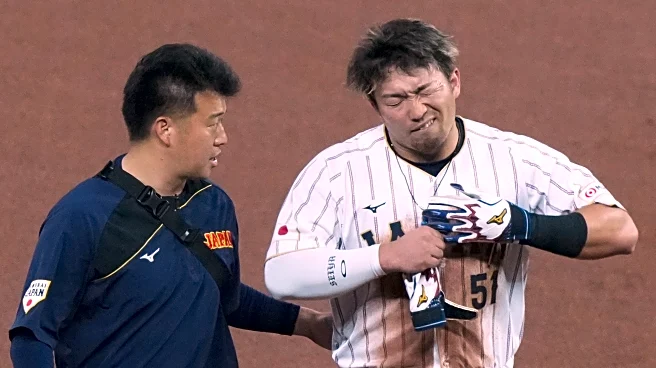
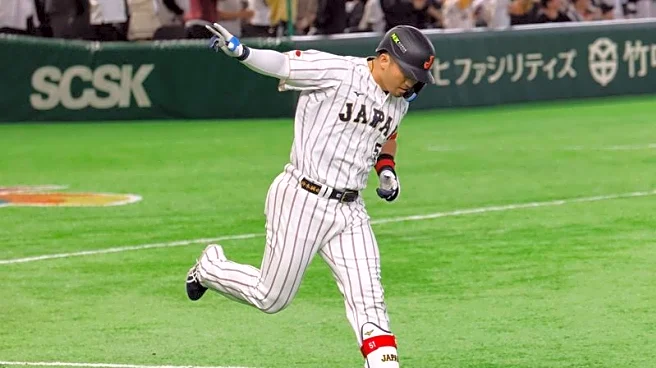
The Cubs announced today that Seiya Suzuki would start the season on the 10-day injured list after suffering a knee injury in the World Baseball Classic. The Cubs had already announced that he would not be ready for Opening Day, but they hoped that he would be back quickly enough that he could avoid an IL stint. With Suzuki still wearing a knee brace today and with the season starting on Thursday, it was clear that he would miss more than just a couple of games.
The Cubs still aren’t putting a timeline on when Suzuki will return to the team, although Suzuki himself is optimistic and saying his knee feels better every day. He also stressed, and I’m sure the Cubs agree, that they don’t want to rush him back and possibly re-injure the knee.
But even though the Cubs can backdate the IL stint to today (Monday), it still seems like a ten-day minimum is awfully optimistic for Suzuki, considering he’s still wearing a brace. But it also doesn’t seem like something major that is going to keep him out for months, so I’m guessing he’s going to miss the first two or three weeks of the season. Jordan Bastian in the linked-to article speculated that Suzuki could return for a roadtrip to Cleveland and Tampa Bay from April 3 through 8, but I’m guessing that Suzuki is more likely to be ready after the Cubs return to Chicago to play Pittsburgh on April 10. With as much time as Suzuki has missed because of the injury, I think that the Cubs will want him to play one or two rehab games in Iowa or South Bend before returning to the roster. Again, I’m just guessing and I haven’t seen Suzuki’s medicals. But I am sure the Cubs won’t want to push him.
So Suzuki is likely to miss 12 games, give or take a series. Who would you have take his spot in right field until he gets back? The Cubs have already told Chas McCormick that he will not make the Opening Day roster, although they’d love for him to stick around in Iowa. So that leaves four options to play in right for the first two weeks.
The first option is Michael Conforto, who has already been told that he has made the Opening Day roster. Conforto had a heck of a Spring Training in Mesa. Even though Conforto only signed with the team on February 26, he got in 12 games and hit .324 with a .359 on-base percentage. Six of his 12 hits were for extra bases—five doubles and one triple. He’s also left-handed, which helps balance out the lineup.
However, this is the same Michael Conforto who hit .199/.306/.333 in 138 games with the Dodgers last year and got left off the playoff roster. Except, of course, he’s a year older now.
The other option that the Cubs have mentioned is Matt Shaw. Shaw, of course, lost his starting third base job when the Cubs signed Alex Bregman. So they’ve been working him around as a supersub and letting him try the outfield. Shaw has also had a great spring with the bat, hitting .320/.417/.500 with two home runs in 20 games.
However, Shaw has looked shaky defensively out in right field. That’s to be expected—he’s never played in the outfield before. But shouldn’t he get some more practice out there before he gets thrown out into the tough right field of Wrigley in April?
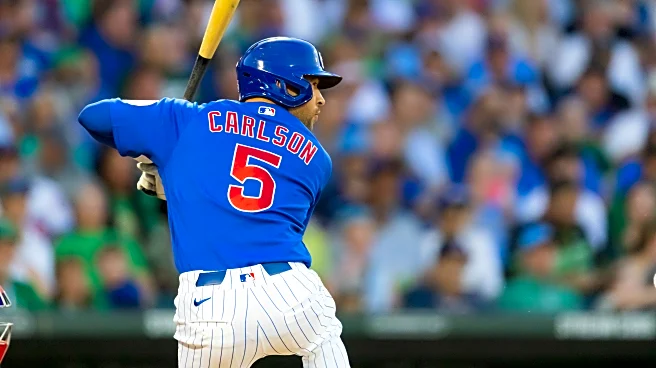
There are two other options. One is Dylan Carlson, who, and stop me if you’ve heard this one already, has hit really well this spring. In 20 games, he’s hit .304/.429/.413 with one home run. He was also someone who was highly-touted as a prospect in the Cardinals system and he delivered with a 3.2 bWAR as a 22-year-old in 2021, his rookie season. But since then, he’s been plagued with injuries, which had led to some poor performances. You know that talent is still in him somewhere and it would a bonanza for the Cubs if he could get healthy and live up to his early promise. On the other hand, the Cubs are his fourth organization in three years and last year with the Orioles, he hit just .203/.278/.336 with six home runs over 83 games.
Finally, there’s rookie and top Cubs prospect Kevin Alcántara. Alcántara would clearly be the best defender of the four choices. He’s a plus defender in center field with a plus arm and he’s played a lot of right field as well. His Spring Training was solid as well, hitting .275/.326/.400 with two doubles and a home run in 13 games. But he also struck out 14 times and only walked twice in 43 plate appearances.
Alcántara also has the advantage, as far as the Cubs are concerned, of a minor league option year. Whereas the Cubs would lose Carlson if he didn’t make the Opening Day roster, Alcántara can be sent down to Iowa.
So who would you choose to play right field until Suzuki returns? Obviously more than one player can start out there based on matchups, but which one of these four right fielders would you give the most at-bats to?
Thanks for stopping by. We’re always glad to have you. Please get home safely. We want you around for Opening Day. Recycle any cans and bottles. Tip your waitstaff. And join us again tomorrow evening for more BCB After Dark.