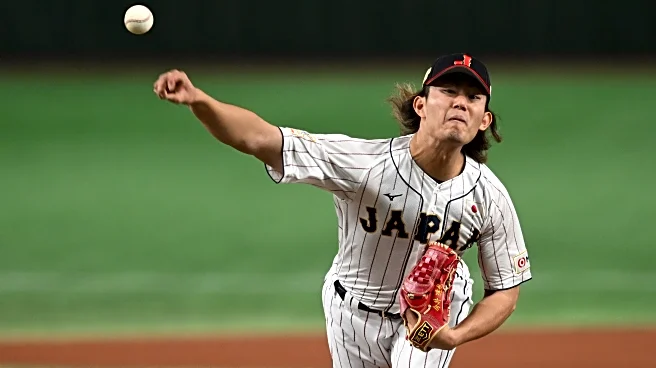

There are certainly projections for all of the Astros pitchers and some sources have provided them for Tatsuya Imai as well, but providing projections for big league pitchers is challenging enough. Providing
them for foreign born players is that much harder. How good is the Japanese major leagues in comparison with the big leagues? There are numerous opinions as to where that stands and it is not my place to contradict them or rain on their parade.
As a statistician I do not like idle speculation. I much prefer facts. Obviously, Imai is his own guy with his own stuff. So much matters. In many ways, the infrastructure of the team matters. It matters in much the same way a the infrastructure for a college quarterback matters. At this point, we only have a few projection systems that have rated Imai. Those ratings were done before he decided to sign in Houston.
Steamer: 26 GS, 153.0 INN, 9 wins, 9 losses, 4.37 ERA, 145 SO, 62 BB
FGDC: 26 GS, 153.0 INN, 9 wins, 9 losses, 4.37 ERA, 145 SO, 62 BB
Obviously, those numbers are underwhelming and they look like the numbers of a pitcher coming from AAA to the big leagues. Of course, I cannot judge the projections one way or the other because it is hard to know exactly how they are arriving at them. What I can do is take a look at past Japanese imports and see what they did in their first seasons in the big leagues.
It is important that we do this because Imai signed what is the equivalent of a one year deal. Sure, it says three years and 54 million (with incentives that can make it reach 63 million), but he has opt outs after year one and year two. One could easily imagine him opting out even if he produces the numbers above. So, let’s take a look at year one for twelve significant Japanese hurlers.
One of the things we would note here is that are all kinds of levels of pitchers and careers here. So, it is impossible to know beforehand where Imai will rate in that continuum. What we do know is that Japanese pitchers in general seem to perform better in their initial seasons than they do in subsequent seasons. This isn’t universally true of course. Hideki Irabu was terrible in that first season, but he also was not good overall.
We could wonder whether this is a Japanese thing or whether it is a factor of coming from a foreign born league. We can compare this to the first season for Korean born starters as well. It remains to be seen if there is a considerable difference between the Japanese Major League and Korean Baseball Organization. We can only go by the numbers we have,
Again, we are looking at a different scale because three of the four pitchers either served as relievers or were sent to the minors initially. However, in terms of success we are looking at the same general rate. These were winning pitchers generally with a sparkling ERA overall. Applying a median to four pitchers seems foolish for obvious reasons, but if we did apply a median we would see a 3,81 ERA with two wins and 33 innings pitched.
Notice how the median ERA for the Korean pitchers matches the mean for the Japanese pitchers. If we add in Hyun-Jin Ryu as a relevant pitcher then we could get a firm median pitcher to compare Imai to. In the betting world we would call this an over/under. Obviously, the median could be a composite or we can look at the pitcher that exhibits most of those qualities.
Composite: 29 starts, 173.1 INN, 13 wins, 7 losses, 3.31 ERA
Kenta Maeda: 32 starts, 175.2 INN, 16 wins, 11 losses, 3.48 ERA
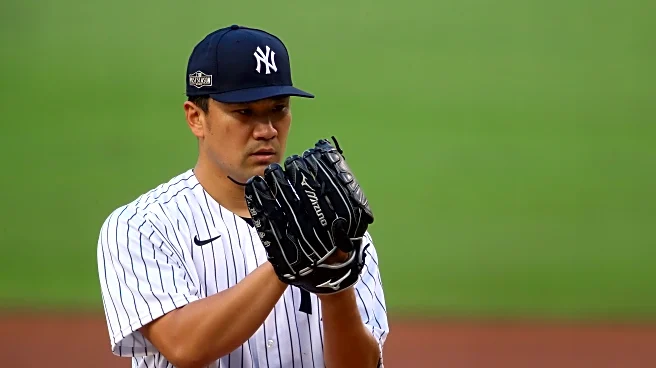
I think most Astros fans would take either of these results and run. Obviously, Maeda is a very different pitcher stylistically from Imai. We are essentially looking at what success Imai might see in his first season in the big leagues. Maeda finished in a tie for seventh place in FWAR along with Masahiro Tanaka, Yoshinubo Yamamota, and Daisuke Matsuzaka. Those pitchers averaged 26 starts, 151.1 INN, 13 wins, and a 3.41 ERA.
Obviously, that’s a lot of talking around the same thing. It would seem that the typical expectations for a first year Japanese hurler is somewhere between 25 and 30 starts, between 150 and 175 innings, and an ERA around 3.50. I’m not predicting that of course. That is just what past results would tell us. If he performs at those levels he will almost certainly opt out, but he also will have successfully filled most of the shoes that Framber Valdez left behind.