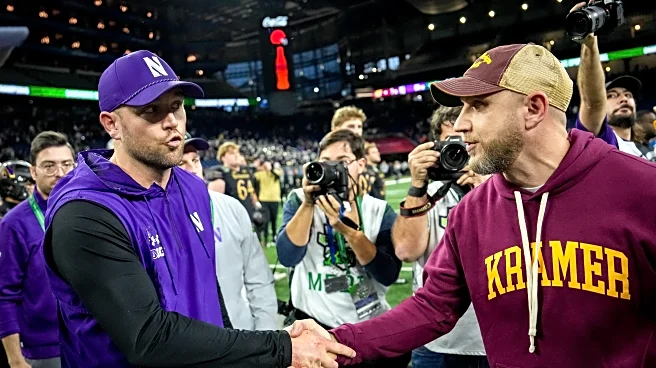



After nearly a three-decade run, Detroit ended its bowl game on Wednesday, leaving the MAC Championship Game as the lone postseason game in Motown. While the move shocked many around the football world, the signs may have been there for awhile.
A few weeks ago, Eastern Michigan and Central Michigan announced their next two meetings would take place at Ford Field. It seemed like an isolated event at the time, but it may have signaled the beginning of the end for the GameAboveSports Bowl, while hinting
towards a new event strategy for the Detroit Lions, organizers of the bowl.
Power Four opt-outs during the 2025-2026 bowl season showed a dark reality for college football’s postseason: it is College Football Playoff or bust for several Power Four teams— especially those going through coaching changes.
The GameAboveSports Bowl likely realized this truth, as it struggled to find a team from the Big Ten or ACC this who wanted to participate this season.
That’s why the potential to create “bowl games” during the regular season could be the solution. Given the Lions’ relationship with the MAC in recent years and the relative feasibility for several member institutions, the Lions organization could pivot focus on paying nearby MAC schools to move their marquee home games to Ford Field instead of hosting them in the holiday season. This solution avoids opt-outs and the stress of finding an eligible team willing to travel.
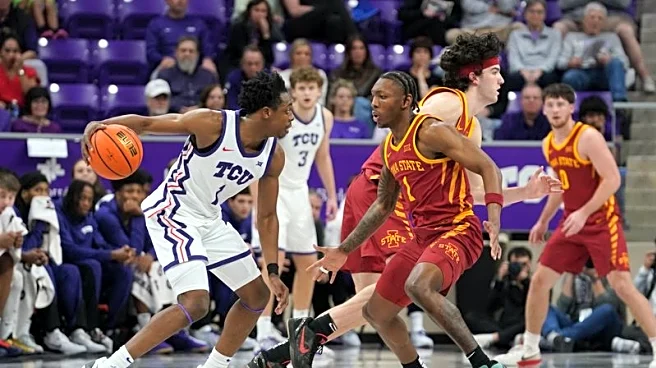
Nearby schools Toledo and Bowling Green both host several notable programs in the coming years. The Rockets will host Kentucky in 2027, Syracuse in 2028, and Washington State in 2031. The Falcons host Iowa State in 2027. A regular season “bowl game” carries appeal for Kentucky, Syracuse, and Iowa State.
None of this trio has played in any incarnation of the Detroit Bowl and are a manageable drive from the Motor City. Syracuse is 6.5 hours or 7.5 without going through Canada, Kentucky’s campus is 5.5 hours away, and Iowa State is nine hours from Detroit. Iowa State may make the most sense given their reputation for traveling well for bowl games.
There’s evidence to point to showing the idea potentially having benefits. The strategy has started to be re-utilized at the Power conference level after the concept of “neutral site” games— a trait of the early 2010s— had leveled off post-COVID. On Thursday, it was reported that SMU is set to host a series of games against fellow Power conference foes at AT&T Stadium in Arlington, Texas, in 2027 and 2029, in what is seen as an effort to keep those games on the schedule.
A move to Ford Field may be the only way Toledo keeps its 2027 home game against Kentucky. In 2024, Kentucky canceled an unprecedented road game at Akron on 10 months’ notice. The Wildcats canceled the rest of the 2-for-1 after hosting Akron in 2023, being more willing to pay a $1.2 million cancellation fee than risking their reputation against the lowly Akron Zips.
Kentucky must cancel one of their four non-conference games against Toledo, Kent State, Eastern Illinois, and Louisville after the SEC switched to a nine-game conference schedule. The Toledo game seems like the most likely to go since the Wildcats host Kent State. Ford Field could be a bargaining chip or the Rockets to keep the game. In 2023, Missouri strong-armed Memphis to move its home game from Simmons Bank Liberty Stadium to the Transworld Dome in St. Louis.
Nonetheless, this strategy has its drawbacks.
The Detroit Lions and Ford Field have tried this strategy before in the late 2000s. Western Michigan and Eastern Michigan both hosted Big Ten teams at Ford Field in front of sparse crowds. 10,000 fans saw Eastern Michigan play Northwestern in 2007. The following year, a 7-2 Western Michigan squad playing the previous year’s Big Ten Rose Bowl representative, Illinois, only drew 12,615 fans.
It is likely the regular season bowl model could see similar results. The 12-team College Football Playoff has pushed fan travel to new limits. Playoff-minded fans of Iowa State, Kentucky, Syracuse, and Washington State could pass on the trip to a seemingly inconsequential non-conference game.
Furthermore, it is difficult to see the return on investment the Lions and Ford Field would get from these games. The Glass Bowl seats 26,038, and Toledo has surpassed this attendance just twice in five appearances at Ford Field since 2010. Likewise, Bowling Green’s Doyt Perry Stadium seats 24,000 and the Falcons have surpassed this total just once in five appearances at Ford Field since 2003.
The juice may not be worth the squeeze for the schools and the Detroit Lions. Why would Toledo or Bowling Green trade in a raucous, on-campus atmosphere for a sterile, NFL environment just to maybe sell a couple thousand more tickets?
Many will miss the GameAbove Sports Bowl. While there is a realistic path to an alternate version of the game, the solution has little to no upside. It may be best that the bowl game decided to do the admirable path and go out on its own terms.