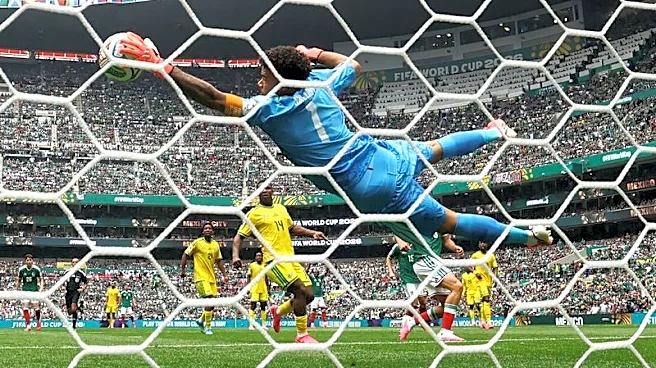










After some time away from writing for the site, a brief spark of inspiration hit me: drawing a parallel between the FIFA World Cup currently taking place in the United States and the Phoenix Suns.
Let me explain. Here in Europe — and especially in France — football is what shapes the sporting calendar. Every year, domestic leagues begin in August and run until late spring, while continental competitions such as the Champions League, Europa League, and Conference League unfold alongside them. On top
of that, there are international tournaments: continental championships and, of course, the World Cup, held every four years. It is the most prestigious competition in the sport, the event that leaves the deepest mark on people’s memories.
The NBA and the Suns have their own defining cycles as well, filled with glory years, rebuilding phases, and transitional periods. That’s why I thought it would be interesting to look at where Phoenix stood during every World Cup since the franchise entered the league in 1968. In total, the Suns have lived through fifteen World Cups.
To make this concept easier to digest, it will be divided into five articles. Now that the stage is set, let’s get started.
1970: Birth and First Glimpses of Promise
At that point, the Suns were still a very young franchise, having just completed only their second season in the NBA. They finished the 1969-70 campaign with a promising 39-43 record, a remarkable improvement of 23 wins compared to the franchise’s inaugural season.
From a tactical standpoint, Phoenix played an up-tempo and offensive-minded style of basketball. They ranked 6th in pace (out of 14 teams) and boasted the league’s 3rd-best offense. The team was led by an outstanding Connie Hawkins (All-Star, All-NBA First Team, and fifth in MVP voting) alongside the backcourt duo of Gail Goodrich and Dick Van Arsdale, who combined for 41 points, 12 assists, and 7 rebounds per game.

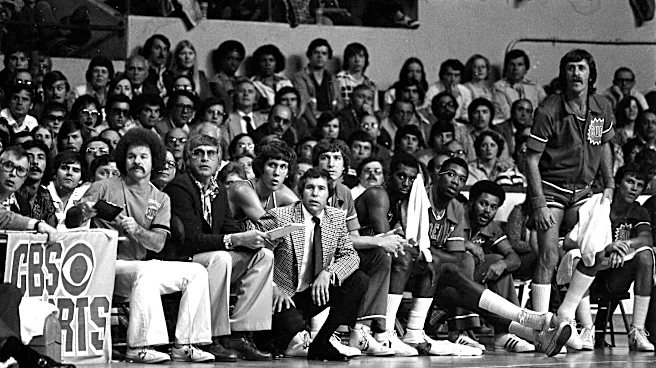
The season was also marked by Jerry Colangelo appointing himself as head coach. A decision that could have been viewed as arrogant at the time, but one that paid off: Phoenix went 24-20 under his leadership and entered the playoffs with positive momentum.
Still, it wasn’t enough to truly challenge the league’s elite. The Suns fell in the first round to the Los Angeles Lakers, featuring Wilt Chamberlain and Elgin Baylor, pushing the series to Game 7 before coming up short.
On the football side, the 1970 World Cup in Mexico is often considered one of the greatest tournaments in the sport’s history. It captivated audiences with its attacking football, became the first World Cup broadcast globally in color, and, most importantly, crowned Pelé’s Brazil.

Led by a legendary generation featuring Pelé, Jairzinho, Rivellino, and company, Brazil claimed its third world title by defeating Italy 4-1 in the final, delivering a footballing masterclass that has since become part of the sport’s mythology.
1974: A Team Improving, but Still Searching for Its Ceiling
By 1974, the Suns had finally moved beyond their expansion years. Phoenix was no longer an NBA infant; it was beginning to resemble a legitimate team capable of competing on most nights, though still plagued by inconsistency.
The final record of 30-52 was disappointing, but it did not fully reflect a franchise that was slowly moving in the right direction.
On the court, the Suns relied on a strong offensive trio of Charlie Scott, Dick Van Arsdale and Neal Walk. Scott, in particular, carried the team with an outstanding season: 25.4 points and 5.3 assists per game. He was a modern guard ahead of his time, capable of creating offense, scoring at will and sustaining the team’s attack almost single-handedly. During his years in Arizona, he earned as many All-Star selections as full seasons played with the franchise: three.

Van Arsdale remained the team’s metronome, reliable and consistent. In many ways, he resembled the prototype of the future two-way guard, earning a place on the All-Defensive Second Team. Walk, meanwhile, posted another double-double season and gradually took over from an aging Connie Hawkins, who was entering his final chapter in Phoenix before being traded to the Lakers early in the season.
The year also marked a major turning point: John MacLeod took over as head coach. Young and ambitious, he would go on to become one of the most influential architects in franchise history, remaining a key figure for nearly fifteen years.
The 1974 World Cup in West Germany witnessed the rise of one of the most influential teams football has ever seen: Johan Cruyff’s Netherlands and their famous “Total Football.” A philosophy built on constant movement, positional fluidity, and technical excellence.

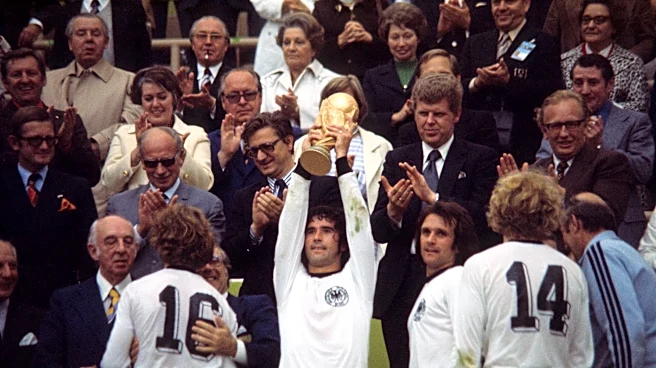
Despite their brilliance, the Dutch fell in the final to West Germany, led by Franz Beckenbauer — one of the greatest players ever — and Gerd Müller, long regarded as one of football’s greatest goalscorers. It was a legendary final, a clash of philosophies, and a World Cup that remains one of the defining tournaments of the modern era.
1978: A Spectacular Team That Still Couldn’t Break Through
By 1978, the Suns had fully shed their status as a developing franchise. Phoenix was now firmly established within the NBA landscape.
Their 49-33 record confirmed that progression. The Suns had become a team to be taken seriously, capable of beating anyone on a given night. The roster revolved around another outstanding trio: Paul Westphal, Walter Davis, and Alvan Adams.
Westphal was at the peak of his powers, averaging 25.2 points and 5.5 assists per game while combining efficiency with elite shot-making. His place among the league’s best players was undeniable.

Walter Davis followed up his phenomenal rookie campaign with another brilliant season, averaging 24 points per game. His offensive game was smooth, natural, and elegant, making him one of the league’s most aesthetically pleasing players to watch.
Alvan Adams completed the trio with his versatility, court vision, and ability to facilitate offense from the high post. Don Buse also deserves an honorable mention after earning a place on the All-Defensive First Team.
Collectively, Phoenix played a fast, technical brand of basketball that felt years ahead of its time. This was a fun, creative team capable of stringing together scoring runs and flipping games in a matter of possessions.
Their journey ended in the Conference Semifinals against the Milwaukee Bucks. After reaching the NBA Finals in 1976, the Suns would not return to that stage for nearly twenty years.
While Phoenix was playing some of the most exciting basketball in the league, the 1978 World Cup unfolded in Argentina amid a tense political backdrop. On the field, however, the spectacle delivered. Argentina, fueled by the energy of its home crowd, captured its first world title. La Albiceleste defeated the Netherlands 3-1 in the final, condemning the Dutch to a second consecutive heartbreak after 1974.

The match was played in the electric atmosphere of El Monumental and notably took place without Johan Cruyff, who chose not to participate in the tournament. The 1978 World Cup remains one of the most controversial tournaments in football history, but also one of the most emotionally significant.
This first chapter comes to an end, just as the Suns’ formative years do. Like every team in every sport, Phoenix experienced both highs and lows on its journey.
The next installment will take us into the 1980s and 1990s, a period during which the Suns would reach a new level altogether, just as world football was entering a new era of its own. See you in Part 2 as we continue this journey through time.