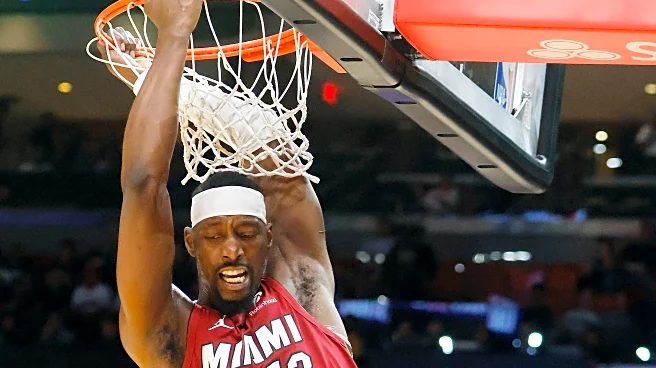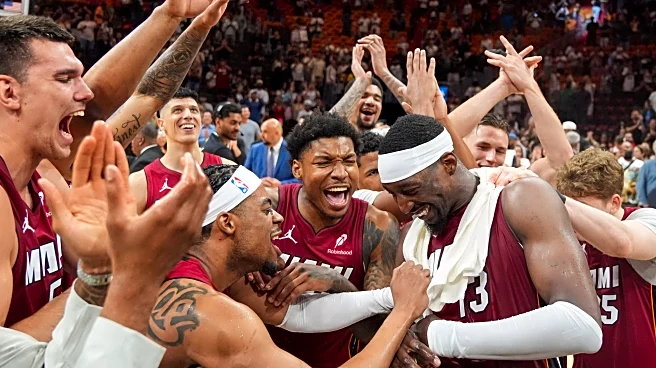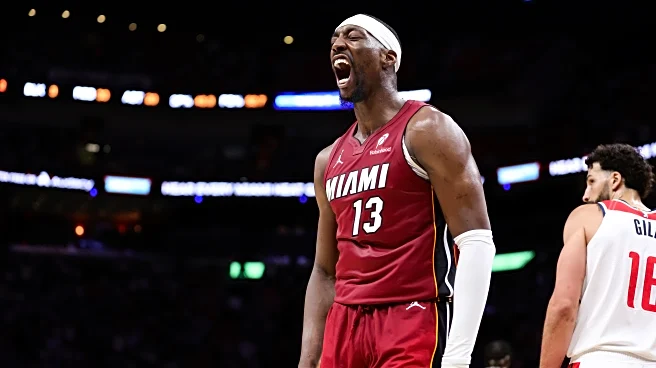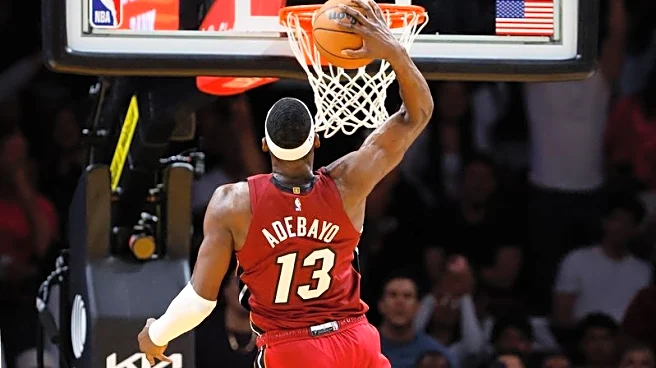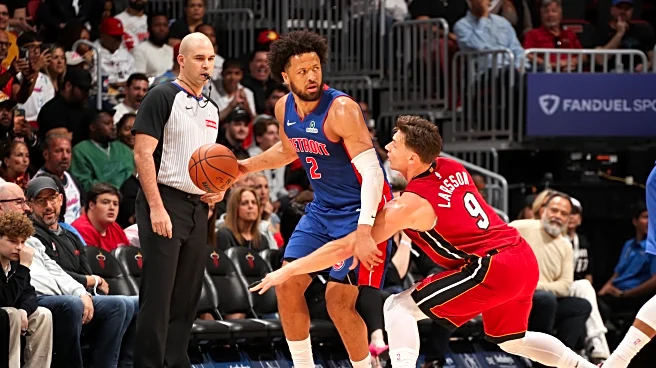
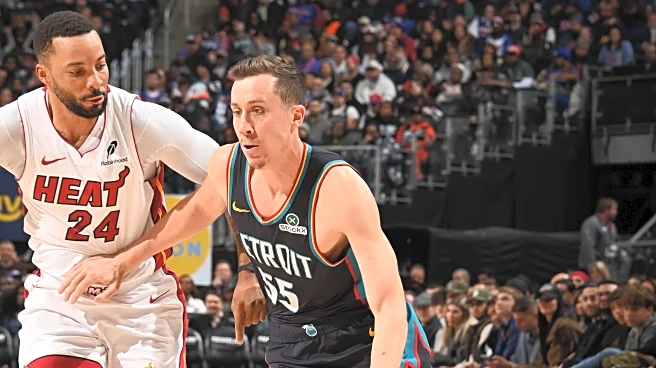
Bam Adebayo erupted for 83 points against the Washington Wizards, and led the Miami Heat to an easy 150-129 victory. It was Washington’s ninth consecutive defeat.
Adebayo’s scoring outburst was both unexpected and historic. His career high entering the night was 41, and he had 30 games in his career with 30 points or more. Not that many for a ninth year pro.

In terms of total points by an individual player in a single game, Adebayo now ranks second all-time. Here’s the list:
- Wilt Chamberlain — 100
- Bam Adebayo — 83
- Kobe Bryant — 81
- Wilt Chamberlain — 78
- Wilt Chamberlain (2x) | Luka Doncic | David Thompson — 73
- Wilt Chamberlain — 72
- Elgin Baylor | Damian Lillard | Donovan Mitchell | David Robinson — 71
- Devin Booker | Wilt Chamberlain | Joel Embiid — 70
- Michael Jordan — 79
- Wilt Chamberlain | Pete Maravich — 68
If I was playing a one of
these things is not like the others from this list, I’d zero in on Adebayo right away. This Chamberlain fellow seems to have been pretty good at scoring.
For grins and giggles, I dusted off my Wilt 100 Translator — a spreadsheet that transmogrifies a scoring performance in one game into the game when Chamberlain went for the epic 100.
Back story on this, on one of the anniversaries of Chamberlain scoring 100, ESPN’s morning guys Mike Greenberg and Mike Golic prattled on and on with guest after guest about whether or not this was the greatest athletic performance by anyone in the history of sports. No one mentioned pace. Or era. Or anything that made a bit of sense. I was left wondering if it was even the single best scoring game in NBA history. (Spoiler: I don’t think it was.)
The method is straightforward. Chamberlain scored 100 on a night his team scored 169. That’s 59.2% of his team’s points in the game. Compare with that night in December 2006 when Gilbert Arenas pumped in 60 points and the Wizards scored 147. That’s 40.8% of Washington’s points in the game — which would be akin to scoring 69 in Chamberlain’s massive game.
Last night, Adebayo’s 83 was 55.3% of Miami’s points against Washington. If the Wizards defense was something other than what Heat play-by-play man Eric Reid called “non-confrontational” Adebayo’s share might have been higher. Even so, it equates to scoring 94 in Chamberlain’s game. Impressive stuff.

Of the games I’ve run through the Wilt 100 Translator, I estimate that Kobe Bryant’s 81-point night was the best scoring game ever, translating to 112 in Chamberlain’s game. Second best was David Robinson’s 71, which converts to 107. Chamberlain’s 100-point game lands third.
Other elite games include Michael Jordan’s 69 (100), Tracy McGrady’s 62 (97), and Kobe Bryant’s 65 (95). Adebayo’s 83 (94) ties Bryant’s 62 for seventh on my all-time translated single-game scoring list.
Two other games cracked the 90-point translated mark: Allen Iverson’s 60 on Feb. 12, 2005 (91), and Jordan’s 61 in 1987 (90).
One of the more amusing things about this game: the Wizards defense wasn’t even all that bad by their standards. Their defensive rating (points allowed per 100 possessions) was 121.7 entering last night’s game. Against Miami, it was 128. Very bad, but not very close to their worst defensive performance of the season.
Adebayo’s 132 offensive rating wasn’t particularly outlandish either. It was an impressive feat but not otherworldly efficiency. In many ways, the scoring output was a microcosm of Adebayo and the Heat — tough, grinding, hard work.
It was also a microcosm game for the Wizards. They were inattentive and sloppy on defense early, got overwhelmed by a superior opponent, and only got serious about trying to prevent that opponent from scoring when the game was out of reach and history was already made. And they still failed at stopping the inundation because they could not stop fouling.
Kudos to Adebayo for putting in the effort and posting a historic number. Kudos to head coach Erik Spoelstra for leaving him in the game to go for history. Kudos to Adebayo’s teammates for committing to getting him the ball and contributing to the night. It was fun to witness.
Four Factors
Below are the four factors that decide wins and losses in basketball — shooting (efg), rebounding (offensive rebounds), ball handling (turnovers), fouling (free throws made).
The four factors are measured by:
- eFG% (effective field goal percentage, which accounts for the three-point shot)
- OREB% (offensive rebound percentage)
- TOV% (turnover percentage — turnovers divided by possessions)
- FTM/FGA (free throws made divided by field goal attempts)
Stats & Metrics
PPA is my overall production metric, which credits players for things they do that help a team win (scoring, rebounding, playmaking, defending) and dings them for things that hurt (missed shots, turnovers, bad defense, fouls).
PPA is a per possession metric designed for larger data sets. In small sample sizes, the numbers can get weird. In PPA, 100 is average, higher is better and replacement level is 45. For a single game, replacement level isn’t much use, and I reiterate the caution about small samples sometimes producing weird results.
POSS is the number of possessions each player was on the floor in this game.
ORTG = offensive rating, which is points produced per individual possessions x 100. League average so far this season is listed in the Four Factors table above. Points produced is not the same as points scored. It includes the value of assists and offensive rebounds, as well as sharing credit when receiving an assist.
USG = offensive usage rate. Average is 20%. Median so far this season is 17.7%.
ORTG and USG are versions of stats created by former Wizards assistant coach Dean Oliver and modified by me. ORTG is an efficiency measure that accounts for the value of shooting, offensive rebounds, assists and turnovers. USG includes shooting from the floor and free throw line, offensive rebounds, assists and turnovers.
+PTS = “Plus Points” is a measure of the points gained or lost by each player based on their efficiency in this game compared to league average efficiency on the same number of possessions. A player with an offensive rating (points produced per possession x 100) of 100 who uses 20 possessions would produce 20 points. If the league average efficiency is 115, the league — on average — would produced 23.0 points in the same 20 possessions. So, the player in this hypothetical would have a +PTS score of -3.0.
Players are sorted by total production in the game.