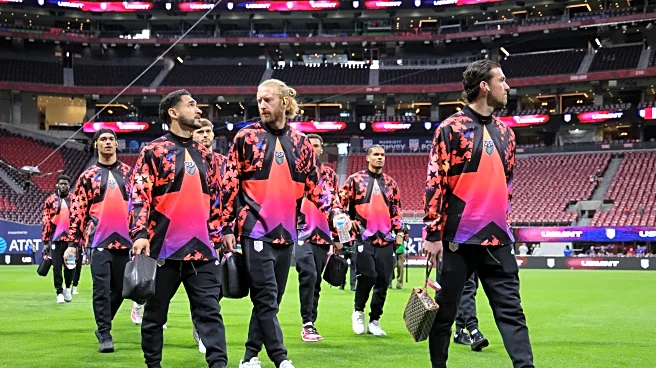

After all of the waiting, the 2026 World Cup is a mere few months away, with the United States Men’s National Team having precious little opportunity to make final adjustments to the squad. Any potentially earth-shattering roster additions or tactical shifts are unlikely, but the tests could pay dividends come June. The current international window opened with an ugly defeat against Belgium (2-5), and Portugal should provide another stern challenge. Mercedes-Benz Stadium in Atlanta, Georgia — a 42,500-seat
multi-purpose venue with a newly installed hybrid blue-rye grass surface — is set to host again.
This is the eighth all-time meeting between the two programs, with the series split at 2-2-3 and the most recent result being a November 2017 friendly that ended in a draw (1-1). Ranked sixth internationally by FIFA, Portugal claimed the 2025 UEFA Nations League with an aggregate victory over Denmark (5-3 [0-1, 5-2]), followed by wins over Germany (2-1) and Spain (2-2 [5-3]), the latter in a shootout. Seleção das Quinas (Selection of the Shields) reached the World Cup by finishing atop UEFA’s qualifying Group F with a 4-1-1 record, doubling up against Armenia (5-0, 9-1), notching a win and a draw with Hungary (3-2, 2-2), and splitting results with the Republic of Ireland (1-0, 0-2). The window opened with a scoreless draw against Mexico.
Roberto Martínez was appointed to the manager position in January of 2023, taking over for Fernando Santos, who had previously held the role for eight years. The 52-year-old Spaniard has experience at Swansea City, Wigan Athletic, Everton, and Belgium; De Rode Duivels (The Red Devils) achieved a top FIFA ranking and third place at the 2018 World Cup, although the “golden generation” was considered squandered without achieving silverware. He is developing into something of a master of qualifying, going long stretches of matches unbeaten and reaching the final tournament in 2018, 2022, and 2026.
Martínez initially named a 27-player roster for the international window. Rafael Leão and Rodrigo Mora withdrew due to injury and were replaced by Paulinho; starting goalkeeper Diogo Costa was also ruled out, with Ricardo Velho being added to the squad. The domestic Primeira Liga is home to seven call-ups, while six talents are in the Premier League, four play at Paris Saint-Germain, and three compete outside of Europe. Notable absences include Rúben Dias, João Palhinha, Bernardo Silva, and Cristiano Ronaldo.
***
GOALKEEPERS (3): José Sá (Wolverhampton Wanderers), Rui Silva (Sporting Lisbon), Ricardo Velho (Gençlerbirliği)
DEFENDERS (7): João Cancelo (Barcelona), Nuno Mendes (Paris Saint-Germain), Diogo Dalot (Manchester United), Gonçalo Inácio (Sporting Lisbon), António Silva (Benfica), Renato Veiga (Villarreal), Tomás Araújo (Benfica)
MIDFIELDERS (7): Bruno Fernandes (Manchester United), Rúben Neves (Al-Hilal), Vitinha (Paris Saint-Germain), João Neves (Paris Saint-Germain), Matheus Nunes (Manchester City), Samú Costa (Mallorca), Mateus Fernandes (West Ham United)
FORWARDS (9): João Félix (Al-Nassr), Gonçalo Ramos (Paris Saint-Germain), Pedro Neto (Chelsea), Francisco Trincão (Sporting Lisbon), Francisco Conceição (Juventus), Ricardo Horta (Braga), Pedro Gonçalves (Sporting Lisbon), Paulinho (Toluca), Gonçalo Guedes (Real Sociedad)
***
Martínez has typically deployed a 4-3-3 formation, with Portugal sometimes opting for a “rigorous and organized high-pressing plan” that seeks to destroy the opponent’s build-up and “limit ball progression in the midfield.” He is a flexible manager – sometimes to the chagrin of observers who grow frustrated with his tinkering “variations” – and seeks to tailor his tactics to the strengths of his players. Described as “crazy fun,” the team plays through the center with a quick and fluid game that sees constant “interchanging of positions” and the “creation of numerical advantages,” particularly against fullbacks. When in control, the intent is to get as many options into and around the box as possible, forcing defenders to make tough coverage decisions.

With Costa out of camp, José Sá has the opportunity to cement his spot as the primary understudy and provide his “dominant presence between the sticks.” The 33-year-old Wolverhampton goalkeeper was named his club’s Player of the Season in 2022 and was able to regain his starting role during the current campaign in the desperate, all-but-doomed fight to avoid relegation. Standing at six feet, four inches tall, he can snag crosses all day and is constantly on the move to readjust his positioning, with the composure to improvise. Due to his club’s recent foibles, there have been countless moments calling for heroic performances and improbable stops, from goal-line scrambles to continual breakaways.
Gonçalo Inácio is a “versatile left-footed defender” with “the freedom to progress with the ball or push high to make recoveries in the [attacking] half,” while also registering regular successful aerial duels. The 24-year-old Sporting Lisbon centre-back seeks contact, is constantly switching the field, and excels at avoiding pressure with his long-distance distribution, providing a spark in both phases of the game. The six-three Renato Veiga of Villarreal is still finding his way through the professional ranks but boasts a balanced profile of firmness in the tackle and comfort in possession. Also capable of stepping into the midfield or at fullback, Breaking the Lines praises his hard work and “powerful dribbling,” on display when “barging his way through and progressing into advanced areas.” Benfica’s António Silva is set for a big move due to a phenomenal “[positional] sense” and “very rarely [being] caught out in the wrong place,” instead making the necessary “blocks or interceptions at key moments in games.” He lives to shut down opponents in the one-on-one, whether handling wingers in the wide areas or keeping his composure as a striker seeks a tiny amount of space for a shot.
“Very close to a perfect player,” Nuno Mendes is a “holy grail fullback” who is “excellent out of possession” with solid one-on-one skills and “can open games with impunity,” tearing upfield with long carries into the final third or slaloming past opponents in the box. The dynamic 23-year-old Paris Saint-Germain fullback can skip past challenges or fight his way through contact, with a tenacious and fervent drive toward the goal, before clipping a pass to a teammate. Manchester United’s Diogo Dalot is “deceptively fast” and attacks with “underlapping runs,” tucking between the defenders with a constant work rate that has been aided by a physical transformation. He covers enormous areas of ground which enables him to win the ball in advanced spots or pinch towards the center in order to help teammates, excelling in shutting down wingers before attempting to start the transition. The versatile João Neves will drop back in the formation for Martínez, who has praised his “energy” that is constantly on display when dispensing hard tackles and tight combinations with teammates. “A technically proficient player who actively looks to receive under pressure,” The Scouting App notes his complete skill set and “wide range of passing, creativity, great reading of the game, and very strong legs.” João Cancelo of Barcelona is a regular starter when healthy and opened qualifying with two goals and two assists in two appearances, continuing to demonstrate his “confidence with and without the ball [and] in tight spaces.” An “attacking threat from deep,” his rapidity toward duels will take opponents by surprise, complementing his creativity while on the move and excellent vision when under pressure.
Vitinha is a “midfield maestro” who serves as “the first receiver from the centre-backs” and avoids pressure from the opponent with “the skill to open space up for himself and teammates” in every zone. The 26-year-old Paris Saint-Germain playmaker boasts “the stamina and speed to get into the necessary positions to create lanes” and a willingness to slot into the back line in order to let other options push forward. The dramatic times of Bruno Fernandes at Manchester United continue, but his creative impact, silken touch, and ability to put the ball seemingly anywhere make him an essential inclusion in any lineup. He will drift into all areas of the field in order to progress from deep, swing crosses into the box, pick apart a crowded box with precise and sometimes audacious distribution, or crack the occasional finish. Al-Hilal’s Rúben Neves provided some key moments during qualifying, including the sole finish in October’s 1-0 victory over Ireland, continuing to demonstrate his value as a two-way player who can dispense tackles, dictate the pace of play, and drill shots. His unyielding motor sees him dropping all the way back to serve as the final emergency defender, winding up the touchline before hitting a ball into the box, or taking an advanced position as the composer of goal-bound symphonies. Matheus Nunes is a fullback for Manchester City but typically slots into the center of the formation for Portugal, showcasing divine graft on the ball and breaking down blocks with quick touches and combinations. Total Football Analysis cites his “brilliant” range of distribution, but his skill set goes beyond finesse with a willingness to get stuck in on challenges that display a “very good technique.”
Francisco Conceição is one of the best chance creators at Juventus and frequently takes the wheel, dragging possession into the deeper zone with frequent success when darting past opponents. His time in possession can stretch endlessly, with a patience and confidence to wait for the right moment to make his move, but there is also a desire to push the tempo and break out into space. The left-footed Pedro Neto is “swift with dribbling ability and a sharp change of direction,” utilizing all manner of Cruyff turns, cutbacks, and stepovers when making his darting runs toward the center. The 26-year-old Chelsea inverted winger will alternate between a quick first step after receiving a pass or pausing in order to draw the defender before blowing past him and playing an inswinging cross. While not the unbeatable talent who drew such predictions in his youth, Al-Nassr’s João Félix can still make some noise for Portugal and has the scoring touch whether latching onto the end of crosses or smashing from distance. He typically moves toward the center of the field and favors the flashy stepovers and pullback moves to work his way around a swiping defender and will track back in order to win possession or receive a pass.
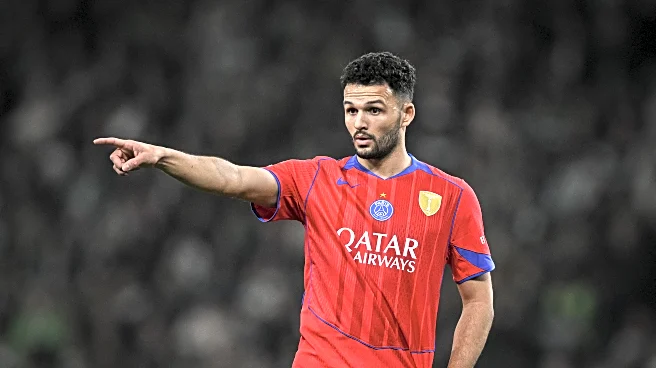
With Ronaldo out of camp, the current understudy and likely future starter Gonçalo Ramos is no slouch as a double-digit goalscorer for Paris Saint-Germain, with target sensibilities and the understanding to play off the ball. The striker from Olhão can play with his back to the defender and checks back in order to receive passes, having the vision to lay off to teammates and the guile to twist and turn his way out of pressure. A late entry into camp and making his first return since 2020, Paulinho has been lighting up Mexico with more than 50 goals in under two seasons, a varying array of finishes that include long-distance shots, breakaways, cross conversions, and poaches. The 33-year-old Toluca forward has an appealing physical profile at six feet, two inches tall with impressive speed to match, pushing his way past physical centre-backs and darting into the empty space.
With a few months remaining until the World Cup, Portugal should provide a stern test in one of the final tune-ups for the USMNT. This match could be another opportunity for experimentation or a glimpse into the first-choice lineups and tactics for both managers. The result is ultimately meaningless, but the scoreline could provide a healthy dose of optimism or pessimism heading into the summer, particularly after poor first showings.
The match is scheduled for Tuesday, March 31st at 7:00 p.m. Eastern, 4:00 p.m. Pacific. Viewing options include TNT, truTV, Telemundo, Universo, HBO Max, Peacock, and FuboTV (free trial).