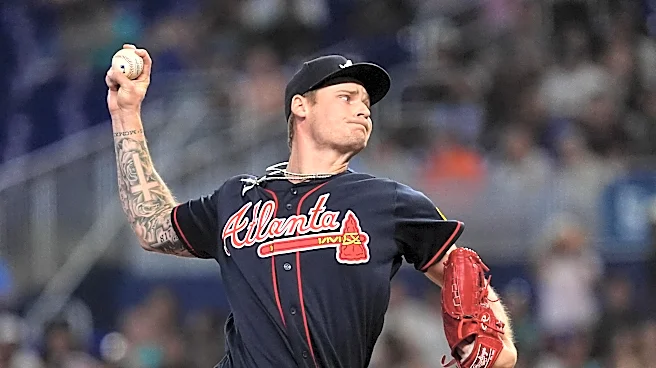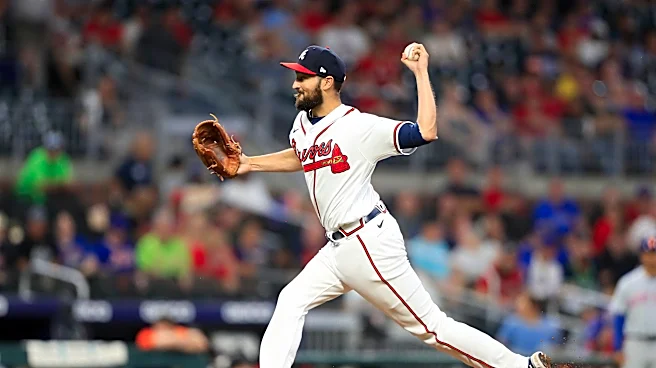


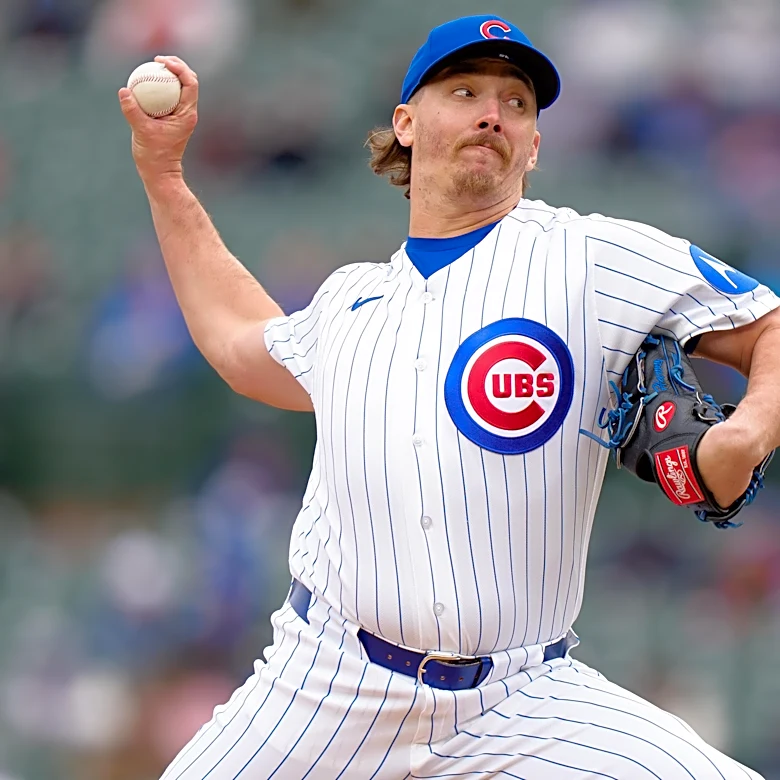

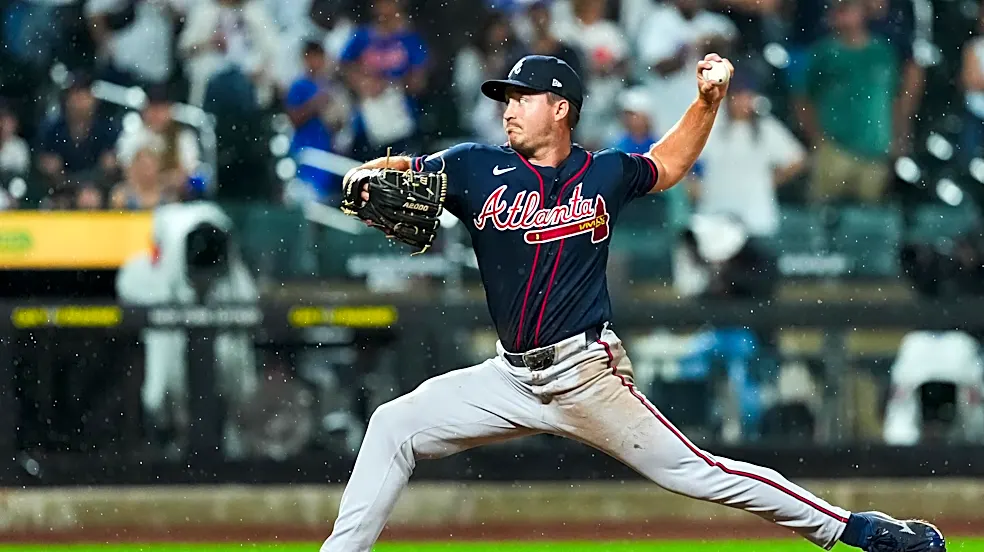
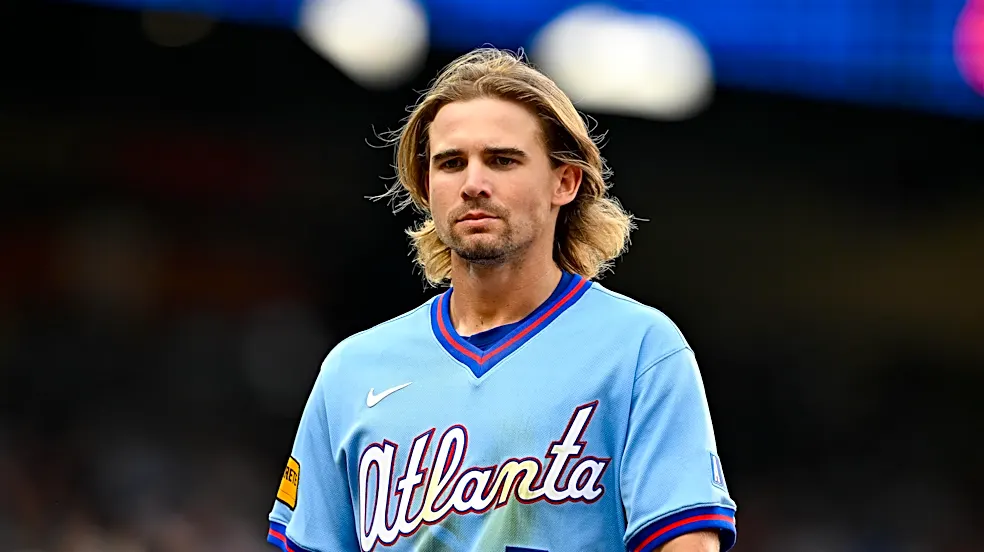
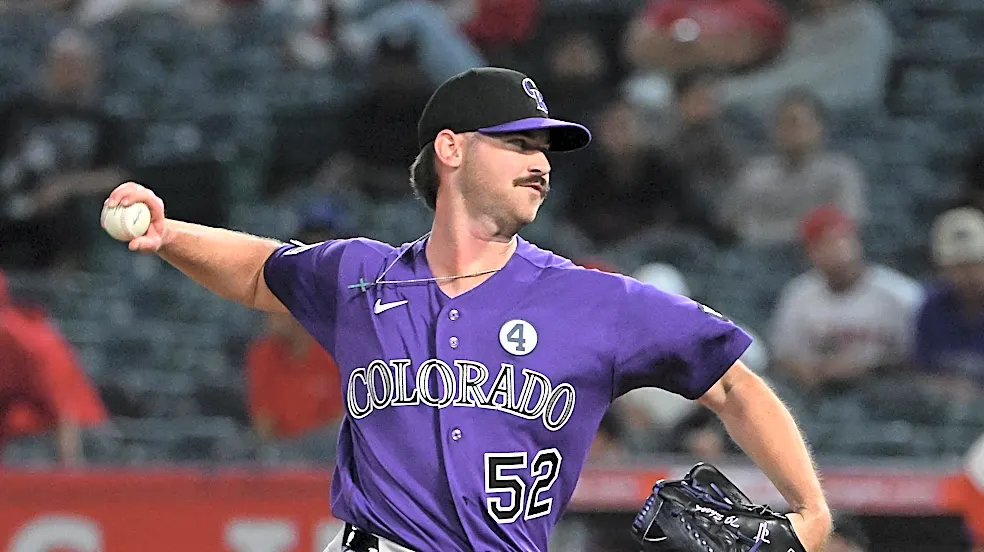

After playing for the Atlanta Braves back in 2022-2023, Danny Young spent two seasons with the rival New York Mets before making his way back to Atlanta. He didn’t spend much time on the MLB roster for the Braves in his first tenure in the organization, so if you failed to realize that he wasn’t just a fringy minor league callup, no worries.
How Acquired
Way back in August of 2022, the Mariners designated Young for assignment and the Braves claimed him five days later. Eleven days after that, he got
called up for a cup of coffee and pitched in 2 2/3 innings in his lone appearance. Interestingly, the Braves sent him back down after he surrendered zero runs and zero walks. He made eight appearances the following year for the MLB squad. After the 2023 season, Young elected free agency and signed a minors deal with the Mets. He stayed with the Mets for two seasons, though his 2025 was cut short due to Tommy John Surgery. The Braves reacquired him in the offseason by signing him to a one-year, split contract.
What were the expectations?
Based on his history, his recovery from Tommy John Surgery, and his contract, it is safe to say that the expectations for Young were never more than depth if injuries happened at the MLB level, though he had some upside. Despite barely pitching (more than 8 1/3 innings just once in four seasons leading up to 2026), Young had a career 100/80/80 line (ERA-/FIP-/xFIP-), built largely on dominating lefties (FIP and xFIP around 3.00) while not being nearly as effective against righties (FIP closer 5.00 and xFIP closer to 4.00). Put that all together and you had a lot of uncertainty: would Young be healthy enough to return and be effective? Would there be space for him on the roster (pitching injuries are inevitable…)? Is there really a spot on an MLB roster these days for a lefty specialist?
Young was basically projected as a replacement level reliever, or slightly above, coming into the season. That made sense given that he was better-than-average but had fewer than 61 big league innings under his belt, and was coming off a serious injury.
2026 Results
After the Braves deemed him ready following some rehab outings, Young appeared in sixteen games, but only completed 12 1/3 innings. That 12 1/3 inning mark was actually the second-highest of his career.
However, the overall results were not great: a 191 ERA-, a 186 FIP-, and a 146 xFIP-. “Not great” is a bit of an understatement — Young had a really rough landing after Tommy John Surgery. He finished with -0.5 fWAR, erasing all the positive fWAR he had accumulated previously in his career.
The Braves designated Young for assignment in August, and successfully outrighted him to the minors a few days later. They re-added him back to the 40-man roster earlier in the offseason — he’s out of options, but is still controlled at the league minimum rate (whatever it will be following resolution of the impending lockout), provided the Braves actually opt to carry him on the active roster going forward.
What went right?
Young somehow managed to skate by for his first 12 appearances of the season without much damage: a bizarre 49/141/137 line, which can definitely happen in a small sample. He was charged with runs in just two of those 12 outings. However, he had a nasty 8/8 K/BB ratio in that span… but we’ll skip past that for now. With luck on his side, he helped the Braves a fair bit in July, earning three shutdowns to one meltdown.
Two notable outings in that span included two strikeouts in an inning against his former employer on July 5, and an incredible stroke of luck on July 26 in Baltimore, when he was asked to pitch the tenth, went walk-wild pitch-walk, but then benefited from a lineout to first that allowed Matt Olson to step on the first base bag ahead of the runner as well. Young didn’t actually stick around after that close call, but that’s how those first 12 games went for him, pretty much.
What went wrong?
When you have a guy posting an 8/8 K/BB ratio during his “good” stretch, with his highest-WPA outing coming thanks to a fortunately-placed lineout after he walked two and had a wild pitch before getting any outs, well… it’s a miracle the bottom didn’t fall out sooner.
But as soon as the calendar flipped to August, it did. In four outings before the DFA, Young was charged with nine runs in 3 2/3 innings, surrendering two homers with a 7/5 K/BB ratio. He cost the team win expectancy in three of those four outings, though fortunately only one was in a close-enough game to count as a meltdown. The Braves moved on shortly thereafter.
Young’s issue wasn’t surprising at all given that he was back on a big league mound after 14 months after Tommy John Surgery: he simply had no command. His sweeper was all over the place, and even his sinker occasionally sputtered way too far armside across the plate. Given that he doesn’t throw hard, a lack of command completely killed his effectiveness, including against lefties.
Young’s most damaging outing of the season was actually one of the silliest — and came during his “dance through the raindrops” stretch. He was asked to pitch to two lefties at the top of the Cardinals lineup in a tie game in the eighth: no-hit backup catcher Jimmy Crooks, and potential Rookie of the Year candidate JJ Wetherholt. Then, two righties were due up. Well, you can already guess, or remember, what happened: Crooks hit a game-winning homer, and Young somehow got through Wetherholt and two good righties.
But, the thing that probably got Young canned was the combination of acquiring Brent Suter at the Trade Deadline, and the fact that Young failed to get through a mop-up inning against the Diamondbacks before extending a five-run deficit to seven, thanks to two walks and a homer. He actually struck out the side in that outing, but with Suter’s rubber arm and Young’s luck entirely evaporated, there was little reason to carry him in the short term.
2027 Outlook
Given his 2026, whether Young is worth rostering in 2026 depends on his continued recovery and return of his command. Pre-injury Young was at least interesting, even if his LOOGY nature made him hard to use effectively in a world of three-batter minimums. Post-injury Young? Well, who knows — he seems like call-up depth at this point, but he’s out of options. So, organizational depth with upside seems like the right tag to apply here. Will he even make it through the offseason without getting cut off the Braves’ 40-man roster? Probably not, but you never know.