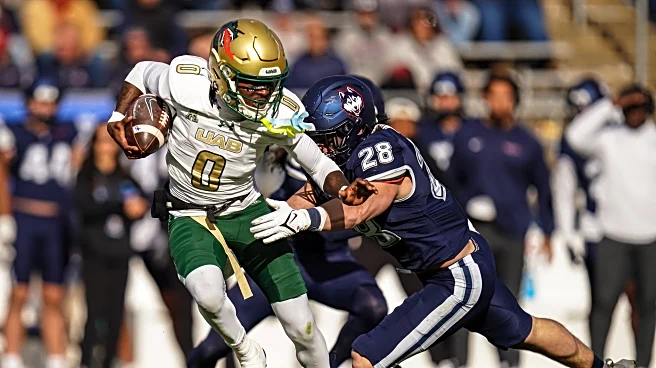

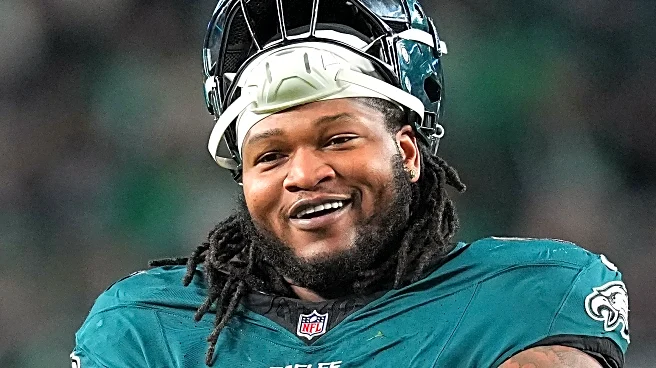

Hooks was recruited to UAB in the 2022 cycle as a low 3-star (.8267) in the 24/7 composite. He redshirted that year, seeing only minor action in one game. As a redshirt freshman in 2023, Hooks was part of the primary rotation of receivers in the first three weeks of the year with a substantial number of targets to open each game. But midway through the third game against Louisiana, he suffered a season-ending ACL tear to his left knee. Local media coverage reported that the NCAA granted Hooks a medical
redshirt for the 2023 season.
For his third year on campus, though technically still as a redshirt freshman in 2024, Hooks returned to the field and played in every game but not extensively. As I tallied it, half of his 26 targets came during garbage time, and even his meaningful targets were mostly later in games. There’s was only one game’s exception, midseason against USF, in which he played from the first drive.
In 2025, Hooks as a redshirt sophomore became the team’s leading receiver, eventually by a wide margin. But this didn’t happen until late in the year, and in fact Hooks’ pace of targets wasn’t even on track finish on top until a major change of trajectory in week 8. That was his breakout game and a turning point for the Blazers in many ways, which I’ll detail later.
The new-look version of the offense still had an uphill battle, facing three teams in the final weeks which finished with a combined 30 wins, and remaining saddled with a defense that ranked 132nd in F+ advanced statistics. So despite impressive wins over Memphis and Tulsa and a close loss to Rice that demonstrated real progress in the change of approach, UAB finished 4-8 on the year. The head coach who’d recruited Hooks had been fired midseason, and the interim coach was given the permanent job in early December. A week later Hooks entered the transfer portal, and in January he committed to Oregon. He has two years of eligibility to play two.
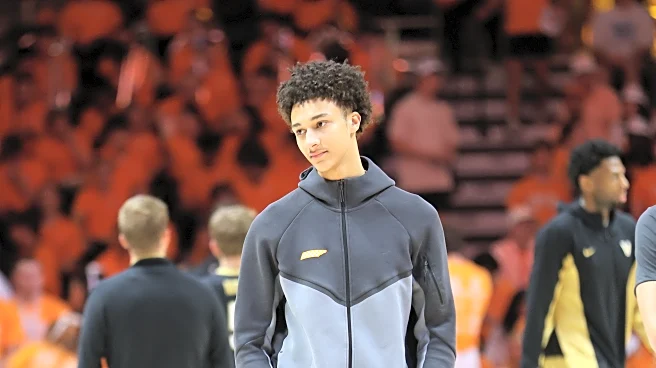
Hooks is built like a slot receiver — he was listed at 5’10” and 165 to 175 lbs during his four years on campus in Birmingham, and that looked accurate rather than inflated to me — and he generally lined up inside on spread formations, with a few reps outside or as the lone WR on 3×1 configurations.
His acceleration is immediately obvious on film, but what was transformative in the latter part of the 2025 season was that the offense realized he was just much better than the rest of the receiving corps — all of whom except the other inside WR having 3 to 5 inches of height on Hooks — at defeating close coverage on deep routes and coming down with the ball for big gains. Here’s a representative sample:
(Reminder – you can use the button in the right corner to control playback speed)
- :00 – Hooks is in jersey #0, as in all clips (though sometimes the nameplate is different due to charity events), as the No.2 receiver in trips to the field. The overhang backer turns to run with Hooks and the safety backpedals deep. Hooks burns them both on the post route with excellent acceleration, and if the QB had put the ball five yards deeper he could just run under it and into the endzone. It’s short as it is, forcing Hooks to slow up and giving the safety a chance to break his concentration flashing his arms through the ball’s path. No dice, Hooks makes the adjustment.
- :16 – Different QB, this one has the faith in Hooks to begin his windup the instant the DB squares up with him and tries to match leverage – the new QB knows Hooks is going to win outside and puts the ball on the back pylon. Hooks pays off the bet.
- :49 – Hooks is lined up as the Z-receiver here, with the CB in press getting physical the entire way. Hooks fights him off while maintaining a good sideline cushion and climbs on top within eight yards, and flashes his hands late while the CB is still scuffling to minimize the chances of turning to play the ball. The QB’s stumble and the flat arc from the rollout narrowed the window for this boundary throw, Hooks had to use pretty much every WR trick in the bag to secure this and only had inches to spare.
- 1:11 – On this 3rd & 10, Hooks is the No.3, inside the split-out TE, running a 10-yard slant then breaking hard at the sticks across the short side. The DB is riding him with outside leverage the whole way, that’s pretty clearly an uncalled hold Hooks has to rip free from. The QB buys some time and throws it away from the defender; Hooks secures the diving catch with the DB on top of him and an arm inside his guard.
I thought that Hooks demonstrated excellent athletic control of his route running – the tape shows proper spacing against the defense, the sideline, and the other routes in the pattern, as well as crisp breaks and burst to create separation. Most of the passing offense was about giving the QB clean looks at his numbers prior to the pass — as opposed to timing concepts or physically dominant receivers winning deliberately contested passes — and Hooks did exactly that. Some examples:
- :00 – The stems from the stacked WRs confuse Tennessee’s zone defense; the one on the line bends out then in on his way deep which carries the corner, while Hooks off the line bends in at first and makes the nickel think the safety is going to get him, just before he snaps it off smartly to the outside. The QB sees the leverage advantage, and on his first time targeted Hooks converts a 3rd & 15 for the biggest play of the game (until deep in garbage time against the Vols’ backups and walk-ons, anyway).
- :23 – This is 3rd & 8, Memphis was setting up for a comeback and had UAB backed up against their goalline. Play action gets the backers to bite and the RB doesn’t help with pressure coming through the LG, the ball is a little hurried but there’s no one underneath. Great hands catch, textbook spacing from the defender at the break, the catch, and as he turns downfield to conserve his momentum around the safety to maximize yardage.
- :45 – Hooks is in the slot to the field side, running an out & up. The nickel is on the line in man but Hooks gets a free release to the outside and climbs on top, legally maintaining spacing using his arm without pushing off. Good sideline cushion despite the physical play for the back shoulder ball and late hands keep the defender guessing.
- 1:07 – This is an extreme unbalanced formation, but the TE and RB stay in close so it turns into a 3 vs 3 to the field. The nickel and corner hand off the No.1 and No.2, but the safety takes outside leverage on Hooks as the No.3 thinking he has inside help and he’s wrong – Hooks sees the misstep and accelerates through the post turn before he can correct, cutting him off. He then has to dial it back because the QB thought he was going to be in a different spot, and makes a midair adjustment on the ball.
Hooks’ tape showed great catch versatility. Despite his stature, he still demonstrated an impressive catch radius on getting vertical and making reaches outside his frame for the ball, and he secured it consistently through hard contact with defenders or the ground. Over 2024 and 2025 there were three different starting quarterbacks (interestingly, the same QB was both the usurper one year and the usurped the next) and I would say that all three had powerful arms with a lot of spin on the ball but none had pinpoint accuracy. So the entire receiving corps had their hand-eye coordination and body control against the sideline tested each week, and Hooks came through very well:
- :00 – The QB’s mechanics are awkward and jerky due to the pressure, but Hooks has run a crisp route through the layered zone and the DB has slipped trying to catch him, so now he just has to catch a weirdly placed ball. He climbs the ladder for it, and comes down with enough conserved momentum that he can outrun the rest of the defense (the peace sign in front of the NGC ad was a nice touch).
- :32 – Memphis never took this defensive playcall out and UAB burned them nearly every time, simply running the slot (often though not always Hooks) right down the hashes into the soft spot of the drop 8 zone. This one is late and then the QB corrects too much by overrotating, Hooks has to adjust on it going to the ground before his route crashes him into multiple DBs for a 23-yd gain.
- :56 – UAB mounted a 4th quarter comeback effort in this game almost entirely on Hooks’ play, this was his third catch of this drive for a combined 48 yards and one play prior ran across the field breaking three tackles. Here the throw from the QB is high after rolling out and throwing without setting his feet; Hooks has plenty of separation but has to go up for the ball then tap his feet before he hits the sideline.
- 1:08 – The QB is staring down the high-low read to the boundary the entire way and goes with Hooks at the intermediate since his separation is enormous. The throw is late (he should have hit the post at the top of his drop, and if that was covered then Hooks on leverage, but his eyes are wrong the entire time) and as a result Hooks has to make a leaping toe tap catch before he goes out of bounds and can’t turn downfield for any more, but gets it done.
Cohort analysis made it transparently clear that Hooks’ presence dramatically improved the offense. Not only was he more effective as a passing target in terms of his own production, but his route running and the threat he presented to the defense opened up the Blazers’ offense and made everyone else on the team, including the running backs, more effective. Even retrodictively controlling for the more rational approach the interim coach chose and normalizing for Hooks’ increased reps in the latter part of 2025, the effects on UAB’s adjusted metrics whether Hooks was on or off the field are stark:

It’s hard to understand why Hooks didn’t play more often in 2024, when he returned from injury. Watching the tape of that season, he didn’t look slowed up or lacking in confidence in his ability to make cuts or put weight on his reconstructed knee at all, and he led the team that year by a slight margin in per-target success rate (restricted to meaningful targets) while posting an impressive 8.1 adjusted YPT. It’s equally difficult to understand why Hooks wasn’t on the field for the majority of reps for the first seven weeks of the 2025 season, given his superior production and how clear the salutary effect on the defense was from the high angle tape even in the earliest games.
Even if I had far more reps to go by, I’d be hesitant to make inferences from the coaching staff’s use patterns. There are extensive inefficiencies in roster management and situational decision-making during former head coach Trent Dilfer’s tenure which are clear both on tape and through statistical regression of the charting data, and in many ways I suspect his midseason firing was expected and overdue.
It would exceed the scope of this article to recount the more than 30-year campaign of interference and imposed mismanagement on UAB’s football program by the Alabama Board of Trustees, and the complicity of the long tenured athletic director (fans displaying signs calling for his firing are a common sight during home wins). Indeed the few times the Blazers have succeeded it’s been because the Board has been so inept that they failed to properly sabotage UAB.
One such instance was allowing the hiring of Bill Clark from then-FCS Jacksonville State, who turned out to be the best coach in program history … the Board then interrupted his tenure by eliminating the team for two years on the flimsy excuse that fans in Alabama didn’t like football enough, only for boosters to raise $20 million practically overnight for a modern operations center and to bring Clark back for another four seasons.
Clark retired at the end of the 2021 season for health reasons, and Dilfer was brought in as something of a stunt hire. Dilfer was a longtime NFL quarterback, then II-AA prep coach and ran Elite 11 camps, and I think his tenure was a mixed bag – it was obvious that he has an eye for skill talent as the WR and TE groups were absolutely stuffed with productive players, the RBs posted great numbers (even though I wasn’t really watching for them, they caught my eye), and every QB could really spin the ball.
But managerially, there were major issues. It will have to suffice to say that I observed both considerable turmoil and personnel problems on the team before and after Dilfer’s firing as well as many inefficiencies in the offense that were only partially addressed by the interim head coach and temporary quarterback change. The interim, now permanent head coach, Alex Mortenson, was a Nick Saban assistant at Alabama and struck me as a process-oriented person, and he immediately set about rationalizing the pass distribution and started a different QB. That led to the biggest upset of the season at the G5 level, UAB’s win over Memphis.
Hooks in 2025 not only led the team in meaningful targets with 69, he outpaced the squad in per-target numbers at 65.7% success rate and 10.9 adjusted YPT. No one else did better than 7.9 YPT, and almost every other pass catcher had success rates ten percentage points lower with the exception of a couple possession guys whose averages were even lower at around 6.5 YPT. But prior to Dilfer’s firing, Hooks was severely underutilized and absent from the field, and certain plays with much higher success rates were being used too rarely or in the wrong situations for leverage.
These issuse weren’t entirely corrected, but they were substantially addressed from week 8 onward. Statistical regression suggests that if the offense had been operated for all of meaningful play in 2025 the way it was under the new coach with the new QB, the three top WRs would have added a cumulative 280 yards to their meaningful season totals, and Hooks would have gotten the lion’s share of that with 175 extra yards (these numbers would of course be much higher if garbage time were included, but such data analysis is invalid by definition).
In terms of play structure, the clearest way that the offense changed after the coaching switch was situational shot plays vs RPOs. These both existed previously, but under Dilfer they called shots when they needed them (3rd & long, mostly) and RPOs as kind of trick plays, with the actual run game being telegraphed by tight-in formations. Mortenson changed it up and called a much higher percentage of shots on 1st down and “money down” 2nd & short opportunities, and had the new QB run RPOs as an integrated approach to rushing, meaning they could show up on any down & distance and in particular were the go-to for short or medium conversions. The greater RPO emphasis worked to Hooks’ strengths as an inside receiver:
- :00 – FAU brings everybody, expecting a run to convert, with DBs in man and the safety reading the QB’s eyes. Hooks’ release gets him some space and he snags the low and away ball before the safety can get over. Note his posture leaning across the plane with the ball in his downfield arm, instead of diving headfirst and potentially coming up short.
- :13 – This was Hooks’ only downfield target of this game, which had the commentators fairly screaming after his Memphis performance – he became the leading receiver on effectively only five games of full utilization. It’s an RPO in which he first runs a short curl in the flat that the defense ignores as the safety and nickel come down on the QB keep and TE toss options. But the OL has stayed close to the line of scrimmage, so it’s legal when Hooks bursts into the big gap the corner has left in order to spin over and replace the safety over the top.
- :22 – This RPO carries some histrionics and the throw is late, Hooks’ route carries him right into the DB who hits him in the back as he’s catching the ball, but his security is excellent and he keeps it controlled.
- :34 – Clean execution here, right read and on target, Hooks gets it in time to rip around the DB for extra yardage. He senses the backer coming from behind to club at the ball and gets two hands on it for security.
Most of the processing time preparing this article was expended on data controls in the cohort analysis, because there are wildly different outcomes to certain plays and I wanted to be certain that this wasn’t noise from random factors to be fair to the entire UAB receiving corps. The trickiest to resolve were very large disparities for screens and throws off of scrambles – in both cases Hooks and another receiver outperformed everyone else, but the second player was different for each category. For scrambles, the data came out relatively robust even after strict controls – Hooks just proved to be very adept at helping out his QB in trouble and catching shakily thrown balls.
I consider the screen pass bump unresolved simply because I can’t test the proposition that Hooks’ screens may turn out better because Hooks might be a bad blocker (and he doesn’t block his own screens). I have nothing on that hypothetical because I have no data whatsoever on Hooks blocking, as UAB never had him block anything (there are a couple long runs he blocked on, but he improvised them). At any rate, here’s a representative sample of Hooks’ screen and scramble targets:
- :00 – Everything’s very smooth here, Hooks drifts from the hashes to the numbers on the outside screen, has the ball caught before he turns to run and accelerates niceley through the backer-safety gap.
- :08 – Ton of separation from the DB here, the designed route has Hooks continuing to run to the short side hashes but the QB doesn’t have the additional second or so that he’d need to throw that from the pocket, and his off platform throw isn’t calculated for where he’s going to be, he just chucks it right at him. Hooks arrests his momentum and leaps back for it, angling his body more than 45 degrees for the catch.
- :21 – This game was right after a two-day rainstorm and the field wasn’t in great shape. You can see clumps of grass thrown up by the DL as they’re knocking around the OL. This isn’t Hooks’ spot in the pattern, he’s meant to curl on the opposite hashes, but he runs over when he sees the QB leave the pocket. He breaks one tackle from a sliding defender but then slides himself dealing with the next.
- :38 – Good patience to widen first and get around the crashing DB, and then recognition that the other safety who’s run over doesn’t have square shoulders and he can cut inside and past. That DB clearly reaches out and commits an uncalled facemask foul because he’s beat, it’s the only thing that slows Hooks down and allows the backer to catch up and tackle him.
Earlier I mentioned the stark statistical difference between reps in which Hooks was on the field and reps when he was on the bench. Partly this effect is correlative – some of the playcalling was just smarter, in my opinion, during the same timeframe under the interim coach that Hooks saw more reps, and while I can normalize for game conditions, opponent, and field position effects, it’s essentially impossible to virtually simulate a smarter football coach (attempts have been made). What I can do is document on film the ways that Hooks’ abilities and the threat he posed in the pattern opened things up for other receivers:
- :00 – With Navy’s zone structure, if the outside receiver presses deeper faster the corner goes with him and then switches to the inside man’s deep route, while the safety stays low and would have had the in-breaker. But Hooks’ blast off from the line negates that, the safety has to immediately carry him deep, and now the corner is outleveraged (and a little confused), leaving his teammate wide open with nobody in a dozen-yard radius.
- :18 – This was right after Hooks’ big gain against Tennessee shown earlier. Up until this point, the Vols were squatting on all these short routes and the Blazers were getting nothing from them. But now with Hooks as the No.2 running the flag route and having just gotten torched by him, look at how the same nickel and corner peel back in zone against his threat. The QB is correct not to throw to him because of that, but it’s opened the lane for the long throw to the TE in the flat and the room for him to pick up a few more, setting up 2nd & 2.
- :30 – Hooks is the point man in the teacup, running the post route. The nickel jams him but Hooks achieves quick separation and forces the safety to lock onto him instead of staying on top of both fieldside routes. Without help, the corner gets grabby on the outside receiver who rips free and now has both a leverage advantage and open grass to run into … although the ball leads him to flip around to the other side it’s still plenty of extra because the safety is occupied by Hooks.
- :50 – The defense has four over three to the field, and look at how all four are leveraging over to stop Hooks as the No.2 on 3rd down, including the linebacker who starts out between the hashes! That opens up the post to a freshman who gets by far the biggest play of his young career.
To me the most puzzling aspect of Hooks’ film is that it took the team so long, and evidently a change at the top of the staff, to feature him. I thought it was obvious from the get-go that Hooks was doing things that other receivers weren’t, and one of the most frequent causes of unsuccessful passing plays given the down & distance was that the QB couldn’t or wouldn’t throw past the sticks. Here’s a representative sample of plays where the throw should have been to Hooks — or a Hooks-liberated receiver per above — but wasn’t:
- :00 – Hooks is the No.2 here, the QB throws the ball to the No.3 receiver, but should have thrown to the No.1. That’s because Navy’s simulated pressure has gotten home and dropped a defender right onto the inside throw, but Hooks’ route (just like the Tennessee play in the above compilation) has peeled the nickel and corner back and opened the outside throw.
- :13 – I don’t put this one on the QB, I think he wants to throw to Hooks on the deep over route out of the slot, but even with the half-roll he doesn’t have enough time to set his feet and against zone coverage if he doesn’t get this right it’s a pick with scary field position. But my goodness is that a pretty route run by Hooks, just perfect spacing.
- :30 – Hooks is the No.3 running the skinny post, with the entire defense playing 12 yds deep and the safety firing down on the boundary single receiver for no good reason. None of the DBs have their hips right to turn and run with Hooks, much less catch up, it’s a TD if the QB had read the safety’s initial step and immediately moved down the progression to Hooks, although maybe pressure was still too fast for that.
- :50 – Here it’s another trips to the field and Hooks is the No.2, running the fade vs the nickel in man with a cushion. He’s climbed on top, the field safety is down on the TE, and the boundary safety isn’t bailing hard enough to help. If the LG didn’t get instantly whipped it’s a TD.
Hooks’ per-target success rate in 2025 was over 65%, five points above championship caliber. Of the third of targets that were unsuccessful, there weren’t any statistically significant spikes in the data, rather it’s a pretty even mix of the most common reasons that passing plays fail – inaccuracy, miscommunication, poor field reads, a completed pass but for inadequate yardage. Given Hooks’ target count, the number of WR problems (e.g., drops, ball security issues, route running errors) were at well below average rates for a top FBS receiver and in most cases I have either one or no instances on the entire run of film, too few to be worth showing. Here’s a representative sample of the failed targets:
- :00 – This is kind of the inverse of the above clips: Hooks has done his job on 3rd & 10 drawing the defense off, as the SAM sticking to him (instead of a three-LB shift that would free the WILL on the other side) means the corner is in tension and the TE is wide open for a touchdown. But then the QB just throws it to Hooks for a failed 3rd down conversion as he gets swarmed under.
- :10 – It’s 3rd & 16, Hooks’ sitdown route midfield is just for pulling the safety down and it does, with the bonus of the linebacker too. There’s no way he’s converting with five more yards to go against two defenders over him so I don’t know what the QB is thinking, when the distraction has opened up the throw to the outside receiver at the sticks.
- :17 – This miscommunication followed a broken play in the first game back for the year’s original starting QB, I suspect it was some kind of signaling issue that the helmet comms didn’t help with since the snaps were so late in the playclock. There were about a dozen of these over the course of the year to a variety of receivers, but Hooks got the most as the top target, and the curious thing was that they never happened with the other QB.
- :27 – The QB is making the right read here, the safety has been pulled off by the X-receiver and Hooks’ drag is the man-beater. This just needs a lot more accurate throw … bit of irony for a Dilfer QB on this.
I think the full range of Hooks’ abilities have yet to be tested – as mentioned above I’ve basically never seen him block, and I’m uncertain how he’d perform in a catch-and-run type of play structure since the way he was being thrown balls tended to get him to the ground or out of bounds immediately. It’s also the case that the three best defenses UAB played in 2025 were at the beginning of the year when he wasn’t being used that much, and even then the best of them only finished the year ranked 52nd in F+. So unlike many of my other film study projects, identifiyng the biggest weakness in Hooks’ game is necessarily making a guess at the moment, since it’s entirely possible given this limited tape that there’s some issue that just hasn’t been put on film yet but may reveal itself in a different offense against stronger opponents.
With that being said, the guess I would make from the film I’ve watched so far would be something like: he’s not Superman. To the extent there’s any throughline at all between failed passing plays, it’s that Hooks isn’t the biggest guy in the world and if you hit him hard enough it can jar the ball loose, or if the ball is wildly off target he can’t make superhuman plays to salvage it, or if your back shoulder fade dies in midair and he has to fight through the DB to get back to a short ball you’ve put him in a bad spot. These are things that might be easier for a WR who’s six inches taller, and he’s not:
- :00 – This throw is late, it’s a comeback and the QB doesn’t have time to wait on an opposite hash throw. If Hooks stays on his feet for it and waits for it to come to him it’s definitely getting broken up, instead he comes farther back and high points it but it’s still not enough, the corner makes contact and he can’t secure it. A bigger WR might be able to intersect the ball’s arc even earlier so the corner would have a harder time with the breakup.
- :16 – It was a little much listening to the commentators praising the QB’s arm talent while Hooks was on the ground repositioning his internal organs after this hospital ball. He hangs onto it but needing to leave his feet means he’s vulnerable to getting shoved out of bounds and so it’s incomplete. (Hooks left the game for a bit but returned the next drive and caught a 47-yd pass.)
- :47 – This is supposed to be a back shoulder fade to the pylon which shouldn’t really be a problem from the 20-yd line. But the ball dies in midair, and now the fact that Hooks has beaten the DB downfield is against him – he has to work back five yards through the defender’s arms. A bigger WR might power through that and get up to high point the ball but this isn’t really Hooks’ game.
- 1:08 – The ball is off target due to pressure (more than that, they pick up the 1st down on a roughing flag, can’t do that to a QB’s head), and Hooks gives his best effort laying out for the ball while keeping his toes in bounds. He just doesn’t have the size for it, he has to making a flying grab instead of staying on his feet and reaching out for the ball as a longer receiver might, and when he lands hard on the ball it pops out.