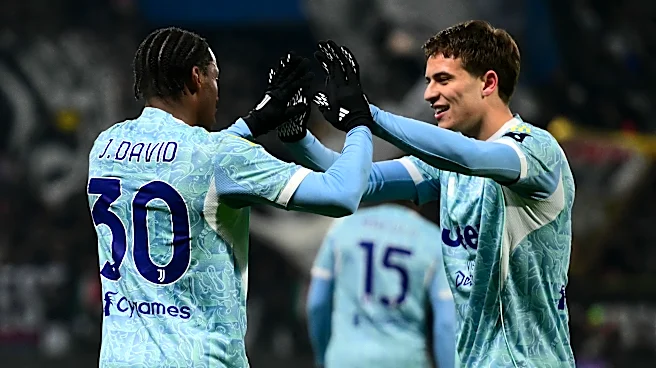



If you listened to this week’s episode of The Old Lady Speaks Podcast, you’d know that I’ve got some strong feelings about this year’s group of forwards. Indeed, in our season-ending extravaganza, I named a forward for MVP, LVP, biggest surprise, and biggest disappointment.
The dysfunction up front was a key point in Juventus’ problems this season. During the 2025-26 campaign, Juve were second in the league in shots on target with 227. Only Inter Milan had more, and the margin was only two. But Inter scored
28 more goals than the Bianconeri — a withering indictment on the performance up front. And while there were certainly moments where a good shot was denied by a fantastic save, that’s somewhat cancelled out by the multiple missed sitters over the course of the season that players somehow managed to yeet off target.
While mistakes by Michele Di Gregorio in goal and breakdowns in defense are certainly big culprits in terms of Juve’s inability to qualify for next season’s Champions League, the inability to be clinical in front of goal was just as important. A little more quality in one or two of the games against Hellas Verona, Sassuolo, or any number of other matches against teams that had no business getting away from a game against Juventus with points would have swayed the season.
Ultimately, I would say it’s this group, more than any other, that needs serious upgrades over the summer if the results in the 2026-27 season are to be any better.
As always for my ratings, I will be listing players in alphabetical order by last name, and a player must have played at least five games to get their own entry.
Let’s take a closer look at Juve’s forwards for the ’25-26 season.
Jérémie Boga — 6.5
Jérémie Boga’s success after arriving in the winter transfer window was a rare mercato success after what felt like three straight windows of duds. Coming over from Nice after an ugly incident with the Ligue 1 outfit’s ultras saw he and a teammate get assaulted, expectations weren’t exactly high for the former Sassuolo and Atalanta man.
He hadn’t played a match in two months after the assault, and his first month with the team saw him largely drawing himself back up to match fitness, with moments here and there showing that he’d have something to contribute when he was back up to full speed.

He turned things on at the perfect time. He scored in three straight games starting on March 1, and as Jonathan David and Loïs Openda became less and less viable as options up front, he began to start as a false nine until Dusan Vlahovic returned to the lineup.
Boga scored four goals total from March on, including decisive strikes in 1-0 away wins against Udinese and Atalanta and a critical goal against Roma that pulled Juve within one and set the stage for Federico Gatti’s stoppage-time equalizer. But the most important thing about Boga was that, as he got more and more comfortable on the field, he was able to take some of the creative strain off of Kenan Yildiz, forcing defenses to redirect some of the waves of bodies they aimed at Juve’s young No. 10 toward himself.
Boga’s loan came with an option to buy for only €4.8 million, and his performance since arriving in Turin makes picking that up a no-brainer. If he continues to have success, he could end up ranking as one of the biggest transfer steals the club has made in recent times.
Francisco Conceiçã0 — 5.5
Francisco Conceição is an incredibly frustrating player to watch. Frustrating, because his talent level is obvious, but he has yet to raise his game to match it.
Since arriving at Juve last season on loan from Porto, we’ve seen how disruptive his pace and low-to-the-ground dribbling ability can be to opposing defenses. His winner in last year’s dramatic comeback against RB Leipzig and the stunning strike he hit in March against Roma show just how devastating he can be when he finds the right moment.

The problem is he isn’t finding it often enough.
The story of Conceição at Juventus has too often been that he’s gotten the ball into excellent positions, but failed to actually do anything with those positions. He only managed nine goal contributions in all competitions — four goals (three in Serie A, one in the Champions League) and five assists. The gap between those contributions was often far too long. He scored his first two goals in back-to-back games against Verona and Villarreal at the juncture between September and October, but didn’t score again until Dec. 20 — a span of 14 games. It wasn’t until March 1 that he did it again.
There are only so many times you can watch Conceição jink his way into a great spot on the wing only for it to come to nothing before appreciation for his talent begins to drift into wondering “Where’s the beef?”
Show us the beef, Chico.
Jonathan David — 4
This is an incredibly puzzling one.
Jonathan David’s arrival at Juve on a free transfer felt, at the time, like the kind of transfer the Old Lady had pulled out in the early part of the Streak era. He’d built up his reputation at Lille as one of Europe’s rising strikers. In the last four seasons with Lille, he’d scored 19 goals or more in all competitions. His goalscoring ability combined with his skill as a distributor from the No. 9 spot seemed like it would be a major upgrade to the attack.
But this season proved to be a complete flop.
David struggled to adapt to Serie A’s more tactical approach and more stringent defenses. He scored off a rebound on his debut and assisted Vasilije Adzic’s stunning winner against Inter two weeks later, but he didn’t make another goal contribution until November, when he scored a late winner to beat Bodø/Glimt — also off a rebound.

It looked like he might have finally gotten into the swing of things in January when he reeled off four goals and three assists — but he only scored once more the rest of the year. He regressed so badly that Luciano Spalletti benched him for multiple different false nines. When Dusan Vlahovic finally returned for good from his injury late in the year, you could see the difference in the attack when he was on the field as opposed to David. When he Canadian came in for Vlahovic, all of their push seemed to disappear.
Ultimately, the lasting image of his season will be his missed penalty against Lecce that condemned Juve to a 1-1 draw against the relegation strugglers. His future in Turin is very much up in the air at this point.
Loïs Openda — 3
Openda was even worse than his attacking counterpart.
The Belgian had never been a first choice for Juve’s brass. They had pursued a return for Randal Kolo Muani all summer before pivoting to Openda at the last minute after negotiations with Paris Saint-Germain ground to a halt. Picked up on loan with an eye-watering €40 million obligation to buy, it was expected that Openda, who had been excellent in the 2023-24 season before enduring a somewhat injury-plagued year in ’24-25, would be a significant contributor, using his excellent pace to break defenses apart.
It never happened.

Openda only managed to score two goals all season, one against Bodø-Glimt and another a month later against Roma. His performance against the Giallorossi was man-of-the-match quality — but it also represented the high water mark of his year. As the season progressed, Spalletti trusted him less and less. After February, he only played twice, for a total of five minutes.
If you want a number to define Openda’s season, it’s this: Juventus forced more own goals (3) than Openda ended up scoring (2). His gargantuan obligation to buy makes him the true white elephant of last summer’s transfer class, and what might happen to him over the summer is anyone’s guess. But odds are Juve will try to get some sort of return on their investment as they get rid of him.
Dusan Vlahovic — 6
The fact that Dusan Vlahovic was a Juventus player at all this season was a surprise by the time the transfer deadline hit. Going into the last year of his contract, most people assumed Juve would get something for him over the summer rather than risk losing him on a free transfer. But a market never materialized, and he ended up playing out his contract.
Given the faceplants that David and Openda turned in this year, that was a good thing.
Vlahovic came off the bench to score in each of Juve’s first two games, then did so again in the Champions League opener against Borussia Dortmund, registering two goals and an assist to help spur Juve’s dramatic stoppage-time comeback in the 4-4 draw.
But the twin banes of Vlahovic’s Juventus tenure, inconsistency and injury, rose their heads again in the aftermath of that game. Vlahovic didn’t score again until November, and then he pulled up just after the half-hour mark against Cagliari with an injury that immediately looked serious.

It wouldn’t be until March that Vlahovic returned to the pitch, and a snag in his rehab saw him miss another month before he could get on the field regularly. When he finally did, he went on a spree, scoring four goals in his last four games and doing everything he could to lift the team into the top four.
Vlahovic’s season was much like his entire Juventus career has been: solid, but not enough to justify the price — in fee and wage — that Andrea Agnelli, Fabio Paratici, and Maurizio Arrivabene handed him in 2022. His injury in December was an anchor around the team’s neck, as save for David’s mini-spurt in January the other strikers simply couldn’t make up the production. By the time he came back, the difference between a David-led and a Vlahovic-led attack was stark. Juve had far more attacking drive with Vlahovic on the field, and especially at the end of the season you could see forward push shrivel when David came on in place of him.
Vlahovic’s seven goals were second-highest in Serie A for Juve, and he was very simply the only effective striker the team had. Had he not missed so much time, this could’ve been a much higher grade.
Kenan Yildiz — 7
It’s no surprise that the team’s best player has the highest grade of the team’s forwards.
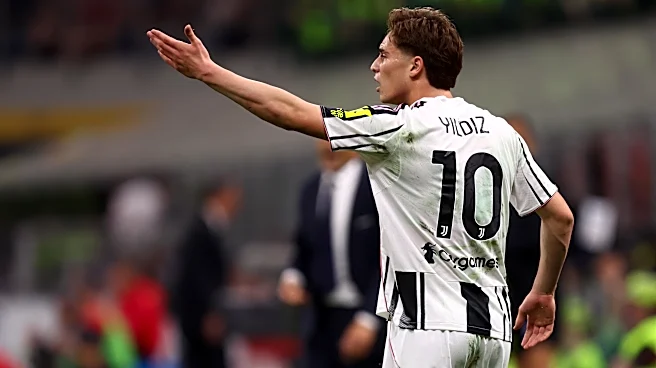
Kenan Yildiz took another step in his development this year. He was the team’s top scorer, potting 11 goals and adding in nine assists in all competitions. His dribbling skills and creative flair were on full display. The anticipation in a stadium when he had the ball was palpable.

Unfortunately, for most of the season he was pretty much the only creative player the team had, and other teams noticed. Opponents would routinely roll two defenders to him whenever the ball was close to him — and sometimes more. That Yildiz was often able to fight through this attention and continue to be productive was one of the most impressive parts of his season.
That production did tail off during the last two months or so of the season, but that coincided with a nagging knee injury that he played through for the entire stretch run. Even then, he still made a couple of moves every game that reminded you exactly who he was, hobbled or no.
Yildiz is the beacon this lost club has to follow to get back on the right track. Here’s to many more years and many more grades like this — and higher.
Edon Zhegrova — 4
Two seasons ago, Edon Zhegrova was giving Juventus fits in the Champions League when they visited Lille. That clearly left an impression on the front office, because Zhegrova was a target all summer before finally sealing his move late in the window.
Unfortunately, the player Juve was buying wasn’t close to the same one they’d just played against.
Zhegrova had gotten hurt not long after that meeting with Lille in 2024. It was a significant injury that cost him most of the rest of the season, and he was still working back to full fitness when he arrived in Turin. The problem was that that injury never seemed to fully go away, limiting Zhegrova’s match fitness to that of a constant sub. He averaged just under 20 minutes per appearance in his 19 Serie A appearances, all from the bench. In all competitions he only made one start, against Pafos in the Champions League, and was hooked after 45 minutes.

That wouldn’t be the absolute worst thing in the world if he’d done anything with what few minutes he had. But that didn’t happen. Zhegrova made literally zero contribution offensively this season. No goal contributions at all. It’s true that he was robbed a time or two by good goalkeeping, but for a player with Zhegrova’s ability, to draw a complete goose egg for the entire season is remarkable, and not in the good way.
Like the other summer arrivals in attack, Zhegrova’s future is very uncertain, and it remains to be seen whether he’ll ever play in a Juve shirt again — and how long he’ll be out on the field if he does.
The Rest
There are two players who we’ve qualified as forwards who didn’t make it over the line in terms of matches played. Nico Gonzalez had a pair of substitute appearances in August before he sealed his loan to Atletico Madrid, totaling 17 minutes. Arkadiusz Milik, whose pre-Euro 2024 knee injury continued to astound in terms of just how thoroughly it torpedoed his ability to play, finally managed to show proof of life and get onto the field in late March. His season debut, an 11-minute cameo against Sassuolo, very nearly produced one of the moments of the year when his 90th-minute header was met with an excellent save by Arijanet Muric, keeping the game at 1-1 after Manuel Locatelli had missed a penalty three minutes earlier. Alas, he managed just one more sub appearance before returning to the treatment table for the rest of the year.