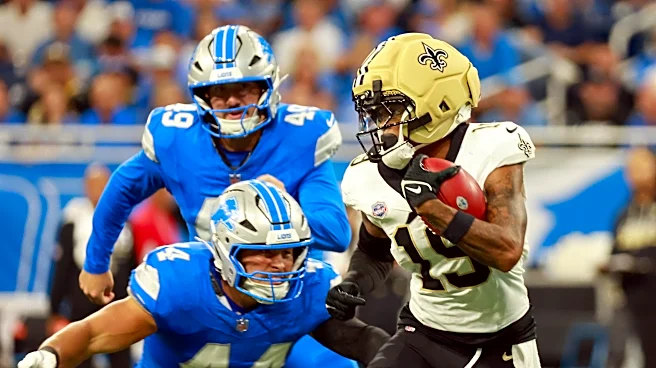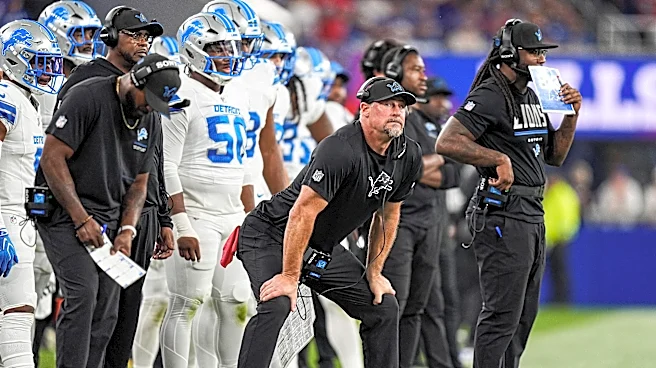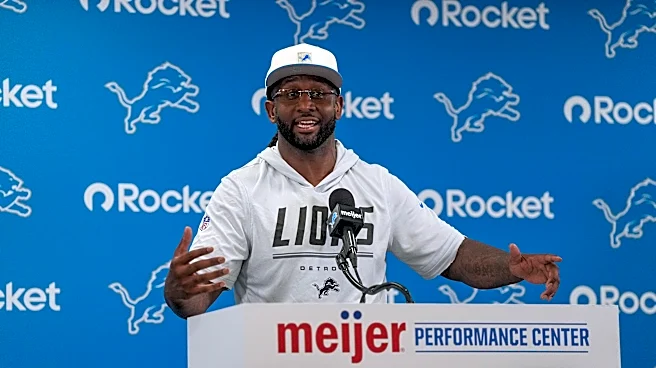



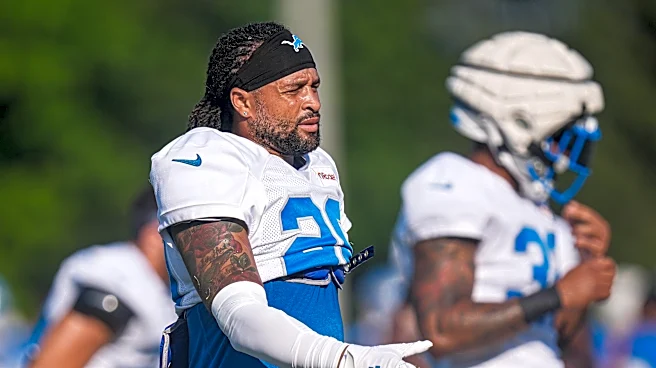
On Thursday, the Detroit Lions coordinators met with the media for their weekly press conferences. It was a highly-anticipated day, particularly for defensive coordinator Kelvin Sheppard, who has come under plenty of fire after Detroit’s defense has allowed 71 points through two games.
Here are my six takeaways from Thursday’s media sessions, two from each coach.
Offensive coordinator Drew Petzing
Slow starts, game scripts
The Lions have started each of their two games offensively with three-and-outs. It didn’t hurt them much against
the Saints, but it was part of the reason Detroit fell into a quick 21-0 hole against the Bills.
Petzing addressed the slow starts on Thursday.
“I think you lock in on the plan, some of the first steps that come up in the game,” Petzing said of early-game solutions. “Making sure you feel real confident in what your job is, what we’re expecting on defense. Playing free, playing fast, I think is part of it. Getting the nerves out of the way pre-game so you can play loose. And calling the right plays at the right time.”
Petzing said he does start games with a specific script, but wouldn’t say whether he needs to go back and adjust his strategy with those scripts moving forward.
“Any time we don’t score a touchdown, I think you’re always going to second guess, ‘Oh, could I have done this? Should I have done that?’” Petzing said. “And I think it’s a balance because I think there are times where you look back at it and say, ‘Hey, I really liked what we called, and we didn’t have the execution I wanted, or something came up a little different.’ And then there’re other times you look at it and say, ‘I’m not sure that was the best call and maybe we needed to tweak that. Maybe I need to change my mindset here a little bit.’”
Second-and-10 runs
One minor complaint I had about Petzing and Detroit’s offense in the Bills game was the seemingly overreliance on rushing plays on second-and-10. It felt like Buffalo picked up on that tendency, and it resulted in a lot of negative plays late in the game when Detroit was attempting a comeback.
Petzing defended those decisions, noting that getting into a third-and-manageable is very important in this league. And if the Lions just leaned into passing plays, they could end up facing third-down looks from the defense, which means increased pressure looks.
Additionally, he made the point that in Detroit, they often operate like a four-down offense, so they often treat second down like first down.
Defensive coordinator Kelvin Sheppard
Done with the omitting explosives game
Last year, Sheppard came under heat for asomewhat ridiculous assertion that Detroit played good run defense against the Los Angeles Rams when they allowed 159 yards on 29 carries. He argued that if you just took away three explosive runs, they played fine.
Sheppard is changing his tune this year. Last year, the explosive plays were the problem, and that’s already reared its ugly head again this year. By the Lions’ measures, they’ve given up 23 explosive plays thus far through two games, and 75 percent of those were “self-induced.” But because it’s been such a consistent problem, they aren’t dismissing them. They’re hell-bent on fixing them.
“I know before, guys, I stood up here and I said, ‘Alright, we played three quarters good, but in the fourth quarter you take that play out.’ Well, we’re no longer doing that this year because taking those plays out is the exact plays that’s been a demise to our defense,” Sheppard said. “And when I say that, coming out of half, I believe we had 77 pass yards total. And then the scramble play to a live aid that I think netted 40-something yards, kind of broke the dam. And led to them finishing with I think around 400 yards passing or something like that.”
Sheppard said they looked at all 23 explosive plays, and had the players diagnose what—and why—things went wrong.
“Tell me what you’re doing. Tell me what you’re supposed to be doing. Coaches, don’t say a word. Let’s let them talk because right now guys, there’s a gap. There’s a clear gap from meetings and practice.”
But Sheppard took plenty of ownership, too.
“We’ve got to do something different guys than we’ve been doing to make sure this gap is closed from meetings and practice to game day, Sheppard.” And I think that was one of the most transparent (meetings). There was a lot of honesty said out loud in that meeting, player to player, player to coach, coach to player. And we hashed out some things.“
Getting Christian Izien up to speed
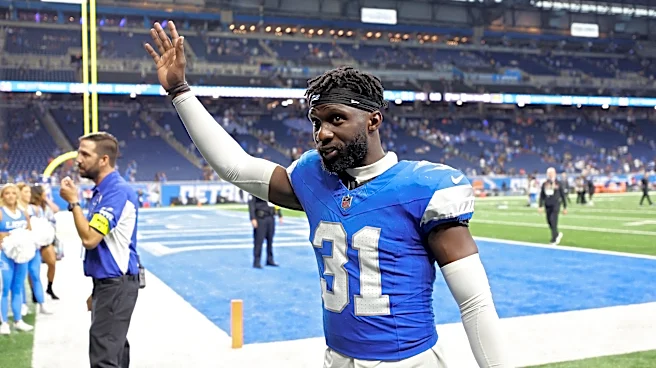
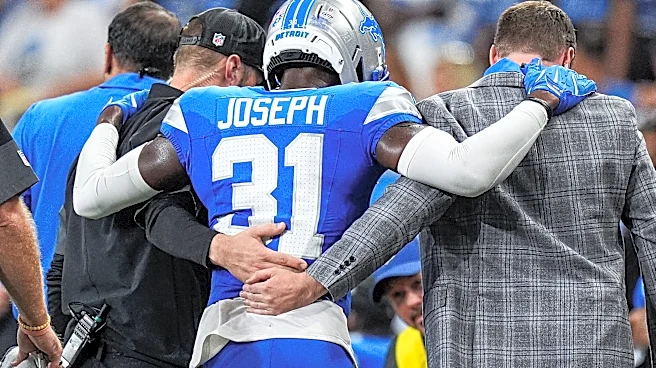
Communication is paramount to the Lions’ defense and that often starts with the Lions’ safeties. Unfortunately for Detroit, they look to be extremely shorthanded this week. Not only are Kerby Joseph and Brian Branch still on the Physically Unable to Perform list, but Avonte Maddox is out for the season with a foot injury, and Thomas Harper is currently sidelined with an ankle injury. That leaves Chuck Clark likely to be paired with Christian Izien, who has mostly been playing at nickel since training camp.
When it became apparent that may be the reality the Lions were facing, Sheppard wasted no time in getting Izien up to speed. Starting Saturday, safeties coach Jim O’Neil started working with Izien to make sure they don’t take a step back on the backend.
“It’s been the sole focus since I would say Saturday when we knew that was a reality and he’s been in here non-stop,” Sheppard said. “I told JO [Jim O’Neil] the other night, ‘Man, you still in there coaching?’ I mean, it’s just a revolving door in JO’s office right there.”
Sheppard insists they won’t have to scale back their defense to accomodate for Izien, despite his relative inexperience at the position. Instead, he feels it’s his job to work with Izien to identify what he’s comfortable doing, and make sure the play calls are geared toward his strengths.
“You got a new guy up here safety. ‘Izzy, come here. What calls do you like on this sheet? Tell me why. Don’t just tell me, ‘because,’ tell me why you like them,’” Sheppard said. “And that’s when you start to gain that level of understanding with the player. And then as the play caller, let’s put him in this position. ‘Here’s why, because you told me. You got me?’ All good. And that’s when we move forward.”
Special teams coordinator Dave Fipp
Hogan Hatten is fine, so stop calling
Lions long snapper Hogan Hatten popped up on the injury report with a wrist injury on Wednesday. And despite him being listed as a full participant, Fipp said agents of seven different long snappers reached out to him Wednesday night. But he had to tell them all they weren’t interested.
Obviously, the wrist is an important job for the long snapper, but Fipp assured everyone that there is no concern with Hatten or his snapping abilities right now.
“He snapped fine yesterday and he’ll play in the game. He looks good to me,” Fipp said.
Line drive kick still a work in progress
With the new kickoff format, there is no better weapon than a kick that hits the ground within the landing zone (between the 20-yard line and the end zone). However, that type of kick is difficult, and Fipp noted how everyone around the league is still trying to get consistent at it, including Lions kicker Jake Bates.
In the season opener, Bates tried that kick, only to land it about 12-yards short of the landing one, resulting in the Saints taking over at the 40-yard line.
“Obviously it can be a tremendous weapon, obviously, if you can execute it 100% of the time,” Fipp said. “The challenge with it is everybody has some challenge with it. The teams that put the ball on the ground have also for the most part come short with the landing zone. And that’s a tough penalty because the ball goes to 40 and on average.”
One interesting downside of practicing these kicks is Fipp believes it’s impacting the trajectory of field goals.
“I do think you’re starting to see some of that bleed into these field goals too. There’s been more low field goals across the league or mishit balls where these guys are hitting a little bit higher on the ball on these field goals and they’re missing,” Fipp said.