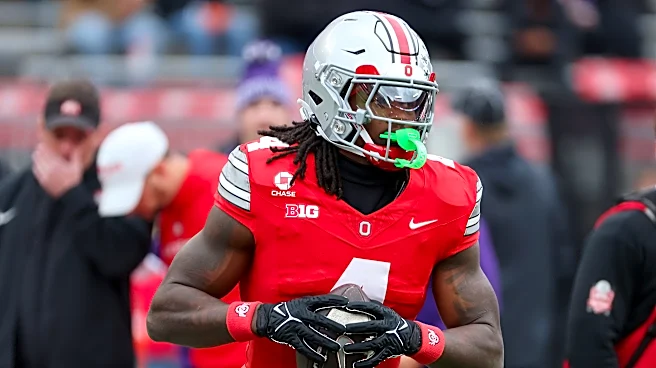

The easy pick this week would be Jeremiah Smith against Northwestern’s secondary. He caught 11 passes for 117 yards and a touchdown, and on a 22-yard catch in the fourth quarter he officially passed John Standeford to become the Big Ten’s all-time leader in career receiving yards.
For me, the matchup that actually decided Ohio State’s 28-19 win over Northwestern was on the other side of the ball.
After two weeks of getting pushed around, Ohio State’s front seven finally looked like itself again, and
Northwestern’s run game never had a chance.

Northwestern couldn’t run
Northwestern finished the day with 53 rushing yards on 29 carries, just 1.8 yards per attempt.
Their leading rusher, Caleb Komolafe, had only 54 yards. This was the same offense that ran for 188 yards against Penn State earlier this season and came into Columbus with Chip Kelly calling plays.
Ohio State took that away from the start.
Northwestern’s opening drive went 13 plays for 46 yards and ended in a field goal, and that was about as good as things got on the ground. With Aidan Chiles out and Nicco Marchiol at quarterback, Northwestern needed their run game to take pressure off a backup.
Ohio State’s front made sure that didn’t happen.
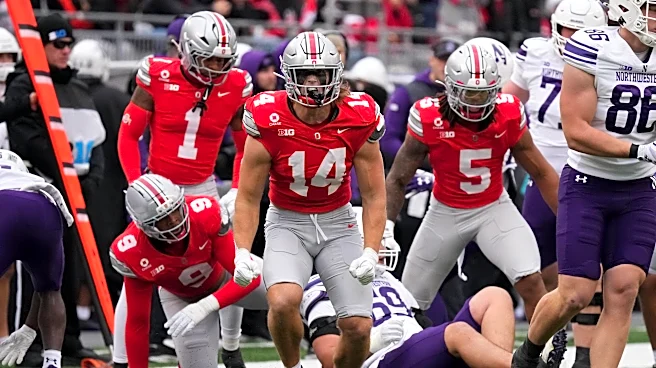
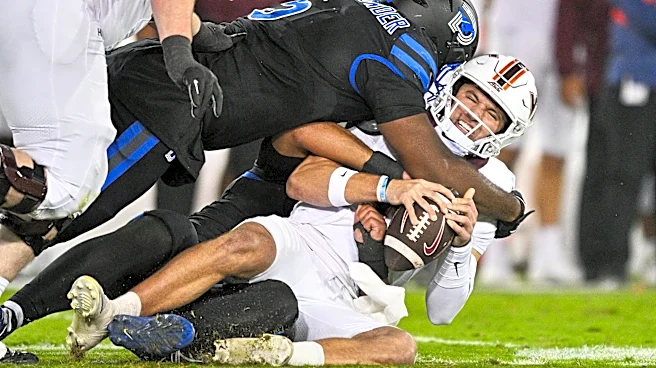
The defensive line was the reason why. Ohio State’s front accounted for 27 yards in losses on its own, and the Buckeyes finished with five tackles for loss.
Northwestern’s running backs were getting hit at or behind the line of scrimmage over and over again, and Marchiol’s 2-yard touchdown run in the third quarter was one of the few times the Wildcats got anything going on the ground near the end zone.
One-dimensional, and the pass rush finally showed up
Once Northwestern couldn’t run, they became a one-dimensional team, and that’s where the Buckeyes’ pass rush finally showed up.
Ohio State recorded a season-high five sacks for 25 yards. Kenyatta Jackson Jr. led the way with two sacks and six tackles, the kind of performance I’ve been saying all season this defense needs from him.
When a team is forced into obvious passing situations, defensive linemen can pin their ears back and get after the quarterback. That’s exactly what happened Saturday.
Marchiol threw for 225 yards, but much of that came with Northwestern trying to catch up, and the Buckeyes made him work for every yard. Ohio State also broke up seven of his passes. After two weeks of giving up huge plays, this defense kept things in front of them and got off the field.
It wasn’t perfect. Northwestern scored a touchdown on their first drive of the third quarter to cut the lead to 14-13, and their final touchdown came as time expired after an Ohio State fumble.
For most of the afternoon, the Wildcats couldn’t sustain anything, and Ohio State’s offense never trailed.

The blueprint for the final two games
This is the version of Ohio State’s defense the Buckeyes need for the rest of the season.
The losses to USC and Oregon followed the same pattern. USC’s running backs averaged five yards a carry, Dierre Hill Jr. ran through missed tackles for a 48-yard touchdown, and neither opponent ever felt pressure in the pocket.
Against Northwestern, the front stopped the run first, then made the opponent one-dimensional and let the pass rush finish the job.
That formula matters even more over the next two weeks. Nebraska and Michigan both want to run the football, and Ohio State’s ability to stop it will decide whether this team can close the season with three straight wins.
The offense did its part too.
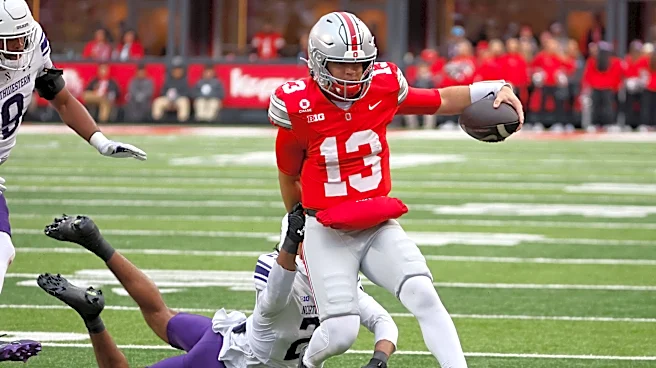
Bo Jackson ran for 114 yards and a touchdown, Luke Fahey kept getting the ball to Smith, and Smith became the Big Ten’s all-time leader in receiving yards. He now has 3,875 career yards, and his 42 receiving touchdowns are the most by an FBS receiver through his junior season.
Ohio State won this game because their front seven controlled the line of scrimmage. If they can do that in Lincoln and against Michigan, this season still has a chance to end on a high note.