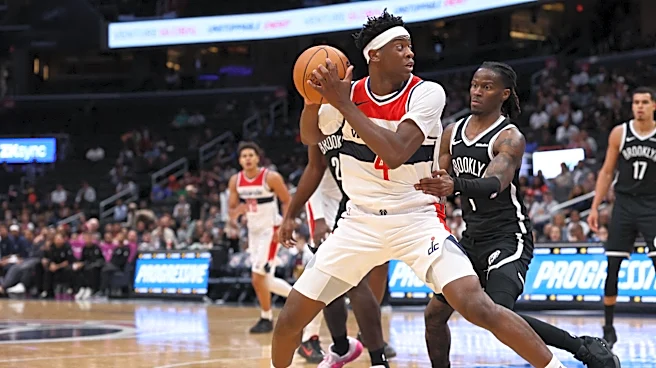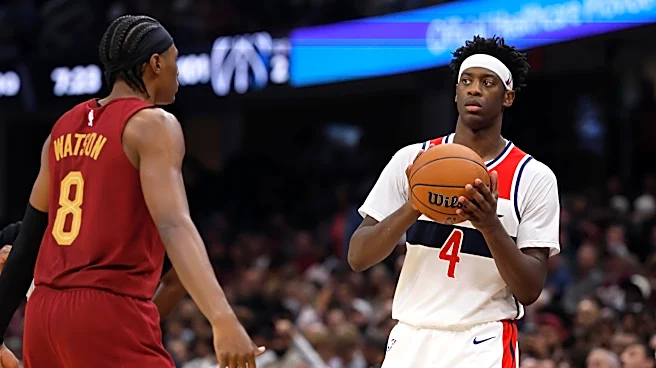



For the first time this season, the Washington Wizards are below .500. At halftime, it looked like the Wizards were ready to cruise home with their third win in five games. They scored 42 points in a first quarter scoring binge, and 69 at the midway point — including posting a 50-12 advantage in the paint, and a 10-point lead.
They managed just 42 points the rest of the way, and lost to the Cleveland Cavaliers, 121-111.
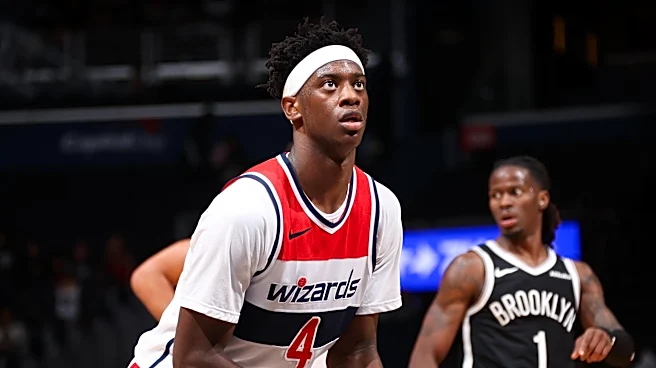
Back from a preseason ankle injury, Wizards rookie AJ Dybantsa made his career
debut, scoring 19 points on 12 shots in 27 minutes.

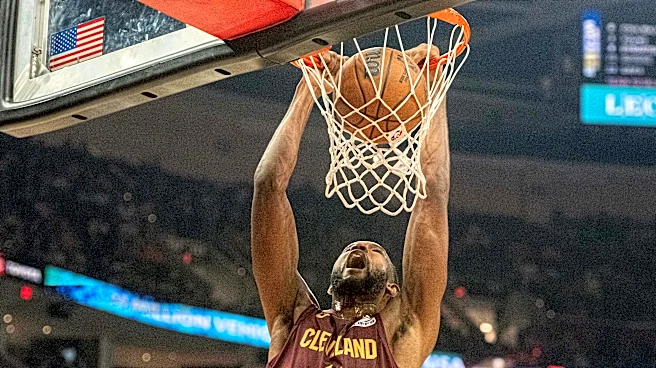
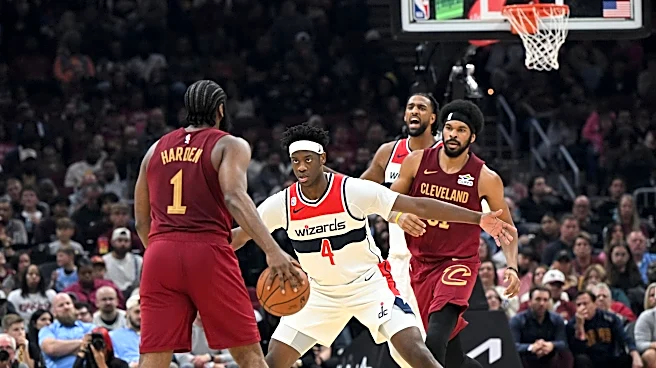
Washington ran a play for Dybantsa on the game’s opening possession. He started in the corner, and popped to the top off screens by Trae Young and Anthony Davis. Young then came up from the corner to set a ghost screen on James Harden. Harden and Watson appeared to miscommunicate — Harden expected a switch while Watson stayed with Young — and Dybantsa attacked the opening with an elite burst. And then tried to dunk on Evan Mobley and Jarrett Allen. Allen got whistled for the foul, and Dybantsa’s first points as a pro came from the free throw line.
Dybanta’s first NBA assist came a few minutes later. He drove and got all the way to the rim, which occupied three defenders — his own man, and two help bigs. He made the kickout to Alex Sarr, who knocked down the corner three.
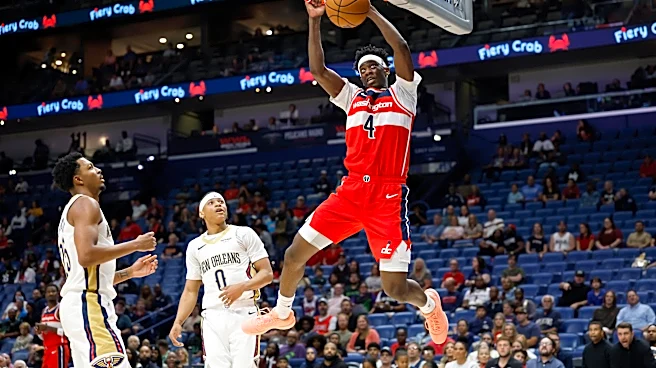
Okay, one more fanboy rave. At 8:56 of the first quarter, Dybantsa outran the entire Cleveland roster to the offensive end, and Young threw him a lob from the half court line for a highlight reel slam. You’ll see that one in Wizards highlights the rest of the season.
Unfortunately, the good feels of the first half dissolved as the more talented, experienced, and battle-tested Cavaliers asserted their will. It didn’t help that Washington’s veteran leaders were struggling as much as anyone. Ideally, Young and Davis will make plays when the youngsters are rattled or overwhelmed. In this one, they seemed mostly overwhelmed, as well.
From the Notebook
- In the early going at least, Washington’s length was bothering the Cavaliers. Cleveland bigs kept trying to make internal passes rather than going up for shots, only for long-limbed Washington defenders to deflect the ball and force turnovers. This was not something that held up for the full 48 minutes.
- In the first quarter, I liked one defensive sequence. Cleveland ran a pick-and-roll for Harden, who seemed primed to attack the Wizards big. Dybantsa freed himself from the screen and sprinted back onto Harden, which allowed Davis to drop back to his man. Harden ended up missing a turnaround fadeaway over a Dybantsa contest.
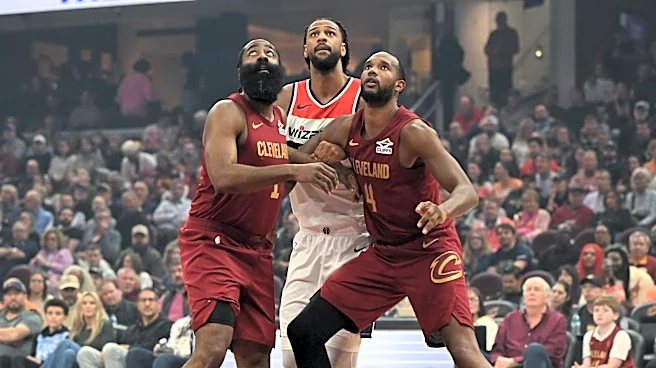
- I mentioned the Wizards outscored Cleveland 50-12 in the paint during the first half. In the second half, the Cavaliers turned the tables, outscoring Washington 34-16 inside.
- At one point in the first half, I noted that Washington’s offensive looked better. Over multiple possessions, they flowed from action to action — pick-and-roll on one side, moving the ball to the weakside where there’d been a down screen simultaneous to the primary action, which then led to another pick and roll with a down screen on the first side and a baseline cut. The better process didn’t hold up, but better — even for a stretch — is better.
- Harden is an atrocious defender. Prime example: the Wizards got a Dybantsa lob dunk on a sideline out of bounds play. I thought maybe it had been a clever play design (Brian Keefe and the coaching staff has a number of them), so I rewound the action. And…Dybantsa got free on a half-assed back pick because Harden just wasn’t paying attention.
- Brad Daugherty in the Cleveland broadcast booth is a treat. He pairs good analysis and insight with a voice that sounds like a cross between WWE and NASCAR. With John Michael on play-by-play, the Cleveland production sounds like a 1980s broadcast of an Atlantic Coast Conference game.
- If Young has the ball and a teammate comes open, he will make the pass.
- Defensive highlight of the game came around 1:17 of the third quarter when Bilal Coulibaly levitated for a sensational block at the rim in transition. Wow athleticism.
- Among the defensive lowlights was Deandre Ayton’s pick-and-roll defense early in the fourth quarter. He backpedaled, got his feet tangled, and gave up a lob dunk he should have been able to contest.
- I’m not quite sure
Four Factors
Below are the four factors that decide wins and losses in basketball — shooting (efg), rebounding (offensive rebounds), ball handling (turnovers), fouling (free throws made).
The four factors are measured by:
- eFG% (effective field goal percentage, which accounts for the three-point shot)
- OREB% (offensive rebound percentage)
- TOV% (turnover percentage — turnovers divided by possessions)
- FTM/FGA (free throws made divided by field goal attempts)
Stats & Metrics
PPA is my overall production metric, which credits players for things they do that help a team win (scoring, rebounding, playmaking, defending) and dings them for things that hurt (missed shots, turnovers, bad defense, fouls).
PPA is a per possession metric designed for larger data sets. In small sample sizes, the numbers can get weird. In PPA, 100 is average, higher is better and replacement level is 45. For a single game, replacement level isn’t much use, and I reiterate the caution about small samples sometimes producing weird results.
POSS is the number of possessions each player was on the floor in this game.
ORTG = offensive rating, which is points produced per individual possessions x 100. League average so far this season is listed in the Four Factors table above. Points produced is not the same as points scored. It includes the value of assists and offensive rebounds, as well as sharing credit when receiving an assist.
USG = offensive usage rate. Average is 20%. Median last season was 17.7%.
ORTG and USG are versions of stats created by former Wizards assistant coach Dean Oliver and modified by me. ORTG is an efficiency measure that accounts for the value of shooting, offensive rebounds, assists and turnovers. USG includes shooting from the floor and free throw line, offensive rebounds, assists and turnovers.
+PTS = “Plus Points” is a measure of the points gained or lost by each player based on their efficiency in this game compared to league average efficiency on the same number of possessions. A player with an offensive rating (points produced per possession x 100) of 100 who uses 20 possessions would produce 20 points. If the league average efficiency is 115, the league — on average — would produced 23.0 points in the same 20 possessions. So, the player in this hypothetical would have a +PTS score of -3.0.
Players are sorted by total production in the game.