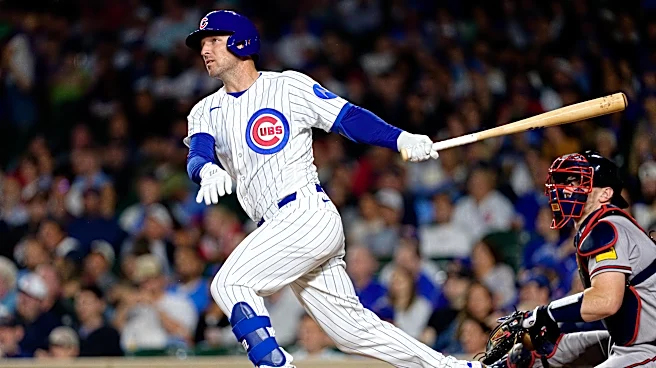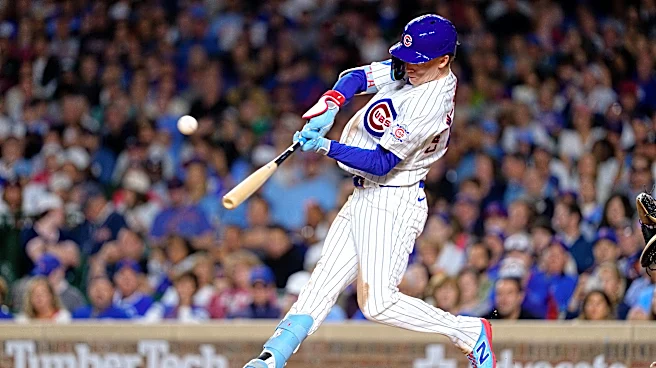



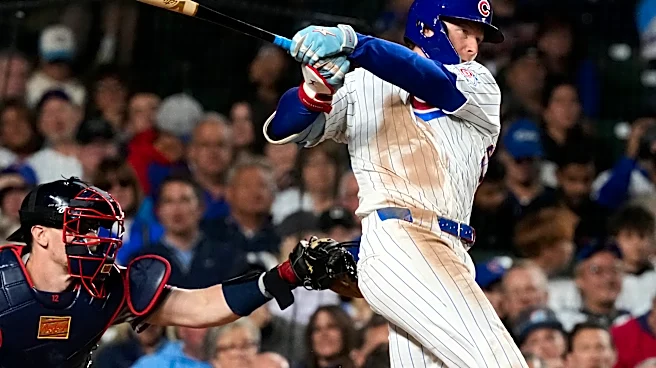
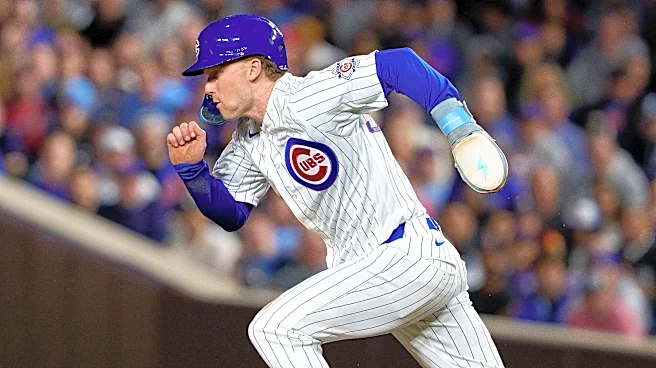
Cubs center fielder Pete Crow-Armstrong is having an historic season. Through Wednesday, 153 games, he is batting .282 /.375/.581 with 115 runs scored, 44 home runs and 37 stolen bases. The slugging percentage and .956 OPS lead the National League.
However, based on this Bluesky post, PCA might have done even better:
Okay, that’s something of what might be called a “freak show stat,” because as Mike Petriello points out, baseball is a very different sport than it was during DiMaggio’s time, which is now between 75 and 90 years ago. That’s a really long time and we should expect sports to evolve over time.
There’s one truth not stated in that post, though, and that’s the reason PCA has faced so many different pitchers. That’s from 10 days ago, and the Cubs haven’t played any teams in those 10 days that they hadn’t faced earlier this yer, so that number isn’t likely to have increased much. The only team they’ll face going forward that they haven’t seen is the Red Sox, who they’ll play for the final three games of the 2026 regular season.
The truth is this: The balanced schedule.
Before the balanced schedule took effect in 2023, MLB teams played a schedule mostly in their own league. They’d play their “rival” twice, then three games each against one division in the other league. It amounted to 20 interleague games, and playing 20 of the other 29 teams.
Now, with the balanced schedule, every team plays all 29 other teams and there are 48 interleague contests per team. What that means, of course, is that teams are playing nine clubs that they didn’t used to see, and fewer games against divisional opponents, down from 19 to 13.
This, obviously, means that players would see many more different pitchers. In 2022, 523 different men pitched for MLB teams. Now, this includes position players pitching, though that was done far less even that recently — only 30 different position players that year, compared to the ridiculous number of 11o this year. We can’t really take an “average” per team because some of these pitchers pitched for multiple teams.
You ready for this? There have been 856 different players throwing at least one pitch for an MLB team this year. Even if you take out the position players for both years, that’s still a 48 percent increase.
And that’s my point here. Hitters are just seeing far more pitchers now than they did with the unbalanced schedule. Combine that with the fact that even over just four years, the number of pitchers who can throw 98 miles per hour has also increased, and I think that likely results in a drop in batting average and offense.
Now, the Cubs have bucked that trend, a bit, by having what could be an historically great offensive season. Good on them, but if MLB went back to the unbalanced schedule, I think that would help boost offensive production. The unbalanced schedule is a good idea for a number of reasons; this is just one more, and I think that MLB and the MLB Players Association should consider reverting to the unbalanced schedule for the next CBA. It would be good for the sport, in my view.
What do you think?