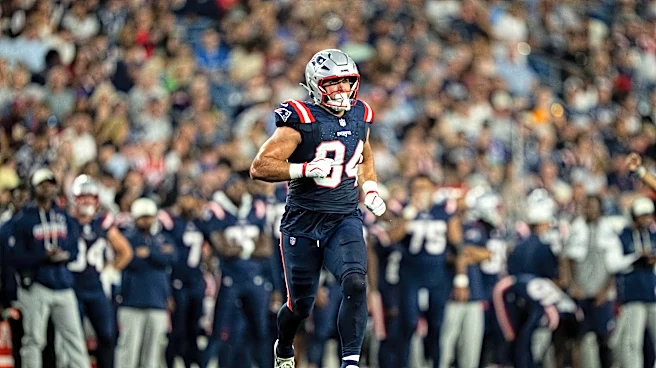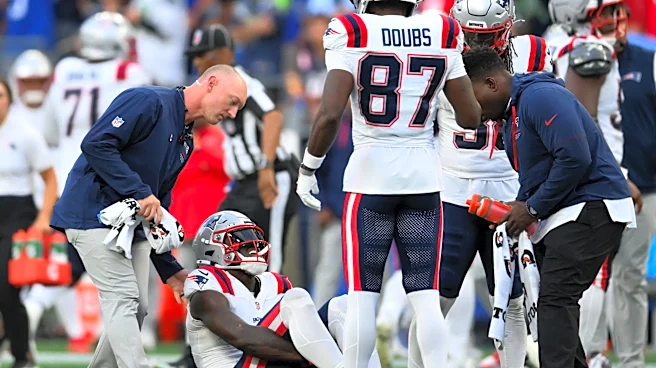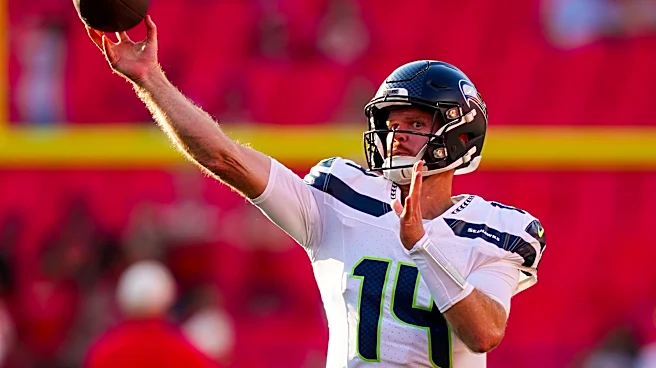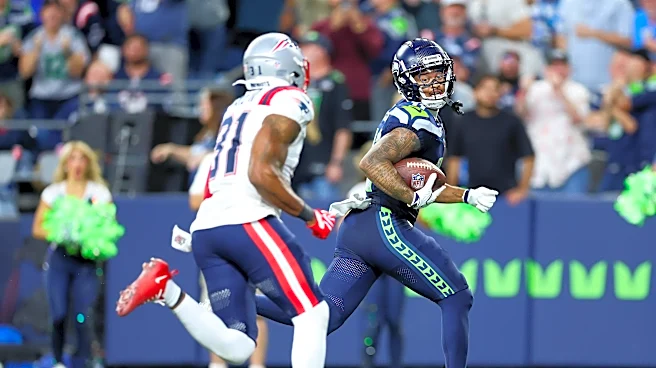


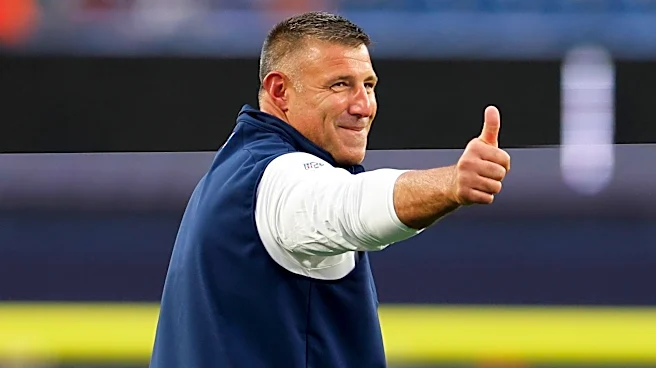
Ahead of his first training camp as Patriots head coach in 2025, Mike Vrabel explained that he was judging his team’s performances by three distinct categories: the good, the bad, and the s—t that gets you beat. If Vrabel looks at his team through those specific categorizations, we shall follow his lead.
To New England Patriots losing their season opener was not entirely unexpected; as far back as the NFL schedule release in May, we already pegged their Week 1 game in Seattle as a potential loss.
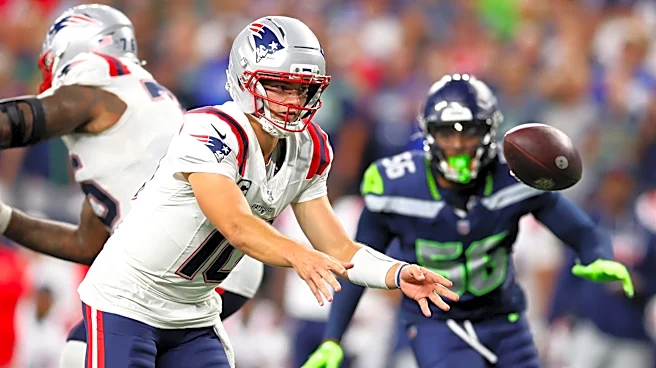
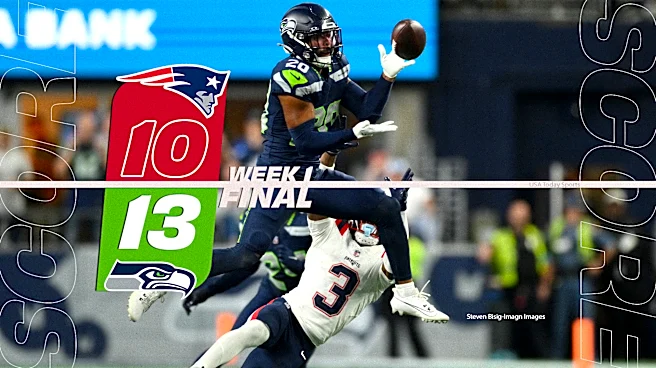
The issue was not that the Patriots lost to the Seahawks for a second time in seven months, it’s how they lost: after taking a 10-0 lead, to a backup quarterback, with their own MVP runner-up effectively throwing the game away.
With that all being said, let’s dive into our weekly breakdown of the good and the not-so-good from the 13-10 defeat on Wednesday night.
The good: Christian Gonzalez
Even though the end result was most definitely underwhelming, the Patriots saw a few positive contributions against the Seahawks. Will Campbell showed some positive strides, as did Gabe Jacas; Mack Hollins stepped up after A.J. Brown’s reported high-ankle sprain; Andy Borregales hit his lone field goal from 50 yards out.
Ultimately, though, none of them had the same level of consistency as Christian Gonzalez. Fresh off signing a four-year, $135 million contract extension, the highest-paid cornerback in NFL history looked the part: with the exception of a dropped interception in the second quarter and slightly tipping his hand on a corner blitz on the Seahawks’ long 4th-and-1 touchdown, he was near-flawless. On five targets, he gave up one 4-yard catch (to tight end A.J. Barner) and had two pass breakups.
He also locked down NFL Offensive Player of the Year Jaxon Smith-Njigba whenever lined up across from him.
According to NFL Next Gen Stats, Gonzalez and Smith-Njigba faced each other on 10 total snaps with both of the passes thrown their way ending up incomplete. For comparison, JSN was targeted on nine of 18 routes against all other Patriots defenders.
The bad: Coaching decisions
Speaking of Christian Gonzalez, his usage was curious. Despite showing himself up to the task of taking on the Seahawks’ most dangerous player, he only did so on 10 occasions throughout the game, including on seven man coverage snaps. All eight of Smith-Njigba’s catches for 122 yards and a touchdown, meanwhile, came against zone. He faced man coverage on only nine of his routes for a rate of 32.1% — a number that was 70% versus Gonzalez and only 11% against every other defender.
Ultimately, the Patriots only gave up 13 points which in a vacuum is a solid defensive outing. That said, one has to wonder how a different plan for Gonzalez and the rest of the secondary would have impacted that number.
That coaching decision was not the only head-scratcher. On offense, coordinator Josh McDaniels’ insistence on running the ball on early downs repeatedly created unfavorable downs and distances. Obviously, three interceptions on the last three drives distort the picture but even before those issues began the Patriots had only scored on two of their six possessions. The game plan seemingly meant to keep Drake Maye out of pressure situations did not exactly create plenty of scoring opportunities either.
The s—t that gets you beat: Drake Maye’s decision making
“We’re trying to be aggressive and obviously win the football game, but not reckless,” said Vrabel during his post-game press conference when asked about the Drake Maye interception that ended the Patriots’ hopes for a comeback late in the fourth quarter.
That recklessness was what ultimately doomed the team on Wednesday night. Yes, it didn’t help that the defense gave up that long touchdown or allowed Drew Lock to complete 72.7% of his passes, but at the end of the day, the Patriots were let down by their most important player. He knows it, too.
“We had the game under control. I thought we had a good plan to try to start chipping away and be patient; I lost patience, and it cost us,” Maye said. “[They were] decisions that cost us the game on my part. I’ve asked myself to be better and realize it’s a long season, but at the same time, can’t have those.”
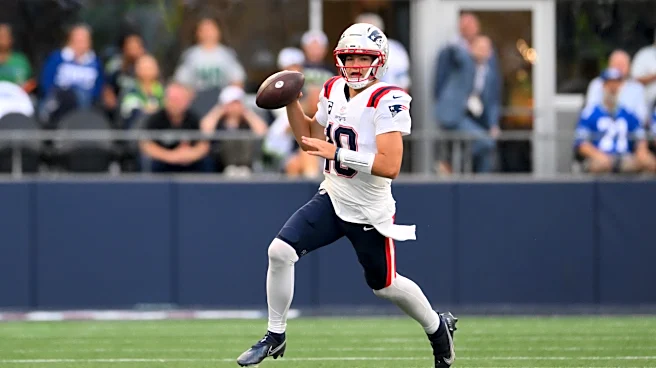
Entering the fourth quarter, Maye had completed 17 of 22 passes for 127 yards and a touchdown. His 5.8 yards per attempt was low, but purposeful: the Patriots did not want to run long-developing pass plays against a pass rush capable of giving them all sorts of fits. And while the results especially coupled with the aforementioned early-down runs were not always pretty, they did allow the team to take control of the game and enter the final period with a 10-3 lead.
Then, the wheels came off. An unnecessary deep shot intended for Romeo Doubs into disciplined coverage, followed by too much aggressiveness on a third-and-long, followed by a head-scratching lack of situational awareness while in field goal range.
Three passes, three picks. That’s all it took to turn what had been a quite solid performance into one of the worst of Maye’s career, and to lose the Patriots the game.