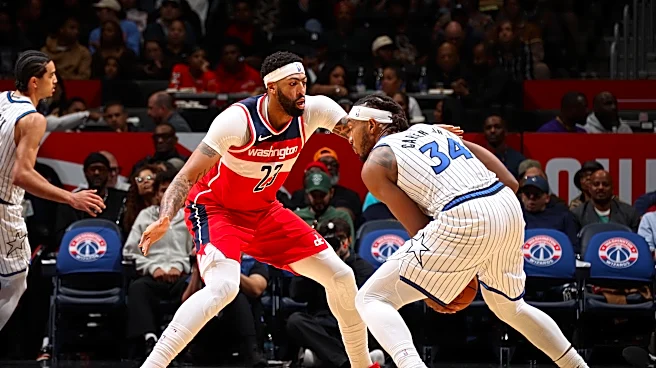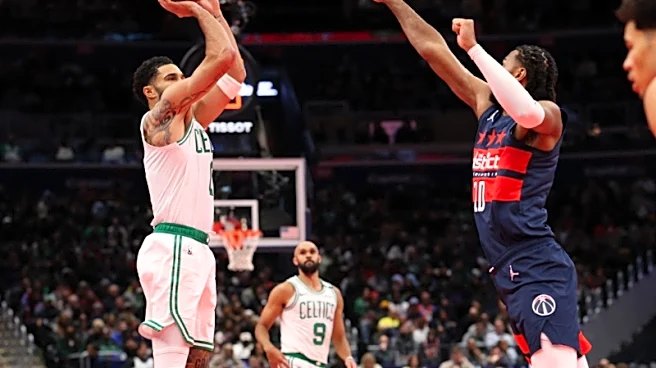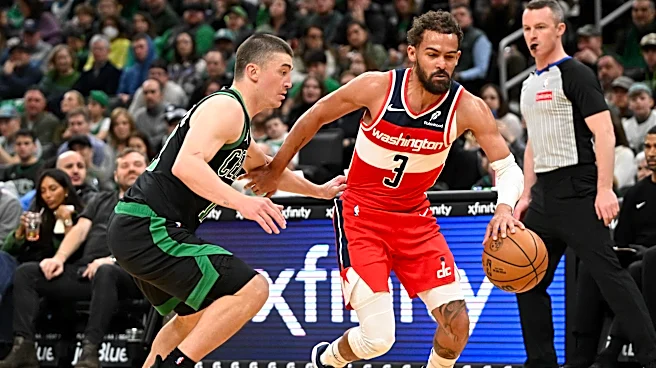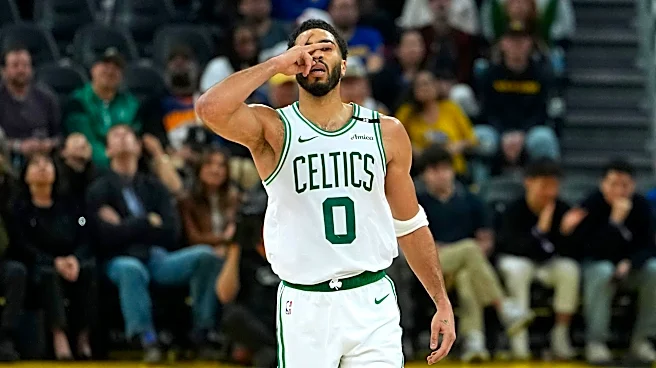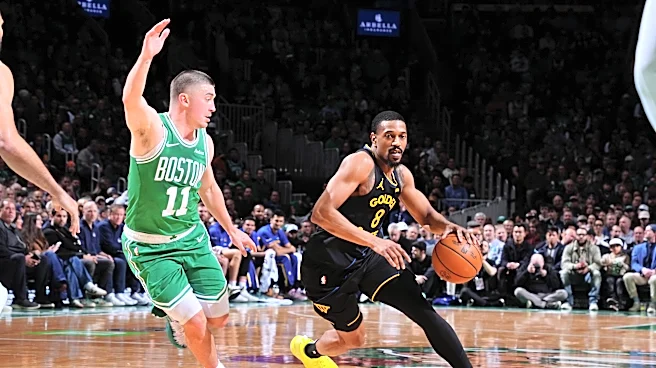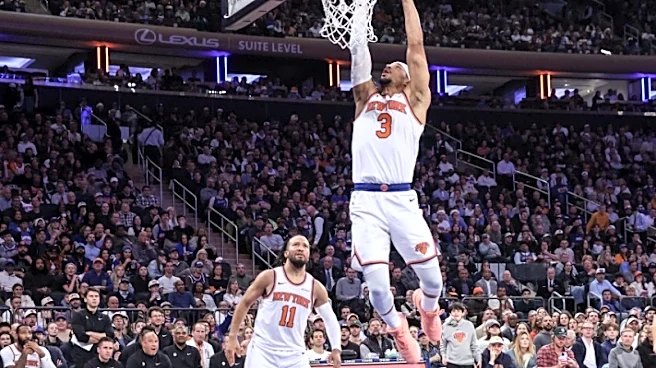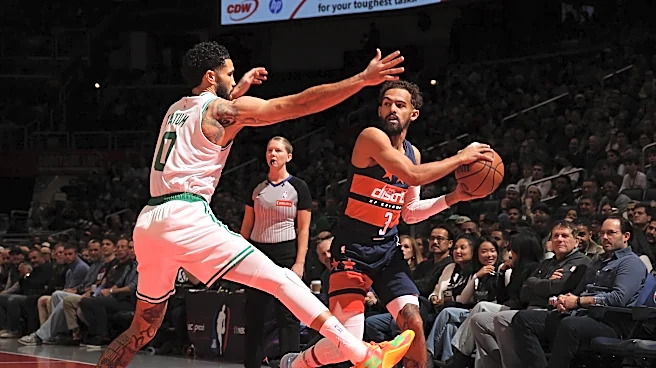

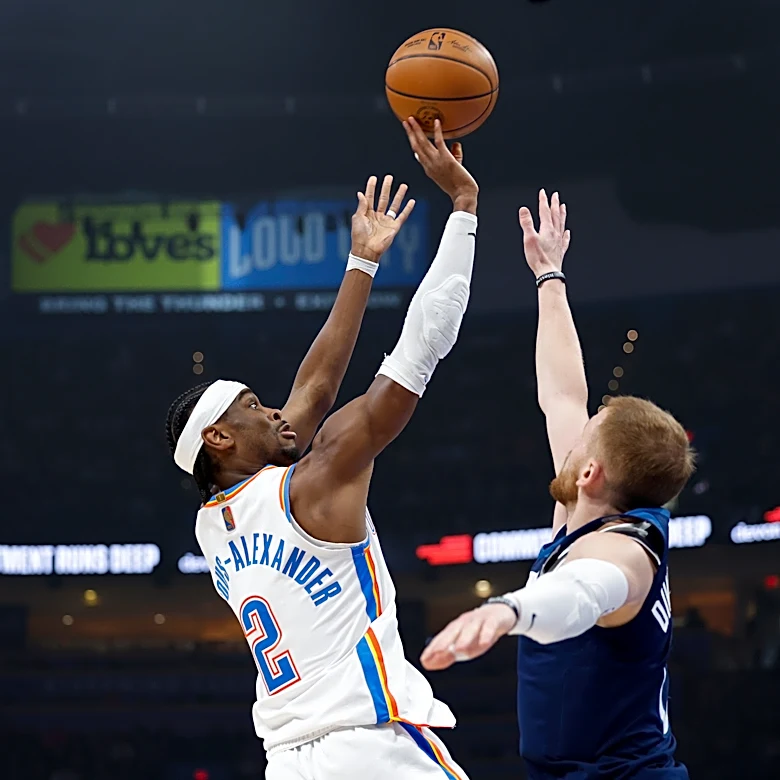

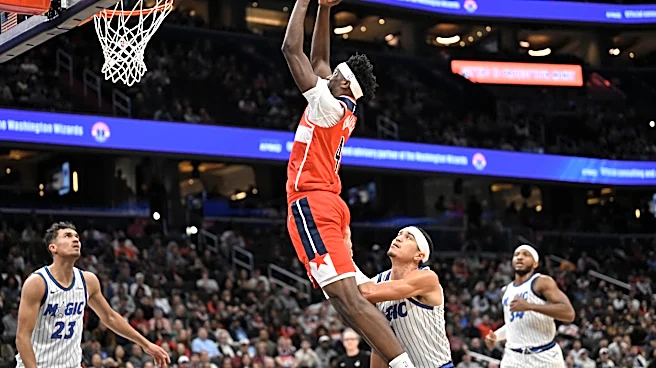
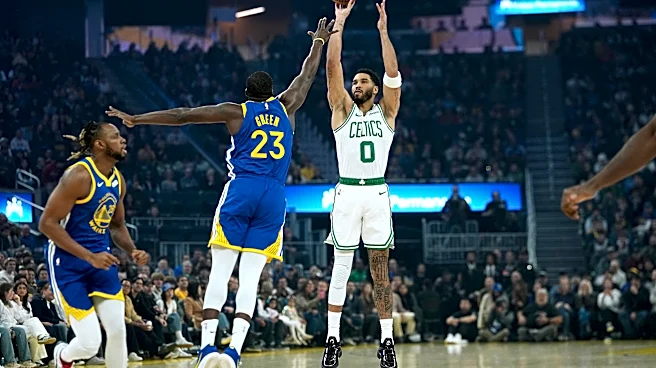
At halftime, I got started on an article about the Wizards based on a question from a friend. Because who wanted to read about the Wizards getting demolished? Again. I didn’t want to write about another blowout. But, I decided to give it a few minutes into the second half before focusing on the other topic, and voila — the Wizards rallied.
The first half was putrid. The Wizards’ offensive rating (points per possession x 100) was a woeful 93. Their defensive rating was a disgraceful 154. The Celtics
hit 15-26 from three, good for 57.7%. Washington trailed, 80-49. Those 80 points were the most Boston has scored in a half this season. Folks, when the Celtics lost to the Golden State Warriors on Sunday, they scored 87 points total. This was a butt-kicking.

In the second half, the script flipped. Washington’s offnesive rating was a superb 137. Their defensive rating was an excellent 104. And they whittled Boston’s lead to as little as five with just over three minutes to play.
Alas, they couldn’t close the deal, Boston hit some shots late, and the final margin ballooned back to 15.
Now, no one should get too chesty about the second half defense. Washington’s overall effort seemed stronger, but Boston still got open looks. A lot of the better result was a matter of Boston missing shots they hit in the first — 7-25 from three in the third and fourth quarters vs. 15-26 in the first two.
The bright side is that Washington played hard in the second half after getting paddled in the first. This is a franchise that has a long tradition of giving up when the going gets tough, and last night they didn’t.
From the Notebook
- I’m still not sure why Reggie Miller persists as a lead analyst in these games. He’s a likable character, and he sometimes makes good points about the game. He also says things that have…well…let’s call it a tenuous connection with reality. Last night, for example, he talked about how the Wizards should be better than they are (debatable, but that’s his opinion, so whatever) and went on to say, “…they should be competing for the play-in…” uttered in a tone that suggested they weren’t. Except, the Wizards entered the night ninth in the Eastern Conference, which means THEY’D BE IN THE PLAY-IN.
- The final possession of the first quarter is an illustration of why it’s so tough to give up on Trae Young. He drove against stout pressure from Boston’s Hugo Gonzalez, seemed to be going up for a floater, before spotting a cutting Kyshawn George, whereupon he looked a defender out of position and then tossed a perfect lob for a George dunk.
- Interesting to see Anthony Davis play the entire first quarter. Unfortunately, when he went to the bench, the game spiraled.
- About the nine-minute mark of the second quarter, there as a defensive possession sure to get some time at the team’s next film session. A whole mess of Wizards defenders got beat on a Paul George drive. Bilal Coulibaly spotted it from the weakside, teleported across the lane to help, and forced a George kickout pass to the weakside. Coulibaly looked back at his man (Peyton Pritchard) and was clearly startled to see that none of his teammates was even attempting a rotation. Coulibaly sprinted into a closeout, but Pritchard nailed the wide-open three.
- On that same play, Deandre Ayton got eliminated from the play by a Derrick White screen. I can’t remember the last time I saw a seven-footer show so little fight when getting screened. By no coincidence, Ayton did not make a second half appearance.
- Another second quarter defensive mishap — Ayton helped at the three-point line for reasons that were not entirely clear. For reasons that were even less clear, AJ Dybantsa sprinted up from the low block, cut between Ayton and a Celtics player, and contested a three-point attempt, which missed. That left the lane open for Luka Garza to stroll down the lane for the putback. Just to be clear, Ayton should not have been helping in that spot — at most, he should have hedged and recovered to Garza or the paint. Dybantsa should not have been closing out — he should have either stayed put on the block or rotated onto Garza.
- Tre Johnson: touch ball, shoot ball.
- 2:07 of the second quarter — Dybantsa had a highlight reel dunk. This kid!
- At about the two-minute mark, more infuriating defense. On this play, Tatum got a dunk off a basic backscreen that got him a step on Dybantsa. The problem: Young was unaware his man was screening, didn’t call out the screen, and then didn’t pick up Tatum. The result: Tatum jogged into a dunk.
- In the third quarter, there was more Young defensive cluelessness. Young’s man set an off-ball brush screen on George’s man. Young didn’t notice his man was screening, didn’t call it out, and didn’t switch. Another easy at-rim score. George looked bad, but that was on Young.
- At 8:41 of the third quarter, the Wizards tried zone. Sam Hauser walked up to the top of the circle from inside the paint. Davis had to follow because Hauser is a shooting threat. Meanwhile, Boston ran a pick-and-roll action up top, Neemias Queta rolled hard, which got him open because Dybantsa hesitated on the switch. Add in George rotating late from the strongside corner, and it was an easy at-rim finish for Queta.
- Late in the third quarter, Boston followed the NBA-wide plan and conceded three-point attempts to Coulibaly. Last night, Coulibaly hit two in a row. It’d be nice if that somehow continued.
- Earlier I gave an example of why it’s tough to give up on Young. Around the 10-minute mark of the fourth quarter, Young gave an example of why you might want to. It was a terrible possession that consisted mostly of Young dribblimg around making moves, completely unable to shake Baylor Scheierman. He finally jacked up a long stepback two, which he missed.
- With about 2:29 to play, Tatum was working on Khris Middleton, who was holding up in the post. Young stood in no-man’s land for a few seconds before weakly jumping in to double for no discernible reason — Tatum was moving away from the basket, Middleton was in good position, and the shot clock was running down. That left Scheierman wide open at the three-point line. Good shooter that he is, he hit the shot. This was an example of needlessly helping from one pass away.
- One last defensive blunder — with 1:16 remaining, Scheierman got another wide open three, which he made. Young was on him to start the possession. He seemed to think he was switching…onto Tatum…when Scheierman set a ghost screen. Dybantsa, who was on Tatum, seemed unaware of a switch (perhaps because there was no communication), and Scheierman got left alone.
Four Factors
Below are the four factors that decide wins and losses in basketball — shooting (efg), rebounding (offensive rebounds), ball handling (turnovers), fouling (free throws made).
The four factors are measured by:
- eFG% (effective field goal percentage, which accounts for the three-point shot)
- OREB% (offensive rebound percentage)
- TOV% (turnover percentage — turnovers divided by possessions)
- FTM/FGA (free throws made divided by field goal attempts)
Stats & Metrics
PPA is my overall production metric, which credits players for things they do that help a team win (scoring, rebounding, playmaking, defending) and dings them for things that hurt (missed shots, turnovers, bad defense, fouls).
PPA is a per possession metric designed for larger data sets. In small sample sizes, the numbers can get weird. In PPA, 100 is average, higher is better and replacement level is 45. For a single game, replacement level isn’t much use, and I reiterate the caution about small samples sometimes producing weird results.
POSS is the number of possessions each player was on the floor in this game.
ORTG = offensive rating, which is points produced per individual possessions x 100. League average so far this season is listed in the Four Factors table above. Points produced is not the same as points scored. It includes the value of assists and offensive rebounds, as well as sharing credit when receiving an assist.
USG = offensive usage rate. Average is 20%. Median last season was 17.7%.
ORTG and USG are versions of stats created by former Wizards assistant coach Dean Oliver and modified by me. ORTG is an efficiency measure that accounts for the value of shooting, offensive rebounds, assists and turnovers. USG includes shooting from the floor and free throw line, offensive rebounds, assists and turnovers.
+PTS = “Plus Points” is a measure of the points gained or lost by each player based on their efficiency in this game compared to league average efficiency on the same number of possessions. A player with an offensive rating (points produced per possession x 100) of 100 who uses 20 possessions would produce 20 points. If the league average efficiency is 115, the league — on average — would produced 23.0 points in the same 20 possessions. So, the player in this hypothetical would have a +PTS score of -3.0.
Players are sorted by total production in the game.