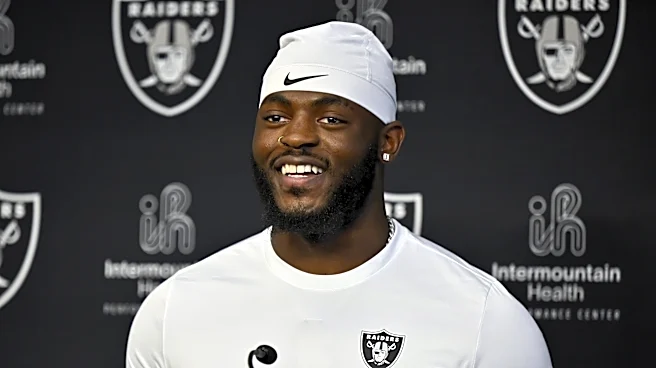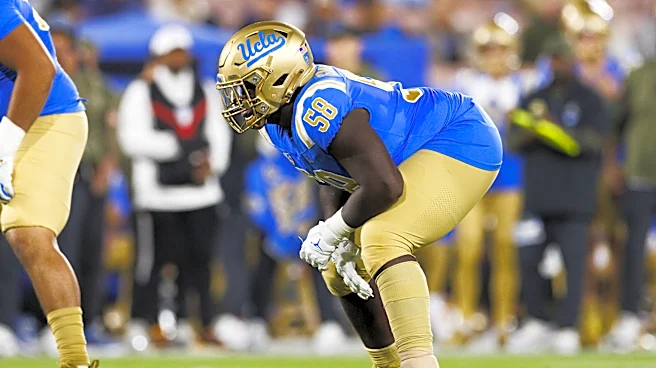




Many expected nose tackle to be a big priority for the Las Vegas Raiders in the 2026 NFL draft, but they didn’t add a defensive tackle until the seventh round. However, the Raiders did get some insurance at the position, signing Gary Smith III from UCLA as an undrafted free agent.
The 6-foot-1, 319-pound defensive lineman has the size to fill the void at nose tackle, and he’s a stout run defender to have a chance at making Las Vegas’ 53-man roster at the end of training camp.
Last season, the former
Bruin ranked tied for 22nd among FBS defensive tackles and fourth in the Big Ten with an 82.3 run defense grade from Pro Football Focus. He also posted 24 ‘defensive stops’ against the run, which was tied for 13th and third in the same categories.
With that in mind, let’s flip on the tape and see what makes Smith a candidate to earn a roster spot.
A big reason why Smith has a chance to make the roster is that he’s effective against combo blocks and double teams. Part of it’s due to his size, but he also uses good technique to stay in his gap and be a boulder in the running game.
Smith lines up as a 0-technique nose tackle against Utah’s outside zone run, putting the center and right guard on a combo block against him. Post-snap, the nose tackle attacks and beats the man he’s lined up across from (the center) to reset the line of scrimmage and create some space between the two linemen. Then, he turns his shoulders to get skinny and split the combo block, giving the guard less surface area to get a clean block on him.
All of that, combined with a wide base and good pad level, allows the defensive lineman to absorb contact and stay in his gap while taking on two offensive linemen. That helps create some piles in the trenches, and when the running back tries to cut up the field, Smith is in position to get off the block and get involved in the tackle for a short gain.
This time, the honorable mention All-Big Ten selection lines up as a 3-technique in the Bruins’ even front and is on the backside of the outside zone call. That forces him to take on a combo block from the right guard and right tackle.
Again, Smith does a good job of attacking the guard and then turning his body into the tackle. The former gives the MIKE linebacker (No. 32) just enough time to shoot the A-gap and beat the guard’s block to get penetration, while the latter helps the nose tackle absorb contact from the offensive tackle. On top of that, Smith keeps his feet moving and uses his size and strength to stay in his gap.
So, when the running back cuts backside because the linebacker is in the backfield and taking away the playside of the call, the backside defensive tackle is in a perfect spot to clean it up and make the TFL. That’s a unique instance where the nose tackle set up his teammate for success while simultaneously creating an opportunity for himself to get the glory.
This time, Smith only has to take on one offensive lineman, and we’ll see an example of his ability to take away both A-gaps.
It’s another outside zone run, and he’s lined up inside shade of the right or playside guard as a 2i-technique. Once he sees guard work wide and recognizes the blocking scheme, Smith shifts his attention to taking on the center. That’s where his strength and leverage come in, as he locks out the center and gets extension on the block to get some penetration in the backfield. Also, notice how he moves his feet and maintains a wide base after contact. That helps him anchor in the gap and avoid being washed outside, creating a cutback lane.
As a result, the defensive lineman manages to show color in the playside A-gap, forcing the running back to cut backside and upfield. However, since Smith maintained his base while working laterally, he still has his power underneath him to cross the center’s face and defeat the block with a hump move. That puts the defender in the other A-gap and in position to make the tackle near the line of scrimmage.
This next rep is about pure strength on the goal line.
Smith is playing as a 3-technique while Nebraska runs inside zone to his side of the formation, putting him one-on-one with the guard. At the point of attack, the defender does a good job of getting his helmet under the offensive lineman’s and working to get his hands inside for a leverage advantage. This is also an example of where his base and lower-body strength come into play, as he anchors and holds ground while fighting for positioning.
Once Smith gets his inside hand on the guard’s chest, he uses a long arm to get extension on the block and get the guard’s hands off his body. So, when the running back hits the A-gap, the defensive tackle can escape from the lineman and get involved in the stop to give the defense another chance to force a field goal.
Finally, another area where the UCLA product excels is taking on down blocks, and a lot of the traits highlighted above are why he thrives in this area.
The Bruins come out in an odd front with Smith head-up on the center, while the Wildcats run power. That puts the right guard one-on-one with a down block against the nose tackle, creating an opportunity to catch the defensive lineman off guard since he’s reading the center initially. However, Smith recognizes the blocking scheme and immediately plays into the guard with the wide base, good leverage and strength seen previously.
That helps create a log jam in the middle of the trenches, where the nose gets some help with the other two defensive tackles pinching inside and the playside 3-technique making contact with the guard, almost like setting a pick in basketball. Then, Smith capitalizes by shedding the guard with a hump move to make the tackle for a short gain.
Nose tackle is such a wide-open competition for the Raiders that Smith has a unique opportunity to carve out a role as an undrafted rookie. Of course, he’ll have to earn the job in training camp, but the UCLA product has the size and strength to be a gap-filler in the middle of the defensive line.