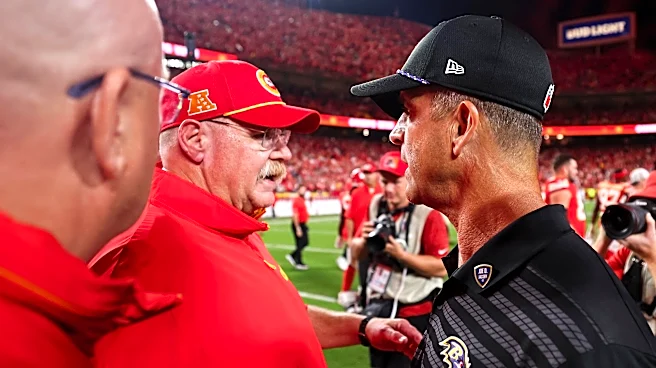


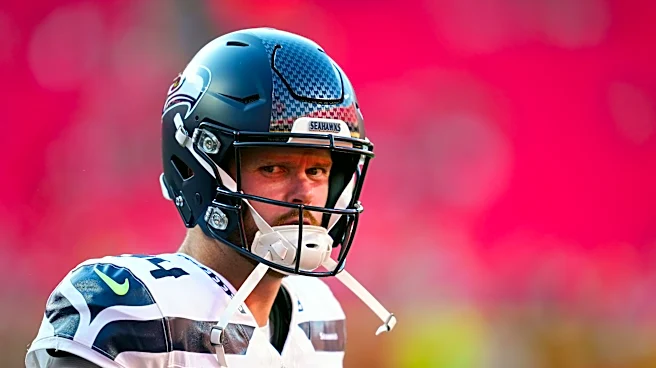
No NFL head coach has ever won a Super Bowl with two different teams. That’s the history John Harbaugh will be trying to buck over the next few years as he starts his tenure as Giants’ head coach this Sunday. Seven head coaches have tried, though, including some of the NFL’s most illustrious names. What can we learn from their experiences, other than that it’s really hard to do?
Don Shula
Hall of Famer Don Shula took over for Weeb Ewbank, whose great Baltimore Colts teams of the late 1950s had drifted toward
mediocrity in the 1960s. Shula won the NFL Championship in his fourth season, 1968, by throttling Cleveland 34-0. Unfortunately for Shula, by then the NFL and AFL champions were playing each other in what was now being called the Super Bowl, and we know what the New York Jets did to the Colts in that game. HOFer Johnny Unitas was injured much of that season and ex-Giant Earl Morrall, a good quarterback who carved out a 21-year NFL career, started but could do nothing against the Jets’ ferocious defense. Shula brought Unitas in with the Colts trailing in the second half, but to no avail.
Shula left the Colts voluntarily after one more season, lured by Miami Dolphins owner Joe Robbie to try to right the ship for the woeful expansion team. Shula immediately led them to a 10-4 season and the Divisional Round of the playoffs behind quarterback Bob Griese, the dual running attack of Larry Csonka and Jim Kiick, and wide receiver Paul Warfield. A year later that team was in the Super Bowl, and they won it all the two following seasons, when they had possibly the best defense in the NFL. Griese, Csonka, and Warfield are all Hall of Famers.
Dick Vermeil
Vermeil was head coach at UCLA when I was a grad student there, his two-year stint capped by a remarkable upset of No. 1, undefeated Ohio State in the Rose Bowl. The Philadelphia Eagles immediately lured him to the NFL. It took three seasons for him to turn the Eagles into a winning, playoff team. The Eagles made the playoffs four consecutive times and reached the Super Bowl once, in 1980, with Ron Jaworski, a solid but not great quarterback, at the helm. They were defeated soundly by the Oakland Raiders and Jim Plunkett. After the 1982 strike-shortened season, Vermeil stepped down, citing burnout.
After being out of the NFL for 14 years, the St. Louis Rams hired Vermeil as their head coach in 1997. After two losing seasons, Vermeil finally won a Super Bowl. The difference? That team had The Greatest Show on Turf, led by Hall of Fame quarterback Kurt Warner and featuring wide receivers Isaac Bruce and Torry Holt and running back Marshall Faulk, all of whom are also HOFs except Holt, a. perennial HOF finalist.
Bill Parcells
You all know about Parcells’ tenure with the Giants. He never had a Hall of Fame-caliber QB, but Phil Simms was a plus player who might have been considered in the second tier of quarterbacks below the HOFers had he stayed healthy for more of his career. Those Giants teams had that suffocating defense, especially at the first two levels, with HOFers in Harry Carson and Lawrence Taylor. They also had a more than capable Jeff Hostetler to hold the fort after Simms went down in 1990. Really, that Giants team might have gotten another ring, in either 1988 or 1989, but the defense wasn’t quite as good as it needed to be in crunch time, and no thanks to @#!% Al Toon and Flipper Anderson.
Parcells stepped down after the 1990 season but came back to coach New England in 1993. He got the Patriots to the Super Bowl in the 1996 season but lost to the Green Bay Packers. Those Patriot teams were quarterbacked by Drew Bledsoe, a good, even prolific at times passer, but not a Super Bowl-caliber QB. Parcells made other coaching stops. He almost got to another Super Bowl with the Vinny Testaverde-led Jets, but his team blew a 10-0 third quarter lead with 6 turnovers and lost to the Denver Broncos and HOFers John Elway and Terrell Davis.
Mike Holmgren
Holmgren coached the Green Bay Packers for seven years in the 1990s, had a winning record every season, and got them to the playoffs in every season but his first. Holmgren won the Super Bowl with HOFer Brett Favre as his QB in the 1996 season, beating the Parcells-led Patriots. He was right back in the Super Bowl the following year but lost to the Denver Broncos and their two HOFers.
Holmgren later coached the Seattle Seahawks and got them to the Super Bowl as well. This time he lost to the Pittsburgh Steelers due to a long rushing touchdown and a trick play for a passing touchdown. Likely future HOFer Ben Roethlisberger quarterbacked the Steelers, but he had a poor game, contributing mainly via a controversial TD on a keeper. Holmgren’s quarterback Matt Hasselback, a solid but not elite QB, had a better game in defeat. Holmgren was a little unlucky not to walk away with a second ring.
Andy Reid
Reid coached the Philadelphia Eagles for 14 seasons before becoming head coach of the Kansas City Chiefs. During most of his time in Philadelphia his QB was Donovan McNabb, who was replaced by Michael Vick for his final three seasons there. McNabb led the Eagles to the playoffs 8 times and to the Super Bowl once. It was his misfortune for that one time to be against the emerging Patriots dynasty, a game he lost 24-21, putting up 357 yards, 3 TDs and 3 INTs.
Reid was fired by the Eagles after the 2012 season and was hired by the Kansas City Chiefs. He immediately turned the perennially losing Chiefs into a winner, going from 2-14 the year before to 11-5 in Reid’s first year there. This past 6-11 season was Reid’s first sub-.500 season since he got there. Still, under the good but not great Alex Smith Reid’s teams never reached the Super Bowl. Then the Chiefs drafted Patrick Mahomes, sat him for a year, and started him in 2018. The rest is history.
Honorable mention
Dan Reeves and John Fox both lost Super Bowls with two different teams but never won one. Reeves actually coached in four Super Bowls, three with Denver and one with Atlanta, winning none. Of course Reeves’ first loss was to the 1986 Giants. Elway was his quarterback in each of those losses. Chris Chandler, a solid but not elite player, was his QB for the Atlanta Super Bowl loss. Reeves coached the Giants in between his Denver and Atlanta stints but only got them to the playoffs once.
Fox coached the Carolina Panthers to the Super Bowl in 2003, where QB Jake Delhomme played heroically in a close loss to the emerging Patriots dynasty. He later coached the Denver Broncos to the Super Bowl in 2013, where an aged Peyton Manning had the misfortune of facing Seattle’s Legion of Boom at their peak at Met Life.
What does this mean for John Harbaugh?
Harbaugh has an opportunity to become the first head coach in NFL history to win a ring with two different teams. In addition to that being unprecedented, it would be more a of a feather in his cap to do it with the Giants than when he did it with the Ravens. In Baltimore, Harbaugh took over a Baltimore franchise that had produced 9, 10, 10, 12 and 13 win seasons under his predecessor, Brian Billick – including a Super Bowl win (no need to remind Giants fans of that). Although the Ravens had dropped to 5-11 in Billick’s last season, they had been 13-3 just the year before. This is a franchise that has had expectations of winning ever since they moved to Baltimore from Cleveland. Furthermore, although Harbaugh got a ring in 2012 with a very good but not elite Joe Flacco at QB, he did it against a 49ers team that somewhat mirrored his own – coached by his brother, both of them coming off heartbreaking losses in the the conference championship the year before (the 49ers’ loss being to the Giants, the Ravens’ to the Patriots). That Ravens team had HOFers Ray Lewis and Ed Reed, though both were nearing the ends of their careers.
This is definitely not the situation Harbaugh walks into with the downtrodden Giants. To elevate this team to a Super Bowl title, however many years it takes, after winning a ring as a Raven would cement his Hall of Fame credentials. What lessons can he (and we) draw from the failure of all his NFL predecessors to do so?
1. It depends on Jaxson Dart becoming at least a very good QB
Over and over again we see from the list above that head coaches who failed to get that ring with a second team didn’t have the quarterback needed to do it. In recent years it’s been a tacit assumption that a team without an elite QB can’t get a ring under today’s pass-favoring rules. That’s clearly the Tom Brady-Patrick Mahomes effect. Those two dominated the Super Bowl for almost two decades.
Things are changing, though. In our dreams we’d all like Dart to become another Brady or Mahomes, but that’s not really necessary anymore. The Giants won their first two Super Bowls without quarterbacks of that caliber, and their last two with a quarterback who wasn’t that either but was a big-game QB who showed up when it mattered both times. In recent years we’ve seen teams led by Jalen Hurts and Sam Darnold win Super Bowls. Both are very good QBs, but neither is on a Hall of Fame track. So is Brock Purdy, who got his 49ers team to a 3-point lead in overtime of a Super Bowl.
Right now, Dart is in the mid-range of NFL quarterbacks according to The Athletic’s poll of coaches and front office personnel. A big question for this season is whether the Matt Nagy-Brian Callahan-Greg Roman offense will suit Dart’s preferences and help him take his game to the next level. The pre-season gave us absolutely no indication of whether it will or not. The Giants played Dart in one pre-season game against a defensive coordinator who played his starters and did a lot of blitzing. Dart didn’t look comfortable but he did get some things done. Can he become as good at processing and reading defenses as Purdy is? Can he be more accurate on the deep ball (and will Nagy call that often enough)?
It’s sobering to think that Andy Reid, whose offense has often been unstoppable with Mahomes (when he had good receivers, anyway), could never win a Super Bowl when McNabb was his QB, even though he came close. McNabb was a really good, probably underrated QB. What will the end game of Dart’s development look like compared to that of QBs like McNabb, and will it bode well for Harbaugh winning a second Super Bowl?
2. It depends on the supporting cast and play-callers
The sub-context, returning to Harbaugh, is: Why did Harbaugh not win a ring or even get to a Super Bowl with Lamar Jackson? That question is going to begin to be answered this season with data points coming from Baltimore as well as New York. It may be as simple as great opposing quarterbacks always standing in the way come playoff time. Since Harbaugh’s lone Super Bowl, his Ravens teams after that were eliminated by teams QBed by Philip Rivers, Tom Brady, Joe Burrow, Josh Allen, and Patrick Mahomes.
On the other hand, it may be that Jackson isn’t quite as good as he so often seems, at least in crunch time. He went 0 for 5 against those quarterbacks when it counted most. Or it may be that Harbaugh and his coaches did not maximize Jackson’s skills. Or it may be that the Ravens’ supporting cast on offense wasn’t good enough. The Ravens were knocked out the season before last when elite tight end Mark Andrews dropped a potential tying 2-point conversion in the final two minutes in Buffalo. The year before, Zay Flowers fumbled what would have been a tying touchdown at the goal line in the fourth quarter against Kansas City.
Harbaugh’s calling card is that of a “CEO-type” head coach. All well and good, we want more attention to detail and discipline than we saw during the Brian Daboll era. The Daboll era did, though, give us imaginative play-calling that led to upsets of better teams (including Harbaugh’s Ravens in 2022) and fourth quarter leads over better teams (see Dallas, Denver, Green Bay, Detroit, Chicago just last season) that were undermined by the defense.
We’re about to see whether the Giants’ offense can be as creative with a new head coach and offensive staff. In Harbaugh’s favor, he won a Super Bowl with a traditional, fairly immobile dropback passer in Flacco. Then in 2018 he turned on a dime when Flacco was injured in mid-season, putting Jackson in and designing a run-heavy offense for the rookie that played to Jackson’s strengths. Over time, as Jackson developed, Harbaugh’s offensive coaches evolved as well to be more pass-oriented, but also taking advantage of Jackson’ unmatched running ability.
That said, they couldn’t get over the hump with Jackson. In the AFC Championship Game vs. Kansas City in 2023 the Chiefs showed a heavy front and dared the Ravens to try to beat them with the pass. The Ravens complied and tried to win through the air and Jackson was unable to. So whose fault was it, Harbaugh’s for letting Steve Spagnuolo and the KC defense dictate, or Jackson’s for not being able to exploit it? If the Ravens win it all this year with Jesse Minter at the helm, the pressure will be on Harbaugh to prove he can do it in the next few years with the Giants.
3. The defense needs to become elite
Especially in the 20th Century Super Bowls, defenses often dominated the game. That was less so once the Brady Patriots era began, but defense is making a comeback. In the 2019 Rams-Patriots Super Bowl the Patriots used some of the concepts of the then-new Vic Fangio two-high safety deployment with post-snap rotation to confuse Rams QB Jared Goff. Mike Macdonald’s defense did something similar in this past Super Bowl, along with simulated pressure, to confuse Drake Maye.
Sometimes, though, the defense was just better than the opposing offense. The 2025 Eagles’ Super Bowl domination of the Chiefs was in part a Fangio-inspired strategy to confuse Patrick Mahomes. In addition, though, the Eagles’ pass rush in that game was relentless, and the coverage of its cornerbacks was exceptional. Mahomes had nowhere to go and little time to figure it out. It was one main reason the Jets denied Shula his first ring, it was why Mahomes couldn’t beat the Tampa Bay Buccaneers in 2021, and of course it was the main reason the record-breaking Patriots offense could do little against the Giants in 2008.
For several years now we’ve anticipated the Giants having one of the best pass rushes in the NFL and dictating to opposing offenses. To some extent we’ve gotten that. The Giants were top 10 last year in a number of pressure metrics. Nonetheless, with the exception of last season’s Chargers game, the pass rush was never able to put the game away late in the fourth quarter. The switch from the passive approach of Shane Bowen (see: Dallas and Denver games) to Dennard Wilson hopefully changes that, as does the strengthening of the linebacking corps.
Underlying all of this is a looming question. Super Bowl winners are usually led by Hall of Fame players. It’s a chicken-and-egg question, since Super Bowl championships are often what makes the case for players getting into the HOF, but the issue for this Giants team is: Where are the future HOFers on this roster? At the moment, there are no clear candidates. Andrew Thomas maybe if he stays healthy, but offensive linemen aren’t usually what decides Super Bowls. Malik Nabers maybe if he’s able to return to his rookie form. If Harbaugh is to get that second ring, he’ll need his own great players who can take over games. Brian Burns? Abdul Carter? Arvell Reese? That side of the ball is the Giants’ tradition. If we start to see a couple of those emerge this season and beyond, then his chances rise dramatically.