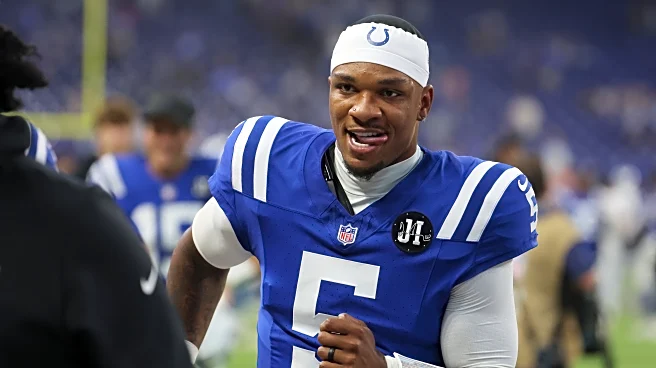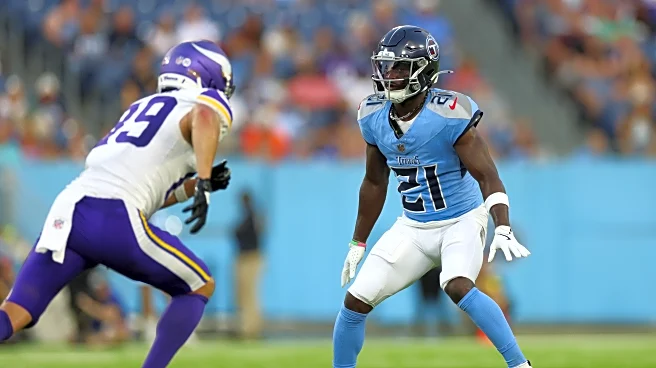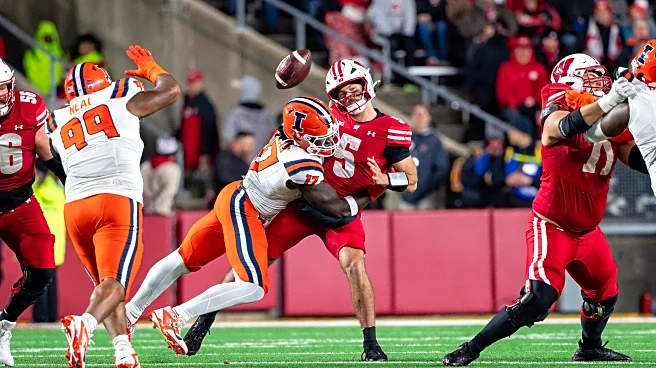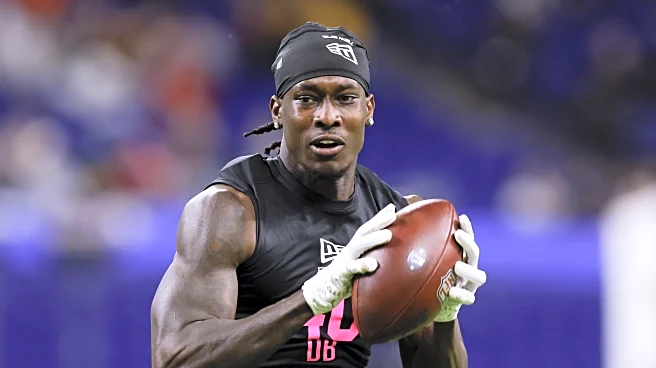


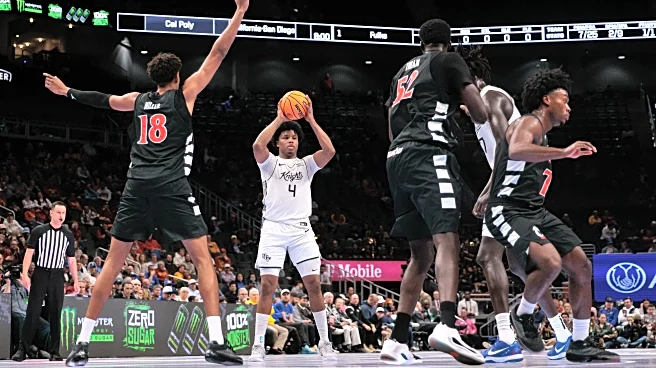
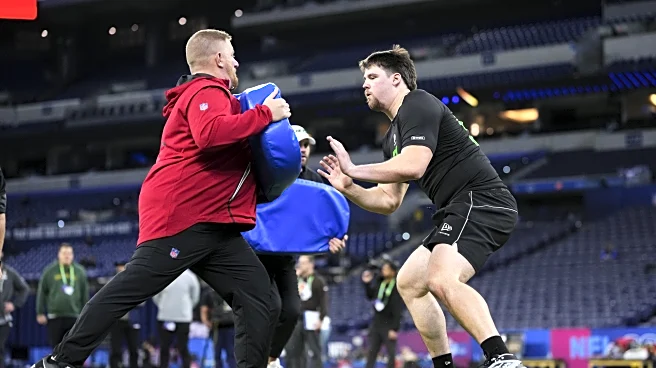
While there are some who are concerned with the lack of “splash” moves by general manager Ryan Poles, the team itself has had its major holes addressed, and the floor of the team has been raised in multiple ways. Key defensive players have moved on, but a core of talent remains. Chicago now enters the 2026 NFL Draft with choices.
For this mock draft, I used the Pro Football and Sports Network’s simulator with the Athletic’s Board, because I have found in the past that both PFSN and PFF’s boards were
relatively out of alignment with the draft itself. I also wanted a board that I was unfamiliar with, because I find that there’s a certain amount of complacency that comes with knowing a simulator’s tendencies. Instead of aiming for players that I individually liked, I tried to put myself in the mindset of drafting for pure grade with only slight weight given by position of need, and I prioritized fit to system for players.
Round 1: Trade up, trade down, or hold firm?
Sonny Styles fell to 12 and Keldric Faulk fell to 14; in both cases I had to resist the temptation to trade up, simply because while those are undoubtedly good players, the cost would have been too high for a team that needs a broad infusion of talent instead of a single impact player.
#25 – Trade Down. There was a decision to make. Houston offered #28 and #69 in exchange for #25 and #129. That’s an overpay by almost an entire third-round pick. However, Dillon Thieneman was still on the board at that point, but so were Kayden McDonald, Caleb Lomu, and Emmanuel McNeil-Warren. Ultimately, the difference in grades I have on Thieneman and McNeil-Warren were not far enough apart to pass on the value, and Poles has shown time and again that he is willing to make downward trades in order to maximize his total draft power. Houston took Thieneman at #25 and I was left with the same three choices for Chicago at #28.
I like McDonald, but he’s not a system fit for Dennis Allen. I have a higher total grade on Lomu, but McNeil-Warren answers a greater need given the number of players Chicago has available at Left Tackle. I ended up going against positional value because the raw grade on McNeil-Warren is so high.
#28 – Emmanuel McNeil-Warren, Toledo (SF). My profile for McNeil-Warren has “aware” or “alert” and various synonyms written down eight times. He plays with twitch and energy, and he is relentless in trying to make plays. It might be that I am overvaluing his short range fluidity too highly and not penalizing him enough for technique, but I have been alternating between having him or Thieneman as my Safety #2.
For the record, Lomu ended up going at 36 to the Raiders, making me feel like Las Vegas might be taking care of its 1OA quarterback in historic fashion.
Round 2: Stacking Talent
#57 – Derrick Moore, Michigan (EDGE). I understand why Moore is not highlighted by most experts in this draft, but he seems to me to be a solid second-round prospect. He is not a perfect fit for Allen’s system because he is a better pass-rusher than he is a run defender, but his frame (6’4”, 255lbs, 33.38” arms) suggests that he will be able to develop in that regard. He has an incomplete toolkit, in that he still needs to work on engaging blockers better and he has more enthusiasm than refinement in his moves. He is in many ways a confirmed rotational player. However, I believe he adds a component that Chicago is currently missing, and if his technique can be improved he could progress into a starter within a couple of years. His selection here likely means that he probably begins the season as DE4, behind Sweat, Booker, and Odeyingbo. I would be stunned if he hasn’t climbed in the rotation by November.
#60 – Jacob Rodriguez, Texas Tech (LB). Sometimes, it’s best not to overcomplicate things. Chicago needs good players on the defense, and Rodriguez is a good player on the defense. He’s a certifiable athlete, with the best 3-cone drill time for a linebacker at the NFL Combine, and his agility shows in his field performance. He is kind of a throw-back player to a time when linebackers were more important, and the only real weakness in his game is that he is overenthusiastic about making big plays at times.
Round 3: The offense gets help
#69 – Trade Down. Lee Hunter was still on the board at #69, and my default preference would have been to simply take him. However, I am again trying to match my draft moves with the staff in place in Chicago and so I accept a trade from Miami. They take Hunter at #69 (picking up #241 along the way) and I shuffle down to #75 in exchange for their 2027 4th-round pick.
#75 – Mike Washington, Arkansas (RB). Owner of the best 40-time for a running back and the second-best performance in the two explosive jumps, Washington is–for me–the type of player who I would not take for a team without established players at the position already. He needs to work on his pass protection despite his size (6’1” and 223lbs) and while he measurably has burst, it does not show up on the field in pads as well as you’d hope. However, the potential is there for him to be a standout ball-carrier. I am okay with drafting for potential with an extra third-round pick, especially since Chicago will need to move on from D’Andre Swift at some point. In the meantime, he provides some much needed power and impact to the rotation.
#89 – Connor Lew, Auburn (C). Without any picks from 90-238, this will be my last selection with any real hope of impacting the roster. Lew injured his ACL in early 2025, and even before that injury he lacked the “sand” to withstand a hard-driving interior rush. However, he is a former wrestler with active hands, and he is absolutely willing to dig in and play hard in the run game. He plays smart, keeps his feet moving, and shows adequate on-field leadership. With the acquisition of Garret Bradbury, I’d anticipate a depth role for him in his rookie campaign with the chance to emerge as a starter either partway through 2026 or after his second offseason in 2027.
Round 7: The “big” finale
#239 – Demonte Capehart, Clemson (DT). Capehart is a big, strong player who eats up space in the run game. At 6’5” and 313, he moves well for his size and is able to impose his will on weaker and less-skilled offensive linemen. He does not have anything like a complete toolkit of moves, and it seems unlikely he will develop into a pass-rush threat at the next level. However, in the 7th round having someone who can jam at the line of scrimmage and eat blocks is a plus.
Concluding Thoughts
It was amazing to me how much this draft felt “authentic” for a Ryan Poles draft. While individually it is hard to argue against player selections, as a whole I was left with the feeling of being rather…whelmed. The defense is improved and gained three well-regarded players, but what I intuit to be the biggest need (a nose-tackle) is functionally not addressed because the best players for that position are not fits for what Chicago’s defensive coordinator will want to employ or they carry substantially lower grades than the other players who would be available at the same time. Because the roster has its major positions largely filled, it’s hard to project for a certainty how big of a role these selections would play immediately.
So, it’s a draft that added talent on all three levels of defense and picked up high-value prospects for the offense. Each of these selections is probably a reasonable option at the position taken. Yet taken as a whole, it’s hard not to feel like one of the big nose tackles or one of the explosive edge rushers would have been more satisfying.

I challenge everyone else—using the same simulator (profootballnetwork.com) and the same board (The Athletic), try to put together a draft that is better for the team Chicago will be, with the coaches it has, in the 2026 season.