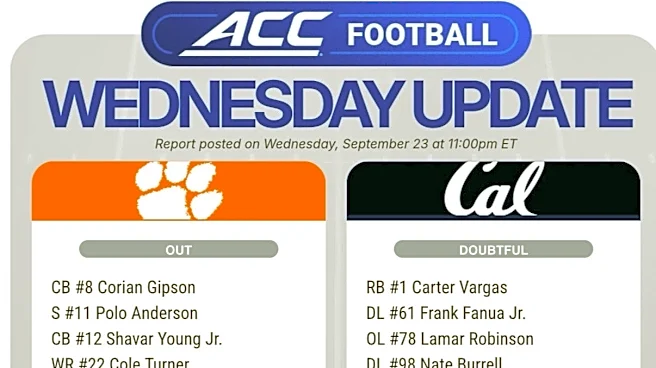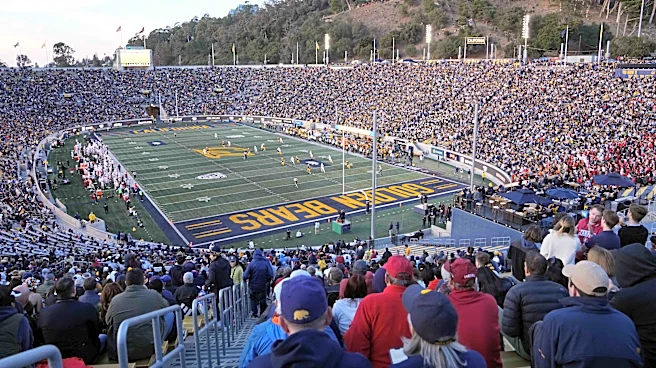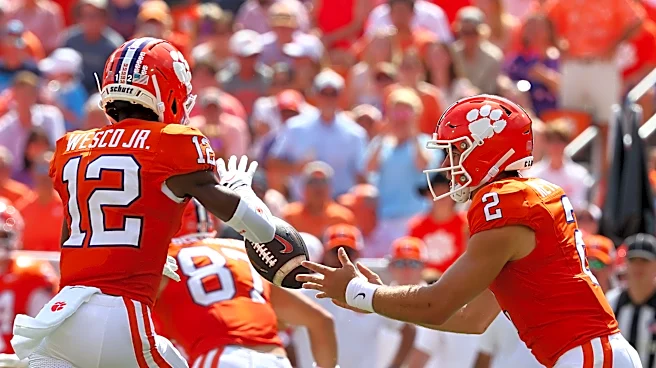



Clemson will have its first road ACC test, on Friday night (why???), against a California team with a distinctly uneven statistical profile. The Golden Bears throw the ball frequently, but their passing efficiency is ordinary. Their rushing offense has been one of the weaker units nationally. Defensively, the picture is almost reversed: Cal has a strong pass defense, particularly at limiting quarterback efficiency, while its advanced rushing-defense numbers suggest a much more vulnerable unit than
the traditional statistics indicate.
National ranks are in parenthesis.
Cal Overall Offense — PFF 72.7
Points/Game: 22.5 (82nd)
Yards/Game: 329.5 (95th)
Yards/Play: 4.4 (117th)
3rd Down: 41% (59th)
Red Zone: 100% (42nd)
Cal’s overall offensive production is mediocre. The biggest concern is efficiency: 4.4 yards per play ranks 117th nationally. The Golden Bears are doing a reasonable job converting third downs, however, and they have scored on every red-zone opportunity to date.
That combination makes Cal more dangerous than its raw yardage numbers might suggest. The offense isn’t consistently generating big chunks of yardage, but it has been successful when it gets into scoring territory.
Cal Pass Offense — PFF 74.5
Pass Rate: 55.9% (11th)
Completion %: 66.1% (61st)
Yards/Attempt: 7.8 (71st)
Pass Yards/Game: 236.5 (56th)
Pass TD: 7 (31st)
INT: 2 (70th)
Sacks Allowed: 3 (33rd)
Pass EPA: 0.25 (78th)
Pass Success Rate: 44.7% (69th)
Pass Explosiveness: 1.56 (68th)
Passing is clearly Cal’s offensive identity. The Bears rank 11th nationally in pass rate and 56th in passing yards per game, but the efficiency numbers don’t match the volume.
A 66.1% completion rate is 61st nationally, yards per attempt is 71st, EPA is 78th and success rate is 69th. That’s a lot of passing without particularly strong efficiency.
The offensive line has at least done a good job protecting the quarterback, with only three sacks allowed. The result is a high-volume passing attack that is competent rather than dominant.
Cal Rush Offense — PFF 76.2
Rush Rate: 43.1% (133rd)
Rush Attempts: 94 (117th)
Rush Yards/Game: 93.0 (115th)
Yards/Rush: 3.4 (122nd)
Rush TD: 4 (93rd)
Rush EPA: -0.08 (126th)
Rush Success Rate: 37.6% (115th)
Rush Explosiveness: 0.78 (118th)
Stuff Rate: 20.4% (107th)
Line Yards: 2.74 (114th)
This is the clearest weakness on Cal’s offense.
The Bears don’t run often, and when they do, the results haven’t been good. The 3.4 yards per carry ranks 122nd nationally, while rushing EPA is 126th, success rate 115th and explosiveness 118th.
This isn’t simply a case of a team choosing to throw more because it’s good at passing. The rushing game has provided very little efficiency or explosive production.
Cal Overall Defense — PFF 82.3
Points Allowed/Game: 26.0 (68th)
Yards Allowed/Game: 419.7 (101st)
Yards/Play Allowed: 5.4 (69th)
3rd Down Defense: 46% (102nd)
Red Zone Defense: 70% (23rd)
The overall defensive numbers are somewhat contradictory. Cal allows more than 419 yards per game, ranking 101st nationally, but its 5.4 yards per play allowed is considerably better at 69th.
The red zone is a genuine strength. Cal has allowed scores on just 70% of red-zone opportunities, good for 23rd nationally. That’s particularly important against Clemson because the Tigers’ 89% red-zone scoring rate is one of their better offensive statistics.
Third-down defense, meanwhile, is much less impressive at 102nd nationally. If Clemson can stay ahead of the chains, there may be opportunities to extend drives.
Cal Pass Defense — PFF 89.8
Completion % Allowed: 51.9% (11th)
Yards/Attempt Allowed: 5.7 (20th)
Pass Yards/Game Allowed: 238.0 (85th)
Passer Rating Allowed: 106.2 (11th)
Pass TD Allowed: 2 (29th)
INT: 5 (10th)
Sacks: 5 (84th)
Pass EPA: -0.09 (17th)
Pass Success Rate: 31.1% (16th)
Pass Explosiveness: 1.68 (101st)
This is Cal’s best defensive unit and one Clemson should be careful about attacking recklessly.
The Bears rank 11th nationally in both completion percentage allowed and passer rating allowed. They’re 20th in yards per attempt, 17th in pass EPA and 16th in pass success rate. They’ve also already intercepted five passes, good for 10th nationally.
Interestingly, the pass defense isn’t producing those results through a huge sack total. Cal has only five sacks. The strength is primarily in coverage and limiting the efficiency of the passing game.
There is one vulnerability: explosive pass plays. Cal ranks 101st nationally in pass explosiveness allowed.
S Kingston Lopa is one of the best safeties in the country and has 5 INTs.
Cal Rush Defense — PFF 73.0
Rush Rate Faced: 43.1% (5th)
Rush Attempts Allowed: 94 (22nd)
Rush Yards/Game Allowed: 181.7 (98th)
Yards/Rush Allowed: 3.4 (17th)
Rush TD Allowed: 4 (26th)
Rush EPA: 0.21 (125th)
Rush Success Rate: 44.9% (109th)
Rush Explosiveness: 1.05 (103rd)
Stuff Rate: 15.7% (105th)
Line Yards: 3.20 (114th)
This is probably the most interesting statistical matchup in the game.
The traditional numbers make Cal look like a good run defense. Opponents are averaging only 3.4 yards per carry, 17th nationally, and Cal has allowed only four rushing touchdowns.
But the advanced numbers tell a very different story.
Cal ranks 125th in rushing EPA, 109th in success rate, 103rd in explosiveness, 105th in stuff rate and 114th in line yards.
That suggests the 3.4-yard average needs context. Opponents simply haven’t run against Cal very often, and the advanced metrics indicate that Cal isn’t consistently winning those rushing plays when teams do run.
Where Clemson Should Attack
1. Establish the run.
Cal’s advanced rushing-defense numbers provide a much more favorable matchup than its traditional 3.4 yards-per-carry number suggests. Clemson doesn’t need to abandon the run just because Cal’s traditional statistics look good.
2. Use the run to create the pass.
Cal’s pass defense is considerably stronger than its run defense. Clemson should avoid making the passing game carry the offense from the opening snap. Run success can force Cal to respect the box and create better opportunities for the passing game.
3. Look for selective explosives.
Cal is excellent at limiting overall passing efficiency but ranks 101st in pass explosiveness allowed. Clemson’s goal shouldn’t be to manufacture deep throws against a good secondary; it should be to take advantage when the structure of the defense creates an opportunity.
4. Stay on schedule.
Cal’s third-down defense ranks 102nd nationally. Clemson’s offense ranks 125th in third-down conversion, so creating manageable third downs is particularly important. The Tigers cannot afford to repeatedly put themselves in obvious passing situations.
Where Clemson Should Be Cautious
1. Don’t let the freshman quarterback become the entire offense.
Cal’s strongest defensive unit is its pass defense. The Bears are 11th nationally in passer rating allowed and 16th in pass success rate, with five interceptions already.
2. Don’t confuse Cal’s run-defense statistics.
The 3.4 yards per carry allowed is impressive, but the advanced metrics suggest Cal is much more vulnerable on the ground than that number indicates. Clemson should test it rather than assuming the traditional numbers tell the whole story.
3. Limit explosive plays and missed tackles.
Cal throws frequently. Its passing efficiency is only average, but high volume gives the Bears plenty of opportunities to capitalize on defensive mistakes. Clemson’s defense has been relatively good at limiting passer rating, so the priority should be tackling and forcing Cal to execute repeatedly rather than giving up easy chunks.
4. Finish drives.
Cal has scored on 100% of its red-zone opportunities so far. Clemson’s defense has allowed opponents to score on 89% of red-zone trips. If Cal can consistently reach the red zone, Clemson’s ability to tighten up and force field-goal attempts or empty possessions will become important.