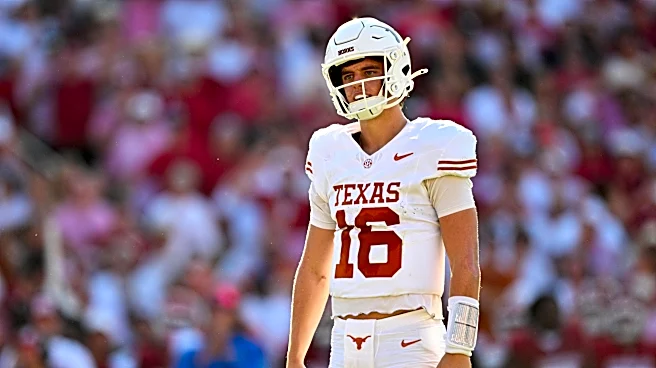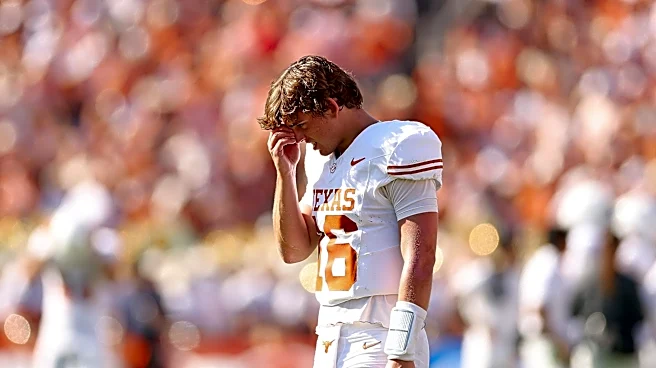




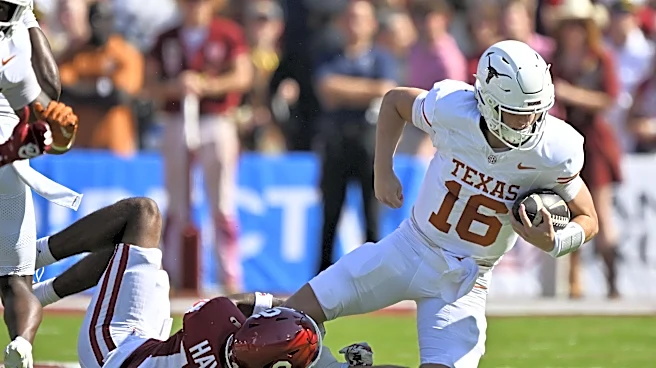
From play to play, there are two versions of Texas Longhorns senior quarterback Arch Manning.
Dr. Manning is capable of seeing the field and delivering highlight-reel plays that justify his longtime perception as a potential top pick in the NFL Draft, like his 41-yard touchdown pass to junior wide receiver Cam Coleman on Saturday in the Cotton Bowl after climbing the pocket and resetting his feet to make the delivery.
Or Dr. Manning’s 42-yard completion to Coleman, an inch-perfect delivery between two defenders.
Or ripping a 34-yard throw to junior wide receiver Ryan Wingo down the seam for a touchdown, a pass made on time and in rhythm.
And then there’s Mr. Swoopes, Dr. Manning’s counterpart who struggles with processing, pocket presence, and accuracy, the quarterback wracked by indecision about when to run or pass who has three illegal forward passes in the last three games. While Dr. Manning has elite arm strength, Mr. Swoopes lacks arm talent and struggles to make the same type of improvisational, off-platform deliveries that defined the high-end talent possessed by Quinn Ewers.
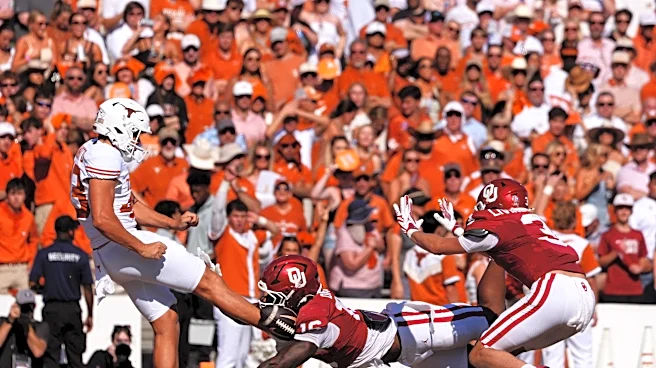
Mr. Swoopes is more of an athlete trying to play quarterback who makes mistakes like floating a duck into the defense on the run that turns into a touchdown back in his face.
Mr. Swoopes has breakdowns in footwork, decision making, and ball placement that result in a late-game interception thrown off his back foot and inside into the defender’s leverage instead of safely out of bounds.
Mr. Swoopes hitches in a clean pocket until he’s on the back of his center, floating his throwing lanes closed and taking a sack that leads to a blocked punt touchdown.
Mr. Swoopes lacks his stinger, turning his athleticism into indecision to limit off-schedule success.
Mr. Swoopes lacks the freedom or comfort level to change plays at the line of scrimmage, leading to look-back calls from the sideline that can force wasted timeouts.
“I think that he’s processing fine,” Sarkisian said on Monday.
But is fine the standard for Manning as a fourth-year player who is in his second season as the starter?
“I think if you took the name off the back of his jersey, and you said, ‘Here’s Joe Smith playing quarterback at the University of Texas, and here’s a guy who’s beaten four top 10 ranked teams in his last 13 starts,’ we’d be praising the guy, but the expectations are high for him. He understands that the expectations are high for all of us, so we’ve got to we got to put our nose back to the grind and get back to work,” Sarkisian said.
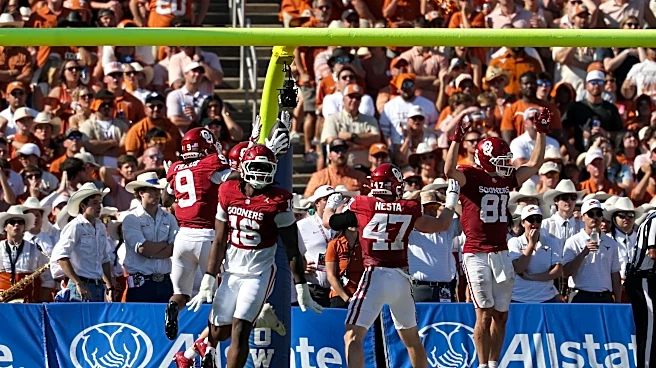
What about assessing the totality of Manning’s performance against the Sooners, which included those three big throws, but was arguably defined by the two crushing interceptions that led to 10 points.
“I hate it for him. He has two interceptions in the fourth quarter of that game when, quite frankly, I thought he played pretty good up until that point, and that’s the frustrating part, but that’s the level of consistency that’s needed,” Sarkisian said.
It’s the type of consistency that’s lacking as the quarterback veers from Dr. Manning to Mr. Swoopes.
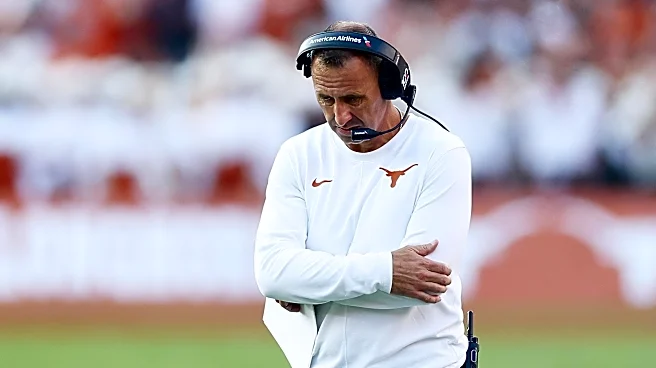
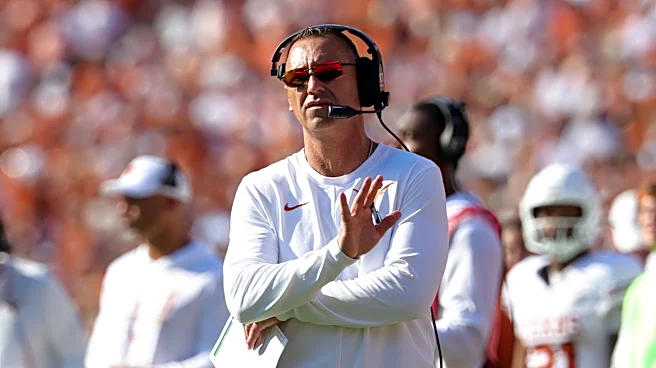
The Texas head coach and his staff aren’t helping enough, either.
Manning simply hasn’t developed enough during his four years in Austin, an indictment of Sarkisian, AJ Milwee, and Mike Bimonte as quarterbacks coaches exacerbated by the lack of development from Ewers during his own time on the Forty Acres, high-profile failures that are threatening to become a trend.
Why hasn’t the game slowed down enough for Manning? Why is he having breakdowns in his footwork? Why is his pocket presence a continued issue? Why is he visibly indecisive when he has space to run?
In retrospect, perhaps the greatest misconception surrounding Manning is that his last name endowed a certain level of the football intelligence and processing speed possessed by his uncles, producing a player with all the best attributes of his uncles and grandfather. Instead, Manning often looks like an athlete constrained by a scheme in which he’s been told not to scramble and rarely receives opportunities to execute designed runs.
Last year, Manning ran for 519 yards and 10 touchdowns, including 32 scrambles for 349 yards and another 31 designed runs. This year, Manning has yet to record his first rushing touchdown, had three of his five designed runs on the season called against Oklahoma, and started looking much less decisive after getting reprimanded for scrambling too much in the UTSA game, contributing to those three illegal forward passes.
Through the air, the type of pass plays that Sarkisian is calling are part of the problem, from a lack of hot reads against the blitzes that SEC opponents have frequently employed to the other missing parts of the quick game, highlighted by the utter absence of the screen game that was so threatening to opponents before Manning took over the starting role.
Last year, Manning’s average depth of target careened from 20.2 against Florida as the Texas quarterback took a beating while trying to lead a comeback to four yards against Oklahoma when Sarkisian allowed him to operate in an efficient, game-manager role that played an important part in the victory.
This year, Sarkisian apparently forgot that lesson because Manning’s average depth of target was at 10.7 yards on Saturday.
The problem with trying to get the ball to the tight ends more in the passing game? There’s no evidence that’s a real possibility.
As for Dr. Manning and Mr. Swoopes, there’s a growing sense that they will return to Texas for a fifth season, but given Manning’s lack of development so far, the Horns may simply be stuck with an unanticipated package deal.