



The Diamondbacks have had a complete disaster of a season at first-base. The original plan seems to have been to have a platoon there of Pavin Smith and the veteran free-agent Carlos Santana. But injury means that the pair have combined to start just 10 of the 74 games played there. In addition, they have both been underwhelming (and that’s probably being kind) at the plate. The pair have combined to go 4-for-35 while playing first, with two walks, nine strikeouts and one RBI between them. The absence
has forced Arizona deep into its depth: we’re not yet at the half-way point in the season, and already, seven different D-backs have started games at 1B.
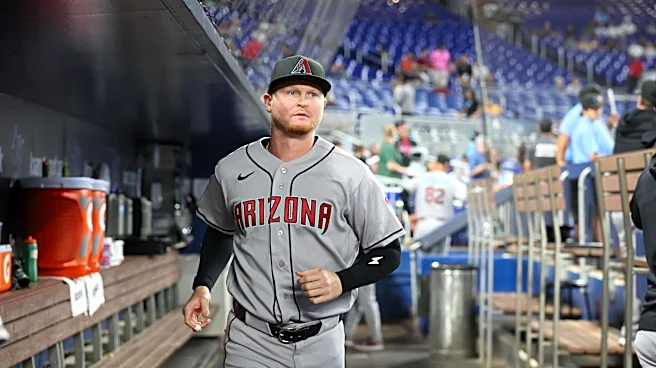
None of them have done well. Ildemaro Vargas has seen most time (39 starts), but after an incandescent April which won him NL Player of the Month honors, he has completely fallen off a cliff. Since peaking at a .404 (!) average on May 1st, at all positions Vargas has hit .162/.218/.206 over 40 games, for an OPS of just .424. We’ve tried new blood as well: Jose Fernandez (16 starts) made an immediate impression, but subsequently also tapered off. LuJames Groover (7 starts) never hit to begin with, and is 4-for-24 while playing first, with no extra-base hits and one walk. Tim Tawa and Luken Baker each made one start. The latter will be a Sporcle stumper come year end.
The sum total of these endeavors is wretched on a historical level. Over almost three hundred plate appearances, Arizona’s first basemen are batting .215/.249/.312 for a .561 OPS at the position. That is currently the lowest figure at 1B by a major league team in over a century. You have to go all the way back to 1920 to find a lower OPS. That season, the Philadelphia Athletics (.530) and Pittsburgh Pirates (.557) were clearly both having difficulty adapting to the first year of the so-called “live ball” era. [There was still only one man that year who reached twenty home-runs, though on the other hand, eight different batters hit .370 or better.]
By any measure, it has been a disaster offensively. Even with better than average base-running (4th in BsR) and defense (8th in Def) there, it’s no surprise that the Diamondbacks rank dead-last in the majors at overall value from the position. With the trade deadline (this year, on August 3rd) now beginning to loom large, there’s little or no doubt that if the D-backs want to improve, the easiest way is going to be at first-base. It doesn’t need to be a superstar earning eight figures – and, no, we will not be trading for Christian Walker, thank you very much. But there’s almost no argument: something needs to be done.
Before we get to potential trades, is there any help in our own farm system? In Reno, the position has mostly be manned by names we’ve already mentioned. Luken Baker, LuJames Groover and Carlos Santana are three-quarters of those with 50+ innings at first. Groover’s .873 OPS for Reno is the best, and… yeah, we’ve seen what he can do in the majors. The other first-baseman is Tyler Locklear. He flopped in his first time with the D-backs, posting a .529 OPS across 31 games following his trade from Seattle. His Reno numbers overall aren’t great, with a .771 OPS. But they have improved, up to .858 over the last four weeks.
With Santana last seen being a human piñata down in the Arizona Complex League, I wouldn’t be surprised if the team gave Locklear another chance before the deadline, at the very least as a platoon partner for Smith. It might simply be a case of seeing what sticks. But even last year’s dismal performance by Locklear, wouldn’t be much worse than what we’ve been getting. Otherwise? The organization depth chart at 1B and DH makes for pretty dismal reading, with nobody outside the Dominican rookie leagues posting an OPS of better than .781. The team needs a solution, not just for this season, but in the longer term as well.
Of course, the elephant in the room with regard to “long term” is the question of whether or not there will even be a major-league season next year. A poll of players today in The Athletic had almost eighty percent predicting a lockout, though they were more divided on whether or not games would be lost as a result. However, there is definitely an argument to made for exercising caution, say, in trading prospect capital. Getting a player signed through 2028 is not as valuable if the 2027 season ends up being shortened or, worst case scenario, completely missing. We just don’t know what will happen.
What trade targets at 1B might exist? To try and bring some objectivity to our rosterbation, let’s look at the standings and the chart of production at first-base linked above. We can narrow it down to teams in the bottom half of the standings (therefore likely to be sellers at the deadline), but the top half of 1B production. Here are the teams who meet that criteria, and what the chances are of them selling to us.
- Athletics – 36-38, 3.1 fWAR. Nick Kurtz. The reigning AL Rookie of the Year isn’t letting up in his sophomore season. His .440 OBP leads the majors, and he’s hitting .292 with 18 home-runs. Despite not having made the post-season since 2020, the A’s seem more interested in a long-term extension than a trade, having reportedly offered him a nine-figure deal. Likely falls into the “If you have to ask the price, it’s too expensive” category.
- Red Sox – 29-42, 2.5 fWAR. Willson Contreras. He has been among the most consistent of players, worth between 2.5 and 4.2 bWAR every full season since 2017. This year looks likely to push the upper limit, since he’s already at 2.8 bWAR. Under contract through 2027 with a 2028 team option, though does have full no-trade protection. With the Red Sox floundering, could very well be dealt at the deadline, depending how Boston feel about their chances going forward.
- Reds – 35-38, 1.6 fWAR. Spencer Steer. Sal Stewart has been their main 1B, but is behind only the Cards’ JJ Wetherholt in Rookie of the Year betting, so is going nowhere. However, does this perhaps render Steer superfluous to their needs? He’s highly versatile, also starting at 2B, LF and RF this year, and wouldn’t reach free agency until after 2028. With an OPS+ of 106 so far, this right-hander does seem to tick most of the boxes Arizona would want. Steer was recently called “untouchable”, though logic for this was missing.
- Astros – 35-41, 1.3 fWAR. Christian Walker. Old friend alert! As mentioned above, this candidate seems highly unlikely. Everyone drooling over his campaign this year, is conveniently overlooking that his 2025 numbers were terrible: just 0.3 bWAR. Last winter, it was among “the worst-kept secrets in Houston Astros land” that the team wanted to trade Walker. If that’s still the case, the return should be higher. Does have a limited no-trade clause, but whether Arizona are on that list is not known.
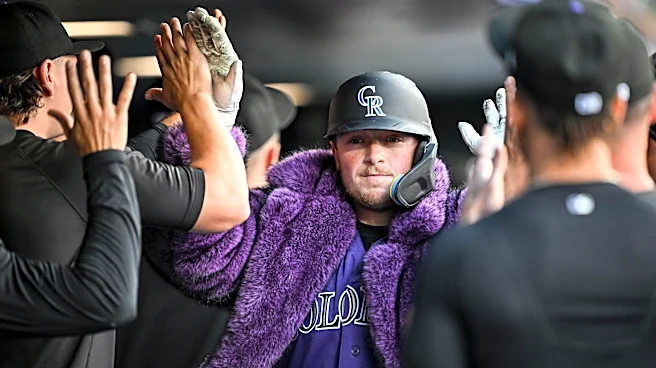
- Rockies – 28-47, 1.3 fWAR. TJ Rumfield. Trades among division rivals aren’t common. But there is precedent, with Arizona sending Jake McCarthy to Colorado in January [worth noting: he’s cooled off of late, and is back down to replacement level by bWAR, though fWAR has him at 0.7]. In another rocky Rockies season – they haven’t won even 75 games since 2018, and won’t this year either – rookie Rumfield has been a rare bright spot. The Colorado front-office would be idiots to trade him. I’ll say no more.
So, what do you reckon? Should the team stick with the current options, and hope they return to normal form? Look to promote from within? Or should they trade for a short- or long-term solution – and if so, who? That would be what the poll and comments section below is for…