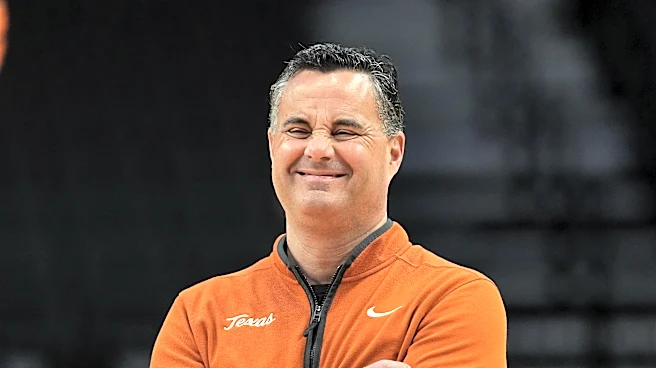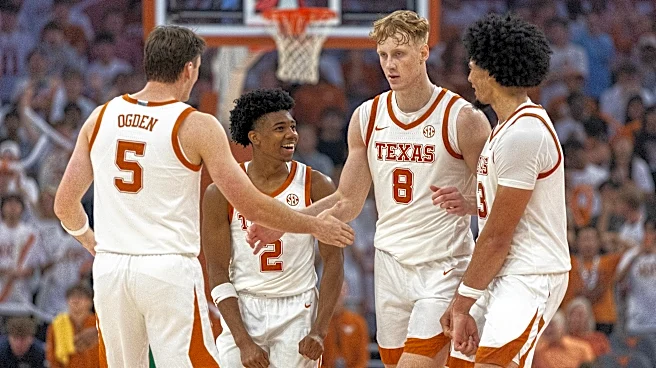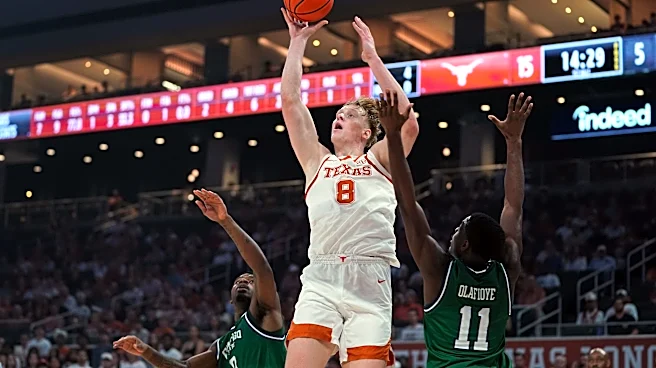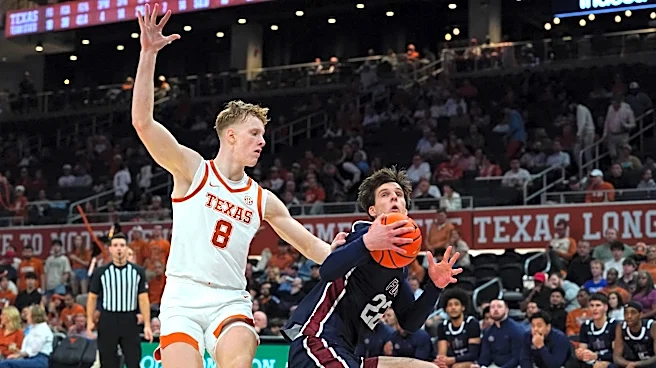

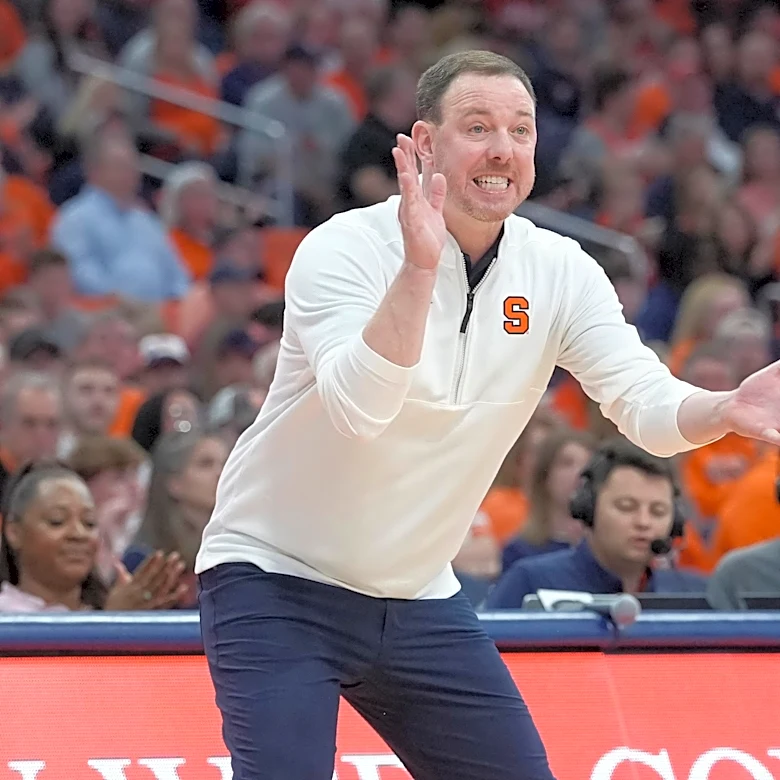
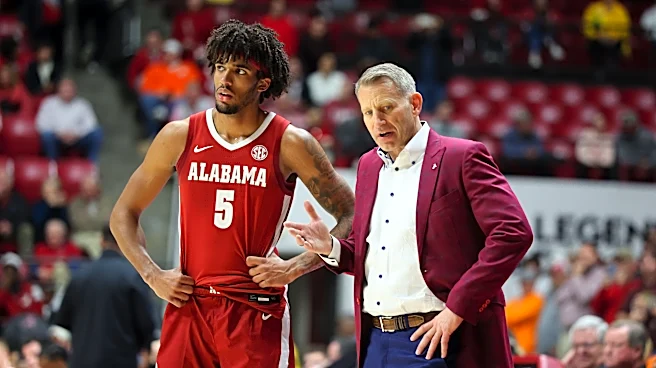

Head coach Sean Miller wants hard hedges and ball pressure to create more transition offense. A rebuilt roster with improved length and athleticism gives the No. 7 Texas Longhorns a chance to make that work.
Miller is asking Texas’ big men to meet opposing guards farther from the basket this season as the Longhorns adopt more aggressive pick-and-roll coverages. That leaves the other three defenders to cover the roller, recover to shooters, and finish the possession, requiring a high level of coordination
and effort to avoid giving up easy baskets.
After leaning on drop coverage in his first season in Austin, Miller wants the Longhorns to pressure ball handlers and bring the screener’s defender up to the ball. The goal is to interrupt the offense before it gets into the paint and turn more of those disruptions into opportunities to get out in transition and create high-quality shots.
“We hard hedge, we put two people on the ball, and we get good at it,” Miller said Sunday.
For Miller, it’s a return to a familiar approach. He estimated that 16 or 17 of his first 21 teams played aggressive coverage. His second stint at Xavier brought a move toward drop coverage, shaped by personnel and changes in the game. That approach followed him to Texas, at least initially.
This roster gives him more options while placing a higher burden on all five players to remain coordinated and tied together with their rotations.
What changes at the screen
In drop coverage, the big man stays below the screen, trying to contain the ball handler while protecting against the screener’s roll to the basket. The guard works to recover. Keeping the big closer to the paint can help preserve rebounding position and reduce the need for teammates to leave shooters.
In a hard hedge, the screener’s defender steps out to disrupt the dribbler’s path and buy time for the screened defender to recover. Then the big has to get back. Unlike a switch, the basic goal is to return to the original assignments.
That creates a temporary problem behind the ball. With two defenders occupied by the ballhandler, the other three must cover four offensive players. A help defender has to account for the rolling screener while teammates prepare to recover to the perimeter. USA Basketball’s coaching guide emphasizes that all five defenders have a part in those rotations.
The pressure can force a retreat dribble or a difficult pass. A late hedge or slow recovery can leave an opening. Putting two defenders near the ball only helps if the other three know what comes next.
Why last year’s defense stayed closer to home
Miller’s explanation starts with personnel. Last year’s group often paired Matas Vokietaitis with four perimeter players as wing Cam Heide played the four position, and Miller said their size limited how aggressively Texas could defend screens. Losing forward Lassina Traore for the season in early February further reduced the available frontcourt options — when Traore was on the court, Texas hedged more often, but played drop coverage otherwise because Vokietaitis, Miller said, was not ready for the same responsibilities then.
“Even if we wanted to be more aggressive, we wouldn’t have been able to do so,” Miller said.
Texas did not always get what it wanted from drop coverage.
After the 101-98 overtime loss to Mississippi State in January, Miller explained that the coverage was designed to preserve matchups, keep players in rebounding position, and limit rotations that could lead to fouls. Texas still surrendered 19 offensive rebounds and committed costly fouls, a persistent problem throughout the season that regularly drew Miller’s ire.
“We have a virus called fouling, and it has plagued us from the opening tip of the first game until tonight,” Miller said after the late January loss to Kentucky. “We will foul the living shit out of you.”
Switching did not automatically solve the execution problems, either. With the game tied late in overtime, Traore switched onto Josh Hubbard, but allowed enough separation for the go-ahead three-pointer.
That game is a useful warning for this season — Texas can change where it applies pressure, but it still has to carry out the assignment.
Vokietaitis has more help, and more to do
Miller believes Vokietaitis can handle more work away from the rim than his size might suggest. During Sunday’s, he pointed to the center’s conditioning, improved agility, and progress since the staff began putting him in those situations in June.
“He’s much more agile away from the basket than you think he is,” Miller said.
The players next to him matter just as much. David Punch gives Texas a forward Miller trusts to defend different frontcourt positions and protect the basket with his length, quickness and instincts. At TCU last season, Punch recorded 66 blocks and 45 steals. Punch’s block rate of 7.4 percent more than doubled the 3.4 percent block rate posted by Vokietaitis.
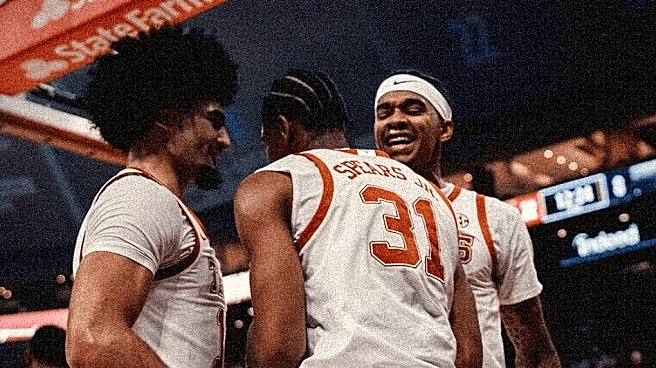
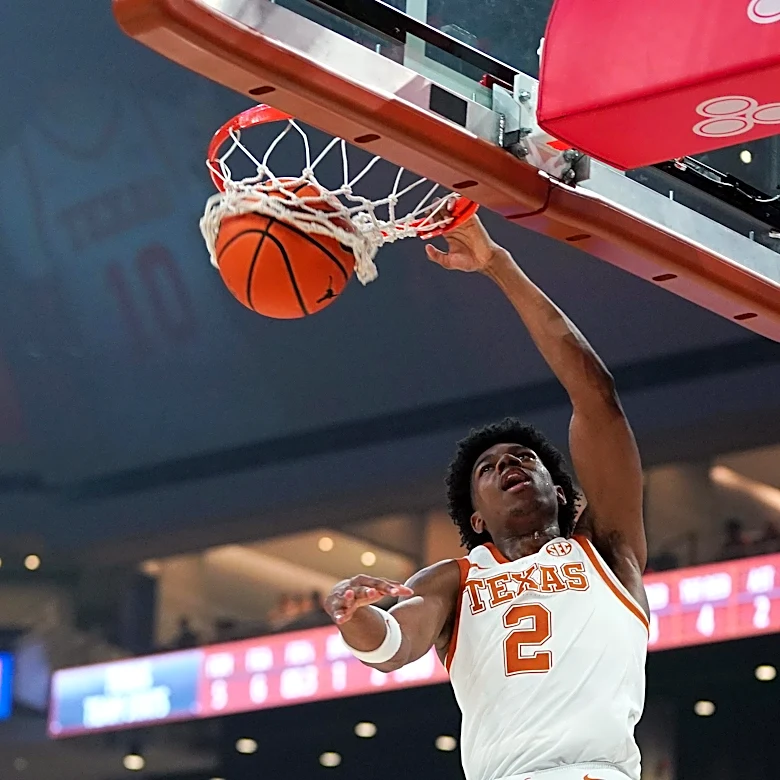
Marcus Spears Jr. provides more rim protection.. The freshman blocked four shots in 20 minutes in Monday’s opener against Chicago State.
“If I go back to a year ago, we really didn’t have that ability to erase a mistake, block a shot, fly around, and Marcus really gives us that,” Miller said. “But I was impressed with the way he played, and he’s got a lot of confidence. He plays with high effort, and when a player plays with a high effort, you want him to be in the game, and I think that’s the feeling that he gives us.”
Miller praised Spears’ activity when hedging ball screens afterward. He also described two second-half mistakes that came when Spears extended his pressure — a foul on one play and getting beaten off the dribble on another. The same player who can cover a teammate’s mistake still has to manage his own aggression.
On the perimeter, Miller singled out Austin Goosby, Amari Evans, and Elyjah Freeman for the size and athleticism that can help Texas scramble and contest shots, a marked change from the lack of size and length in the Longhorns backcourt last season. A big man cannot stay aggressive at the screen if the guards leave him to solve every problem behind it.
“Your guards have got to be able to scramble and close out and be tough on the ball,” Miller said.
The payoff should show up at the other end
Miller sees the defensive change as a way to help an offense that had to create too much without the benefit of turnovers last season. Blocks, steals, and deflections can produce chances to attack on the fast break before the opposing defense gets organized.
“That also hurt our pace a year ago — when you’re in drop coverage and you don’t force turnovers, it’s hard to get out on in transition, it’s hard to make those those plays defensively that ignite the transition game, and we played for much of last year without it,” Miller said.
The 109-59 season-opening win offered an early look at the desired results. Texas forced 15 turnovers, recorded eight steals, and blocked six shots. It scored 25 points off turnovers and finished with a 26-7 advantage in fast-break points.
Much of the disruption came early — the Longhorns scored 18 points off turnovers before halftime and built a 16-0 edge in fast-break points.
However, those totals do not tell us which coverage produced each turnover and one game against Chicago State is too early to say how well this will work against SEC guards. The Cougars also still collected 11 offensive rebounds, a reminder that pressure does not finish a defensive possession by itself.
“We had a few breakdowns, but I think you guys see that we’re more aggressive with our approach,” Miller said after the game.
The next test is whether Texas can stay connected when an opponent gets past the first two defenders. Watch the help on the roller, the recovery to the next shooter, and the rebound after the contest. Those are the plays that will decide whether the Longhorns’ activity becomes dependable defense.
Miller has a roster he believes can do more. Now the big men have to disrupt the ball without leaving the other three defenders with too much to repair.