



World Series champion with the Yankees.
Best friends with Babe Ruth.
Walter Johnson’s kryptonite.
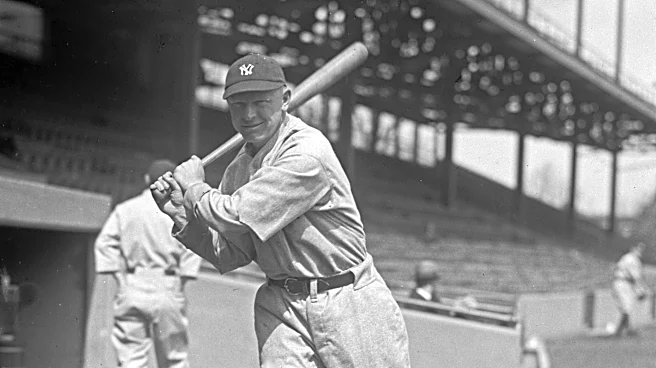
That’s one heck of a three-line resume. It belongs to a diminutive speedster who patrolled center field and held down the leadoff spot for the Yankees in the early 1920s: Whitey Witt.
Witt came to New York via Philadelphia after falling out with legendary Athletics owner/manager Connie Mack. He only wore pinstripes for four seasons, but it was an eventful era, and Witt left his mark on Yankee history.
Oh, and to justify that remark about Walter Johnson, for his career, Witt hit .345 off “The Big Train,” with 39 hits in 113 at-bats, with more walks than strikeouts. He did all that against the most dominant pitcher of baseball’s first century and an inaugural Hall of Famer.
Lawton Walter “Whitey” Witt
Born: September 28, 1895 (Orange, MA)
Died: July 14, 1988 (Salem County, NJ)
Yankees Tenure: 1922-25
Whitey Witt debuted with the Philadelphia A’s in 1916 at the age of 20. Immediately a full-time player, Witt struck out more than he walked that rookie season. It was the only time in his major-league career that happened.
By 1921, he really had his feet under him. Witt hit .315 that season while leading the Junior Circuit in plate appearances. Philadelphia, however, was putrid, as Mack had long since dimantled his famed “$100,000 Infield” dynasty that won a trio of championships in the previous decade. These A’s finished the season 53-100-2, good for last in the American League. That offseason, the Yankees came calling. The New York Times reported that the Yanks paid Philadelphia $16,000 for Witt’s services but Miller Huggins, the Yankee skipper, refused to corroborate the price.
1922 was an eventful season for Witt. A fixture at the top of the lineup (he led off 138 times), Witt racked up a .400 OBP, thanks to 89 walks, a number that led the American League. “Get on base and let Babe Ruth drive you in” seems like an all-time great baseball strategy, honestly. He also only struck out 29 times. Imagine a 3:1 walk-to-strikeout ratio in today’s game.
In the final series of the season, Witt was the victim of an unfortunate and scary incident. Playing in St. Louis, in the first game of a three-game set to decide the pennant, Witt was struck in the head by a Coca-Cola bottle, allegedly thrown by a fan. “Knocked me out, and they had to carry me off the field bleeding on a stretcher,” Witt recalled. “It was a really nasty crowd, and after I got hit, a riot almost broke out.”
He missed the penultimate game of the season but returned for the finale and drove in two runs in the Yankees’ 3-2 win that clinched the pennant for the Bronx Bombers. (Days later, the New York Times reported that a 10-year-old boy was the culprit.) It was the Yanks’ second flag in a row after securing their first in 1921, but also for the second year in a row, they were matched up with their Polo Grounds landlords, John McGraw’s New York Giants. The Yanks were dusted in what was essentially a sweep, with only a tie sparing them from full ignominy, Witt held to a 4-for-18 (.222) showing in the Fall Classic.
The following season saw Witt permanently earn his place in the Yankee history books. On April 18, 1923, Witt strode to the batter’s box to lead off the bottom of the first in the Yankees’ home opener… at the brand new Yankee Stadium.
The first Yankee to bat in “The House That Ruth Built,” Witt grounded out. Witt was also standing on base two innings later when Ruth hit the first home run at the new park. When Witt touched home plate, he became the first Yankee to score a run at the Stadium. Not bad claims to fame. He had a career year, hitting .314/.386/.408 with a 107 OPS+ in 146 games, good for a career-high 3.2 rWAR with the Yanks winning their third-straight pennant.
That fall saw Witt win his one and only World Series championship, as the Yanks got their revenge and beat the Giants in six games. Witt later remarked that capturing the title with Ruth, one of his best friends, was the greatest possible thrill.

Witt played two more seasons with the Yankees before they replaced him with Murderers’ Row stalwart Earle Combs. That, of course, meant Witt was in New York long enough to see the ascent of Lou Gehrig, who Witt held in the highest respect.
His Yankee career ended the way it started, with another scary incident. In November 1925, he went goose hunting with—appropriately—Goose Goslin, a Hall of Fame outfielder for the Washington Senators. Goslin’s shotgun exploded, lacerating his left hand, prompting Goslin to forswear hunting until after his playing days ended. He and Witt were supposed to go on a quail hunt the following week.
After bouncing around the minor leagues for a few seasons, Witt went home to New Jersey where he spent the rest of his life. Witt died in his home on July 14, 1988, at the ripe old age of 92. The day before, he’d played a round of golf, a sport he loved almost as much as baseball.
Whitey Witt did not have a long Yankee career. But it was a memorable one. He won a World Series title and was the first Yankee to bat at Yankee Stadium and to score a run there. Witt’s tenure in pinstripes saw him rub shoulders with Ruth and Gehrig and the rest of the legendary figures of the 1920s iteration of the Yankees.
Happy 131st birthday, Whitey Witt.
See more of the “Yankees Birthday of the Day” series here.