






“Rome ne fu[t] pas faite toute en un jour.”
I honestly couldn’t tell you how many times I’ve heard that phrase uttered.
Not in the original French, of course. But in English, just about everywhere. At work. In casual conversations and in those I’ve overheard. It’s one of those rare gems that you’re as likely to hear in a conference call about a pending contract as when one of your college buddies completes a pyramid of Lone Star tallboys. (Both real examples in my case)
Written or spoken, it has infected
the parlance like a herpetic strain at a key party — everybody loves to share it.
Frankly, I always thought it was kind of redundant. Of course Rome wasn’t built in a day. You’re talking about 1200 years from the founding of the capital city to the fall of the Western Empire.
Even long before I could read them, I would stare at Edward Gibbon’s hefty six-volume set on my father’s bookshelves in wonder at the length. Six volumes? For one empire?
“And that’s just charting the decline”, my father would invariably answer.
Yes, in the end, Gibbon would dedicate over a million words (and most of his life) to the writing and editing of his ‘History of the Decline and Fall of the Roman Empire’. Spurs fans should be so lucky.
And, to be fair, in many ways they have been.
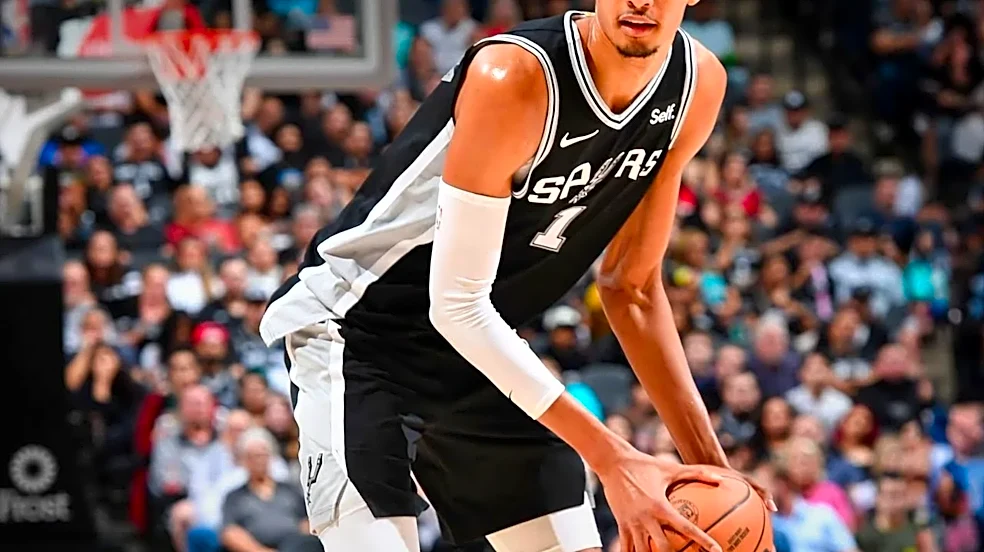
Robinson. Duncan. Wemby. It’s a social media narrative now that the Spurs have been blessed beyond both reason and absence of conspiracy. It draws heat like a black hole from a neighboring star, and is no less mythical than still somewhat shrouded origin of the city of Rome, supposedly founded by a pair of men who were nursed by wolves.
There are those who believe that Adam Silver bailed out the franchise, and those who refuse to acknowledge the tanking, and those who believe 14% is a reasonable gamble, and those who believe it was destiny.
I suppose the rise of an empire always has its murky places — points of debate for historians to engage in years after the music has ended and the chair one might have raced to has long since deteriorated.
Still, it’s as hard to deny that the Spurs have felt favored by someone or something as it is that they’ve worked hard for it. I can’t imagine that realms are consolidated any other way.
Luck, skill, and effort, they all play their part. Last year the Spurs were lucky until they weren’t. They were skilled until it didn’t matter. They gave effort even when it afforded them no further progress.
Now they must evolve.
In early October of 105 BC, the bulk of the Roman army found themselves camped on the banks of the Rhône, just outside of Arausio (now known as Orange, France).
Approaching the peak of their era in the sun (80ish years from official ’Empire’ status) the Romans had covered themselves in glory, driving out every rival from the Italian Peninsula and defeating the once-mighty Carthage in three successive wars.
They’d conquered Macedonia and the whole of Greece, and the constant state of war had hardened their fighting forces to the point of excellence and imbued them with an aura of invincibility. Or so it seemed.
Over the past decades, as Rome’s attention was turned elsewhere, a series of Celtic and Germanic tribes had begun to move their way slowly southward, chief amongst them, the Cimbri and the Teutons.
Ignored by the Romans, they seemed to pose little threat, until they attacked another Celto-Germanic tribe known as the Taurisci, who happened to live as allies on the northern border of Roman lands.
Calling for aid, the Taurisci were certain that the Romans would easily drive away these new enemies. And so were the Romans, until they fought them.
Though there’s still some debate over the specific origin of the Teutons, it’s largely agreed that the Cimbri originated on the Danish/German peninsula of Jutland. The shared languages and values necessary for an alliance suggest a similar geographic origin for the Teutons.
And why would that matter?
Because that’s also where the Vikings came from.
The Romans were fighting the (proto) Vikings. And they were not prepared.
First the Romans sent some of their legions northward in a show of force, led by Gnaeus Papirius Carbo. Carbo demanded the withdrawal of the tribes, while preparing an ambush irrespective of their compliance.
Having agreed to go, the tribes then discovered Carbo’s treachery, and furiously routed him and his army at the Battle of Noreia, all but annihilating the Roman forces (and very nearly killing Carbo).
They then turned towards Gaul (Southern France) collecting allies in response to their tales of Roman treachery and defeating the army of Marcus Junius Silanus in the process.
The Romans sent another army, helmed by the newly elected Consul Lucius Cassius Longinus and his Legate (Head General) Lucius Caesoninus.
After an initial victory at Tolosa, Longinus refused to leave behind the battle spoils to pursue the retreating tribes, who then heavily fortified Burdigala in preparation for battle, and set into motion an ambush of their own.
Having finally arrived and fortified the top of a nearby hill, Longinus then opted to split his force and march on the city with only 1/4th of his 40,000 men.
Feeling no need to tighten his ranks or march in battle formations, Longinus also refused to send out scouts, and his overconfidence was rewarded with utter defeat and both his and Lucius Caesoninus’ deaths.
The 30,000 men on the hill were the only survivors and promptly surrendered, forced not only to give up the aforementioned spoils, but also the majority of their own supplies.
Which brings us back to the banks of the Rhône. Now taking the Cimbri, Teutons, and their various allies more seriously, the Romans had dispatched two armies this time.
It was a strategy that had worked well for them in both the Samnite and Punic wars, in which pairs of talented generals had worked in tandem to divide, pursue, cut off, and surround their enemies.
Many of those generals had been lifelong friends or comrades in arms, though, and the pair who had been selected for this task were decidedly not.
Proconsul Quintus Servilius Caepio did not like that a younger, inexperienced candidate had been elected to a consulship over him, and was determined to undermine the admittedly green Gnaeus Mallius Maximus at every opportunity.
In the political arena, this would have been all but expected. In the case of open war, however, this was so astonishing a stance that some historians have theorized that the Senior Consul of Rome, Publius Rutilius Rufus, simply failed to consider that Caepio would behave in such a way on the field of battle.
And when both armies carved their separate ways to Arausio with relative ease, everything appeared to be going according to the plan. That is, until Caepio refused to cross the river without orders directly from the Senate, refused to combine forces once he’d crossed, and then insisted on continuing to camp separately.
As a combined force, the Roman mass was substantial at 80,000 troops and roughly 40,000 auxiliary and support soldiers. Separately, however, they posed less of a threat — and even less than one might think, being unaware of the true size of the combined tribal army opposing them, which numbered close to 200,000 men.
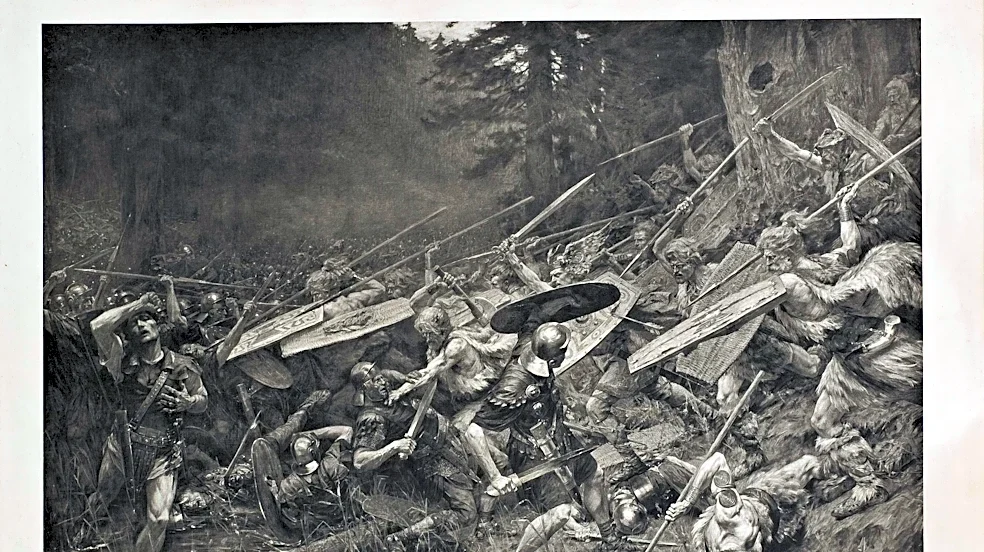
Afraid that his young compatriot might try to claim the lion’s share of the glory, the hubristic Caepio attacked the opposing horde without support from Mallius Maximus, and his army was, by all accounts, immediately destroyed, and his camp overrun.
Unaware and unprepared for Caepio’s assault, Maximus’ forces watched as 60,000 men at arms were wiped out in front of them. And then the tribes turned their attention to the remaining Roman army.
Trapped by the river and having just witnessed the slaughter of their comrades, the remaining Roman forces put up little resistance. The awkward positioning of the inexperienced Maximus’ camp only made things worse, and all told, fewer than 1,000 men survived the day, Caepio and Maximus among them.
120,000 men. The largest Roman force in almost 100 years. Gone.
Understandably, for the first time in decades, the Roman populace began to panic.
Furor Teutonicus, they called it — ‘Teutonic Fury’, as they awaited invasion in ‘terror cimbricus’, expecting the Cimbri to appear at the gates of Rome. In a desperate bid, they spontaneously (and in absentia) opted to reelect a previous consul to replace Caepio and Maximus (who were both imprisoned and later exiled), Gaius Marius, hero of the Jugurthine War.
And, as in the past, the choice proved to be a wise one.
Returning from his campaigns in Africa, Marius studied the circumstances of the recent Roman defeats and decided that the failures had been every bit as structural as strategic.
He resolved, in combination with Publius Rutilius Rufus, to pass sweeping military reforms that would help prevent such failures in the future (and would also aid in his effort to build another army from scratch).
Left with little more than mercenaries and a few thousand newly-trained legionaries, Marius removed land ownership from the list of requirements for military service, which allowed the landless poor to enlist for the first time, and granted non-citizens a chance at Roman citizenship through a 25-year term of service.
He levied for the funds to change the then-seasonal army into a permanent professional force, and improved military training by bringing gladiatorial instructors to train the men how to use their swords.
He standardized equipment and had the state supply the army with weapons for the first time, and imposed a code of strict military discipline.
He reorganized the standard military unit from irregular ‘maniples’ of 60-120 men into the Roman cohort of 480, demanding that each legionary carry their own rations and heavy equipment to reduce supply lines and the associated issues, allowing each cohort to operate independently and adapt to different combat situations as needed.
He even, as the legend goes, personally selected The Aquila, the silver/bronze eagle with a thunderbolt clutched in its talons, as the sole legionary standard.
Almost everything you might envision if you were to close your eyes and imagine a typical Roman legion was the result of one of Rome’s greatest and most embarrassing defeats.
And all of this took place roughly 500 years after the founding of Rome! The Romans had already conquered and held the whole of Italy.
They’d won naval wars and wars abroad. They’d defeated some of their greatest peers and become one of the most imposing powers of their historical era.
And they *still* had to refine a bunch of things to become the behemoth that we know them as now.
Hopefully, that’s what the Spurs have spent their time doing this off-season.
The reality is that these Spurs have lived off the victories and reputations of their predecessors for as long as they realistically could.
They were tried and tested by the New York Knicks, and it was revealed that they are not the Spurs of old.
They must forge an era all their own. They must refine the process further. They must assess the weaknesses of previous eras and come up with fresh solutions.
They’ve made great strides, but now they must become the machine.
They like to win with flair and flash, and, as I wrote on several occasions last season, seem to prefer a humiliating victory at the cost of the occasional loss.
Now they must learn to love the grind.
When Marius reformed the Roman military as he knew it, he abolished the cavalry altogether. And though Caesar Augustus would later reverse that policy in later years, Marius’ message was clear: there will be no cavalry to save you.
The legions had to rely on themselves and their training. Every battle would be won or lost, foot by foot, thrust by thrust, from one agonizing end of the battlefield to the other. There would be no fleet-footed horses to bail them out. No stirring charges. Just endless attrition and the smell of leather.
Three years later, when the opposing tribes finally moved towards invading Northern Italy, with even more allies in tow, it was barely a contest.
In their first serious battle near Aquae Sextiae, 37,000 superbly trained Romans turned back an estimated force of 200,000 Teutons, killing and capturing almost half of that number in a single engagement.
The rest of the war went quickly, with the Battle of Vercellae serving as a fitting bookend, as a combined 52,000 Romans crushed the last of the Cimbri to the tune of 120,000+ casualties.
This is something these Spurs have in them, too. We’ve seen the havoc they can wreak on an opponent. We’ve seen the speed with which they can bury most teams.
But that’s not going to work against the Vikings of NBA contention. There are teams that can match their fury.
Wemby’s predecessors set a foundation for an empire to come, but even at their peak, they were labeled “boring” and “robotic”, and they just kept winning. They beat you dribble by dribble, position by position, inch by inch.
These Spurs must learn that. Must crave that. Must find their own version of that, in a new era.
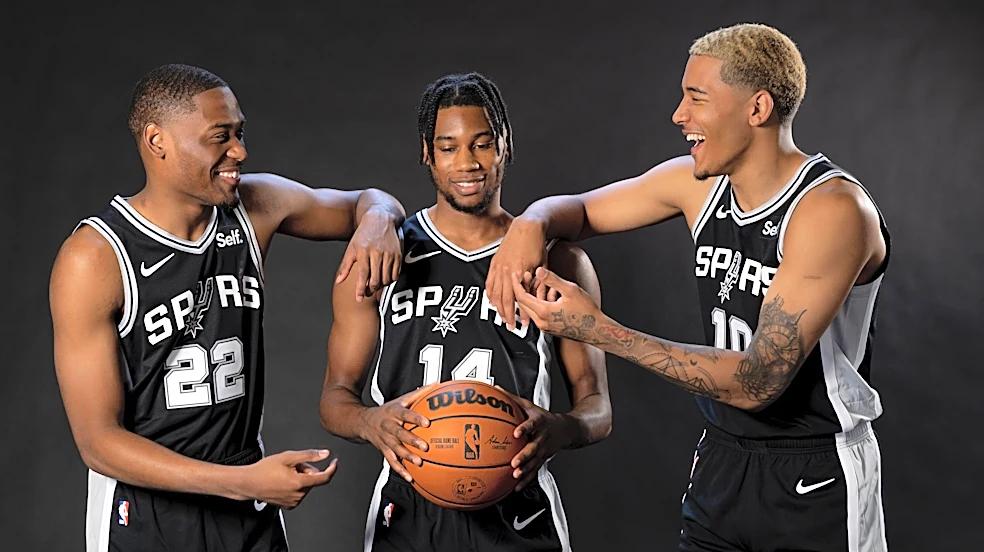
They’ve patched holes all off-season. They’ve bolstered the ranks with both veterans and youth alike. Their front-court is no longer a question mark. Their backcourt is teeming with talent.
Their Superstar is asserting himself early and often.
They can turn humiliation into victory. They have the whole season ahead of them to do it.
They just have to learn to march in close order.
Playing You Out – The Theme Song of the Season:
Winning Ugly by The Rolling Stones
Author/Editor’s Note: This article was partially inspired by James Hansen’s excellent piece for SBNation’s SLC Dunk.