


Bayern Munich faced Viking FK, a first-timer in the UEFA Champions League and it did not go as expected. The team from Stavanger in Norway was unpleasant to play against, both because of the team itself and also the circumstances surrounding it. From the artificial turf and the weather, to the game and the refereeing, it was not a night to remember. Bayern, even with thrice the number of total shots that their opponents took, managed only to score the same amount of goals.
Here are our observations
from the game.
How it all began
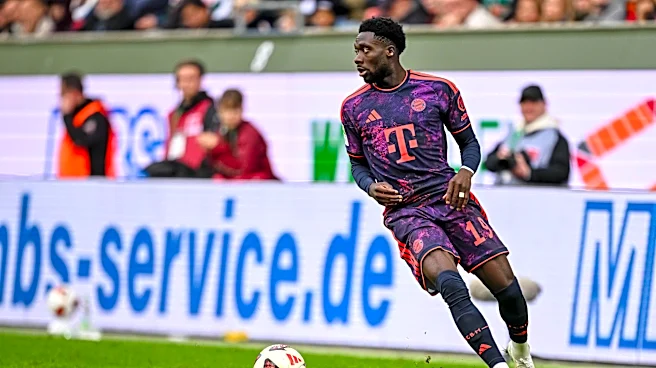
Bayern started the game off with Harry Kane up front, Lennart Karl in attacking midfield, Luis Díaz and Michael Olise on the wings. The pivot comprised of Joshua Kimmich and Tom Bischof — a long-anticipated change. In defense, Jonathan Tah started alongside Kim Min-jae, with Nathaniel Brown and Konrad Laimer. Nothing about this is truly new, including the mistakes Bayern made tonight.
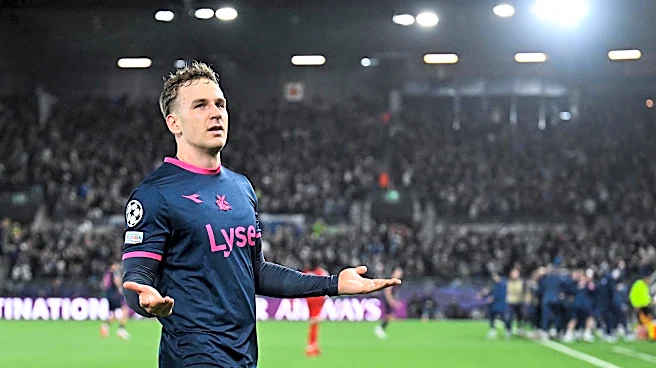
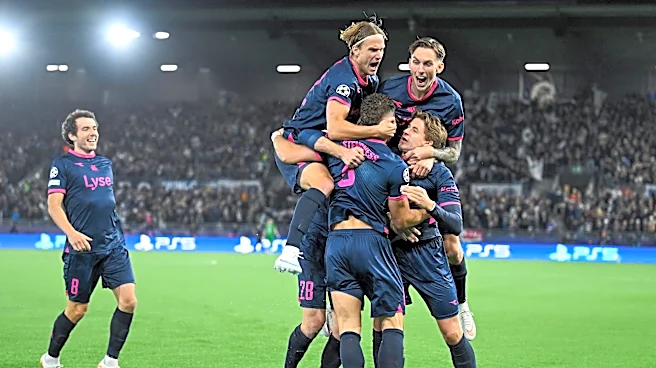
The first goal came in faster than anyone could’ve imagined. After Manuel Neuer set a record for fastest goal conceded in the Bundesliga, it was only fair for Jonas Urbig to also have a record in his name. By scoring in 74 seconds, Viking hold the record for the fourth-fastest goal scored against Bayern.
Even with multiple players marking him, Gianni Stensness seemed almost comfortable in scoring. In the footage, it is evident — he was the only player to anticipate the ball, map its trajectory, receive it and in the end managed to score as well. From Bayern’s end, there was both failure to mark Stensness and also failure to intercept the ball ahead of him — no one else was seen anticipating the ball like the opponent. The fact that he could receive and score on the same touch becomes a big question of Bayern’s set piece defending, which has been heavily criticized for nearly a decade. What separates Bayern from Stensness was that he was reading the ball while close to eight Bayern players all let Stensness pass them while watching the ball.
Bayern were now heavily disadvantaged. Viking’s plan was going to be to defend anyway, but the early goal meant they could settle in enough to influence the rest of the game. Bayern now had more reasons to play dangerously to get a goal past and every turnover could potentially become a counter-attack. However, this was a risk they had to take.
Between goals
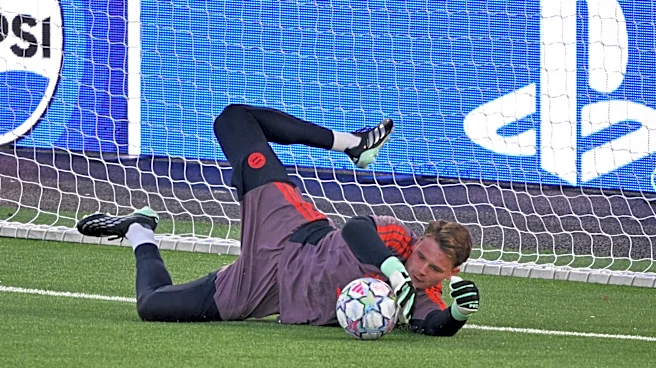
This is when the game truly began. Bayern attacked and attacked and Viking simply played shock-absorbers. Until the 34th minute there were a minimum of six attempts. Goalkeeper Arild Ostbo came through in this segment of the game. Bayer may have dominated the numbers, but they certainly were not in charge of the game. Dominating possession, with a whopping 70%, yet, Bayern were not in charge of the tempo.
Since the season began, an alarming pattern has been Bayern’s assumption that possession translates into control. The numbers make Bayern look dominant, but the pitch makes them look desperate. Can Bayern control the spaces behind advancing players? No, they have lost balls there before. Are they able to cut turnovers off early? No, often the opponent reaches the final third before any tangible defensive action is attempted.
The most important component of Bayern’s possession is the decision the attacking midfielder takes with regard to where the ball goes. Historically, Thomas Müller perfected this role, and in fact, this is why Bayern’s possession almost always translated into pure dominance. However, with Karl, this was not the case. We saw the most doubtful and indecisive version of the youngster this year, who has now lately struggled to convince as either an option for the wings or the center.
Karl did not know what to do with the ball, while Kane hardly got on it. The striker had dropped deep, as usual, and this effected nothing — since no one passed it to him.
Perhaps, someone should remind Karl that when in doubt, he can always pass to the literal Ballon d’Or contender feet away from him.
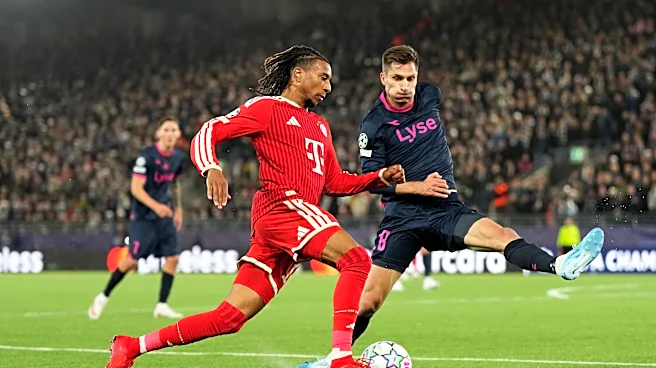
Coming to another disappointing attacking figure — Luis Díaz. Díaz is somehow single-handedly the best indicator of how a Bayern game goes. When he has a bad game, the whole team suffers, and when he does well, the goals come out of seemingly nowhere. This held up today as well, with the Colombian winger doing very little with the ball.
However, there is only so long Bayern can play around for — their opponents were still on high alert. And they learnt this the hard way.
Alarm bells
The Norwegians had a clear game plan, and they executed it.
Without the ball, Viking could defend and force Bayern to work harder in the final third, and with the ball, they knew how to make their limited chances work. Unlike Bayern, they did not need possession for stretches, they simply needed to win the ball and find the right pass to score before Bayern’s defense could react. And they did precisely that.
In the 38th minute, the gap widened for Bayern, as Viking drew blood with a second goal. Here is a visual of what happened.

Bayern here demonstrates the lack of what is known as a rest defense. The defense that steps up when you’re in attack but you’ve lost the ball. The ball was lost in the opposition box, and Bayern’s rest defense failed to grab possession. Unfortunately, things only got worse — Nathaniel Brown was the last man and he was simply a step behind Peter Christiansen the whole run.
Christiansen managed to make a nearly 40 metre run without any trouble.
The goal clearly set off alarm bells in the team’s head, which probably explains the second half.
The comeback
Is Vincent Kompany a tactical genius? Perhaps. But is he a man of common sense? Yes, and that made all the difference.
Substitutions were key to winning the game while 2-0 down. The manager brought on Dayot Upamecano, Ismael Saibari, and Alphonso Davies to replace Jonathan Tah, Lennart Karl, and Nathaniel Brown.
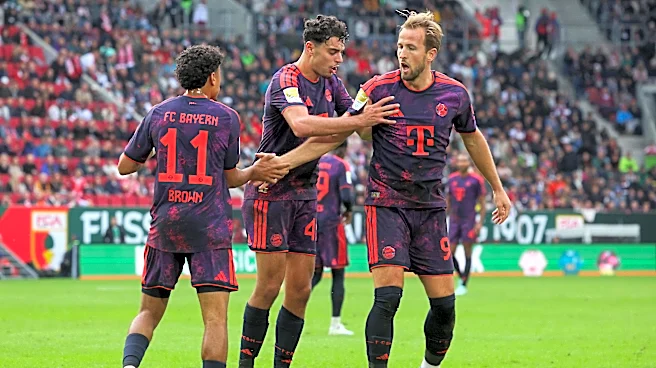
By the 54th, Kane managed to score a penalty, and by the 60th, Kane had converted a corner from Kimmich. In six minutes, the game was back in Bayern’s hands. The system had not changed to make this happen, Bayern simply became better with the chances they were perfectly capable of creating. The second half demonstrates what happens when Kane actually gets the ball, thus making Karl’s poor performance from the first half more evident. At the 71st, Bayern managed to finally turn the game fully around — Luis Díaz assisted by Konrad Laimer scored from close range.
This is where Bayern should have ideally drawn the curtains and decided to defend. But risk stratification is not Kompany’s strong suit.
Oh boy.
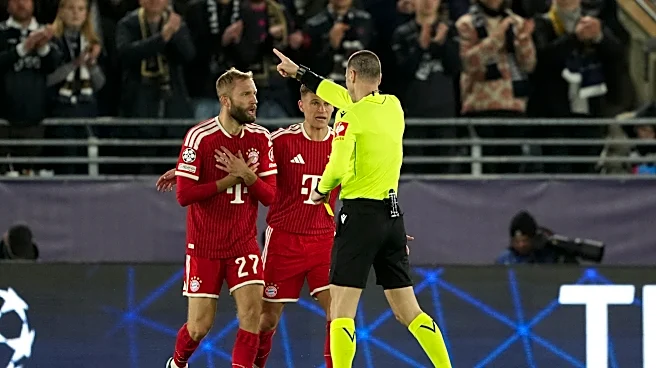
Did Michael Olise deserve to get sent off? As a Bayern fan, I’d certainly say no. But the refereeing was unfortunately clearly skewed, and Olise paid the price by losing his temper.
This loss created major problems. There was one lesser man to press, more space to cover with fewer players and one lesser attacking outlet. This could have been handled by a more defensive approach and Kompany then chose to sub on Josip Stanišić for Díaz. Viking still held the numerical advantage and used this as their opportunity to win the game back.
Five corners. That is the how many they forced out of Bayern defenders in ten minutes. They were not spamming crosses — they were selective in creating chances because they knew they’d use them effectively. Bayern could no longer afford to dominate possession, they simply had to survive the next 10-15 minutes without conceding. However, Bayern chose not to work on a survival mindset and the end result was the equalizer.
This Bayern team needs to snap out of it and realize that the season has already begun. Unfortunately, the decisions taken by players make it look like they’re still mentally in pre-season. They need to get more clinical and stop conflating possession with control, when clearly they have not been in full control for a hot minute. This team is so incredibly capable, if they can get out of their own way.
Join the conversation!
Sign up for a user account and get:
- New, improved notifications system!
- Fewer ads
- Create community posts
- Comment on articles, community posts
- Rec comments, community posts