

Now that the dust has settled after the first weekend of this season’s edition of March Madness, sixteen teams remain in the running for a National Title. While all the seeds left in the big dance range from 1-seeds to 11-seed Texas, one fact has become abundantly clear in re-evaluations: power conferences (and favorites) have dominated the 2026 Tournament.
Friday’s first round action marked a historical day in Tournament history, with all 16 higher seeds emerging victorious, good for the first time
since 1992 that all of the higher ranked teams have swept the full day. Additionally, fourteen games ended with margins of 20 points or more, the most in Round of 64 history.
While Thursday, Saturday, and Sunday all brought their fair share of memorable March moments, Friday’s trend proved to be telling. This tournament has not delivered us a real mid-major run, and no true Cinderella making her way to the ball that is the Sweet Sixteen (No, Texas does not count, even as an 11-seed). As much as this serves as a referendum on the current state of disparities in NIL funding from power conferences down to the smaller schools, it also gives an interesting commentary/storyline on how the transfer portal has pillaged mid-major programs. A graphic that has surfaced recently has our Michigan State Spartans highlighted as one of the only Sweet Sixteen team that has all five starters as players who began their careers at their current school.

As for conferences, the Big Ten leads the way into the second weekend, with six conference members reaching the third round out of the nine total B1G teams who qualified for March Madness. The SEC is next up, with four of ten tournament qualifiers surviving the first weekend, followed by the Big 12 with three, the Big East with two, and ACC with only Duke still standing. Let’s take a deeper dive into the performance and different records of the NCAA’s 31 qualifying conferences.
The One-Bid-Mid-Majors
Below is a list of all of the conferences who were represented by one lone champion in the 2026 NCAA Tournament, and how they fared in the first weekend of Madness.
Atlantic Sun- Queens (L- Purdue)
America East- UMBC (L-Howard, First Four)
American- USF (L- Louisville)
Big Sky- Idaho (L- Houston)
Big South- High Point (W- Wisconsin, L- Arkansas)
Big West- Hawai’i (L- Arkansas)
CAA- Hofstra (L- Alabama)
CUSA- Kennesaw State (L- Gonzaga)
Horizon- Wright State (L- Virginia)
Ivy League- Penn (L- Illinois)
MAAC- Siena (L- Duke)
MEAC- Howard (L- michigan)
MVC- UNI (L- St. John’s)
Mountain West- Utah State (W- Villanova, L-Arizona)
NEC- LIU (L- Arizona)
OVC- Tennessee State (L- Iowa State)
Patriot- Lehigh (L- Prairie View A&M, First Four)
SoCon- Furman (L- UConn)
Southland- McNeese (L- Vanderbilt)
Summit- NDSU (L- Michigan State)
Sun Belt- Troy (L- Nebraska)
SWAC- Prairie View (W- Lehigh, L- Florida)
WAC- Cal Baptist (L- Kansas)
Only two of the single-bid conferences were represented with a win in the Round of 64, High Point and Utah State, while a grand total of zero of these squads will be moving on to the Sweet Sixteen. Not a great showing from a full cast of potential bracket-busting teams, although Siena did give Duke quite the first round scare.

The Multi-Bid-Mid-Majors
The Atlantic Ten (St. Louis, VCU), MAC (Akron, Miami), and West Coast Conference (Santa Clara, St. Mary’s, Gonzaga) all sent more than one team to this season’s tournament. How did the Madness pan out for these schools?
A10
SLU: W- Georgia, L- michigan
VCU: W- North Carolina, L- Illinois
MAC
Akron: L- Texas Tech
Miami: W- SMU (First Four), L- Tennessee
WCC
Santa Clara: L- Kentucky
St. Mary’s: L- Texas A&M
Gonzaga: W- Kennesaw St, L- Texas
These squads fared slightly better overall, with three Round of 64 victories. However, thanks to Texas knocking off Gonzaga, along with both SLU and VCU ending their seasons in blowout fashion against Big Ten opponents, none of the seven schools above have moved on to the Sweet Sixteen.
Big East
I defer to you, the reader, on whether or not you consider the Big East a “power” conference in the world of college basketball. While they certainly are above the level of many of the aforementioned conferences, I’m not sure if I am ready to put them on the level of the B1G, SEC, or Big 12 (although, with the ACC’s performance this year though, you might have a case).
Regardless, we have a bit of a quality over quantity argument brewing for the Big East. The conference bidded only three teams, but two of them will be marching their way into the second weekend, St. John’s and UConn, both set to play in Washington DC against respective marquee opponents. Their only team not to make it out of the first two rounds was Kevin Willard’s Villanova squad, falling in the Round of 64.
UConn: W- Furman, W- UCLA
St. John’s: W- UNI, W- Kansas
Villanova: L- Utah State
While notable Big East programs like Marquette, Creighton, Seton Hall, and Providence did not qualify for the Big Dance this season, a 4-1 record from the conference’s three postseason representatives is far from a bad showing. Unfortunately for Big East fans and Danny Hurley, both teams are tasked with tough matchups (Duke and MSU) in the buzz saw of a region that is the East quarter of the bracket in 2026. Will we see an all-Big East Elite Eight matchup in the East? Unlikely, but certainly possible.
ACC
The “Atlantic” Coast Conference was in an interesting position heading into the 2025-26 college basketball season. After sending only four teams to the ‘25 tournament, the conference needed a return to national relevancy, both in the regular season and postseason. NCAA poster child Duke undoubtedly helped with this, but so did doubling their amount of bids to the big dance once March Madness ‘26 came along. Unfortunately for the ACC, after just two rounds, the conference is down to a lone representative. Let’s take a look at each of the conference’s teams tournament performance.
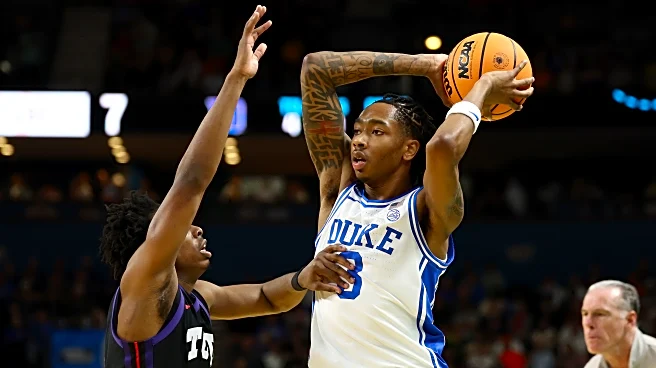
Duke: W- Siena, W- TCU
Clemson: L- Iowa
Louisville: W- USF, L- Michigan State
Miami (FL): W- Mizzou, L- Purdue
North Carolina: L- VCU
NC State: L- Texas (First Four)
SMU: L- Miami (First Four)
Virginia: W- Wright State, L- Tennessee
For a year in which the ACC sent a good number (eight) of teams to the NCAA Tournament, for only the third time ever, a 5-6 overall record is not nearly as impressive. To make matters worse, higher seeds in UNC, Clemson, and Virginia were all taken down by lower seeds in VCU, Iowa, and Tennessee. The ACC also lost both of their First Four matchups, found very tough sledding against Big Ten opponents in both rounds.

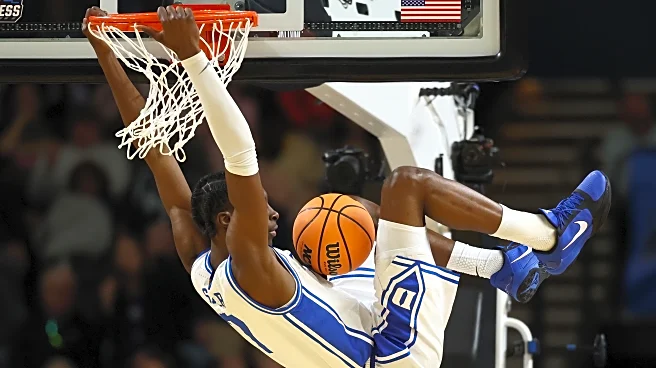
Thankfully for ACC fans, Duke is still alive and looking to be a real threat to string together four more wins- aside from a quick blip against Siena in the first half of their 1-16 matchup. It’s shocking to think that Friday’s matchup between Johnnies and Blue Devils will give Rick Pitino and St. John’s a chance to not only eliminate Duke, but eliminate the ACC in its’ entirety.
SEC
Now, to the conference where “It Just Means More”. Saying that was definitely a fair argument on Selection Sunday, where the Southeastern Conference boasted 10 total teams in the NCAA Tournament (out of their 16 members). One-seed and defending national champion Florida led the way, followed by a pair of No. 4 seeds, one team at each of the 5-8 lines, and both a ten and eleven seed.

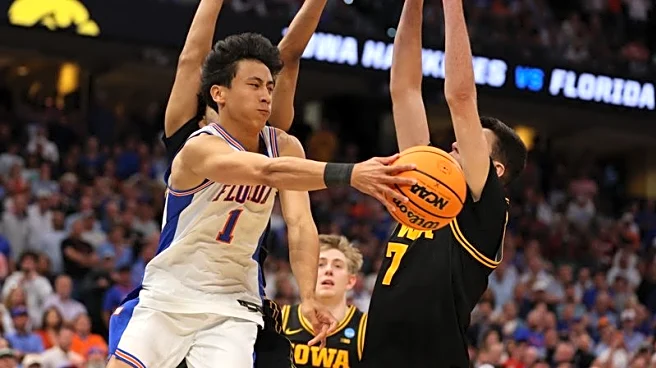
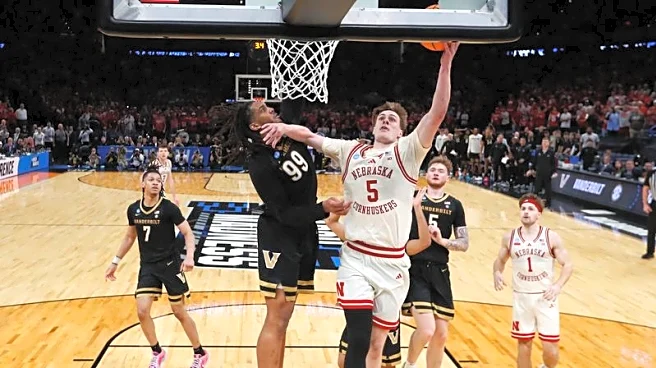
In arguably the best game of the tourney so far, Iowa dethroned the Gators in front of a very pro Florida crowd in Tampa thanks to a late three pointer. Nebraska also beat SEC foe Vanderbilt in cinematic fashion, with the Commodore’s final half court heave rimming out to send the Huskers to their first Sweet Sixteen. However, Darius Acuff, John Calipari, and Arkansas are still alive in the West region, and First Four participant Texas, who barely made the tournament in the first place, is the talk of the college basketball world after knocking off BYU and Gonzaga in back-to-back games. Rick Barnes and the Volunteers have survived the first weekend, and Nate Oats and the Crimson Tide also moved on in dominant fashion. Let’s see how the rest of the SEC did.
Florida: W- Prairie View A&M, L- Iowa
Arkansas: W- Hawai’i, W- High Point
Alabama: W- Hofstra, W- Texas Tech
Vanderbilt: W- McNeese, L- Nebraska
Tennessee: W- Miami, W- Virginia
Kentucky: W- Santa Clara, L- Iowa State
Georgia: L- SLU
Mizzou: L- Miami (FL)
Texas A&M: W- St. Mary’s, L- Houston
Texas: W- NC State (First Four), W- BYU, W- Gonzaga
That’s a lot of wins at all the seed lines for the SEC, far from a bad showing, despite their top dog (gator) falling to Iowa. Arkansas, Alabama, Tennessee, and Texas are all still alive, and each have their own case as to why two more wins and a Final Four appearance is more than just a pipe dream. However, it will be an uphill battle, as all four teams (all, interestingly, on the right side of the bracket) will face higher-seeded teams in their respective Sweet Sixteen matchups.
Big 12
The Big 12 conference matched their record amount of bids in 2026, with eight teams receiving opportunities in the tournament. Many experts remarked that the Big 12 was the most top-heavy conference represented in March Madness, with Arizona, Houston, Iowa Stata, and Kansas all sporting top-4 seed lines. Texas Tech and BYU weren’t far behind either, with five and six seeds, respectively. This proved to be true throughout the third weekend, for the most part. Big time teams like the Wildcats, Cougars, and Cyclones faced little trouble advancing to the Sweet Sixteen. Bill Self and the Kansas Jayhawks, on the other hand, suffered an early exit from the East region in buzzer-beating fashion at the hands of St. John’s.
Despite being down to three teams left, the remaining Big 12 reps are all the higher seed in their three individual Sweet Sixteen matchups. Arizona will take on Arkansas, Iowa State has Tennessee, and Houston will battle Illinois for a chance to be Elite.
Arizona: W- LIU, W- Utah State
Iowa State: W- Tennessee State, W-Kentucky
Houston: W- Idaho, W- Texas A&M
Kansas: W- Cal Baptist, L- St. John’s
Texas Tech: W- Akron, L- Alabama
BYU: L- Texas
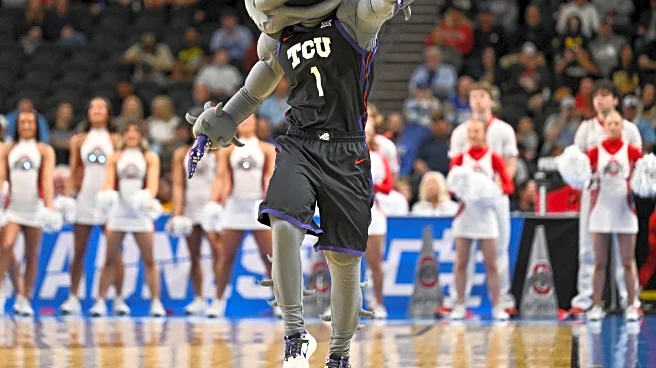
TCU: W- Ohio State, L- Duke
UCF: L- UCLA
On top of three teams still hanging around, only two of the Big 12’s teams did not get a win in March Madness. Certainly a solid showing, with three very realistic shots winning the Big 12’s first title since Kansas in 2022, and Baylor in 2021. Can Arizona get over the hump and make a deeper run to their first Final Four since 2001? Which of the defensive-minded two seeds, Iowa State or Houston, has a better shot in the next two rounds?

Big Ten
Finally, we get to the conference that has not won a national championship since Tom Izzo’s fifth season at the helm of the Michigan State Spartans in 2000. 26 years later, this year might bring the best chance at breaking the streak yet. The B1G matched the Big 12 with eight teams qualifying for the NCAA Tournament, but what is more impressive is that six of those eight squads have advanced to the Sweet Sixteen.
Amazingly, there is still a chance at an all-Big Ten Final Four, with MSU in the East Region, Iowa/Nebraska/Illinois in the South, michigan in the Midwest, and Purdue in the West. All of these teams survived their first weekend in a variety of ways, from routs like Illinois’ two victories, to barely squeaking by like Iowa and Nebraska.
Michigan State: W- NDSU, W- Louisville
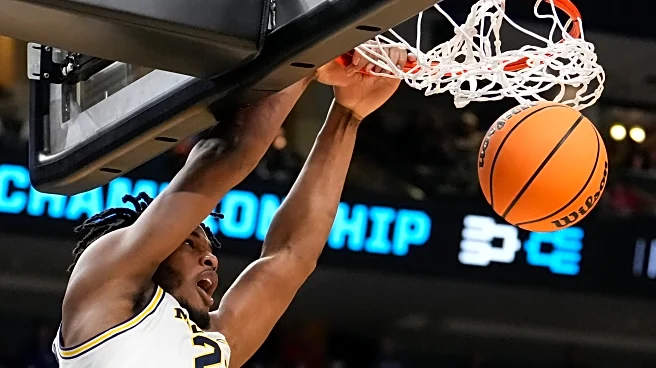
michigan: W- Howard, W- SLU
Purdue: W- Queens, W- Miami (FL)
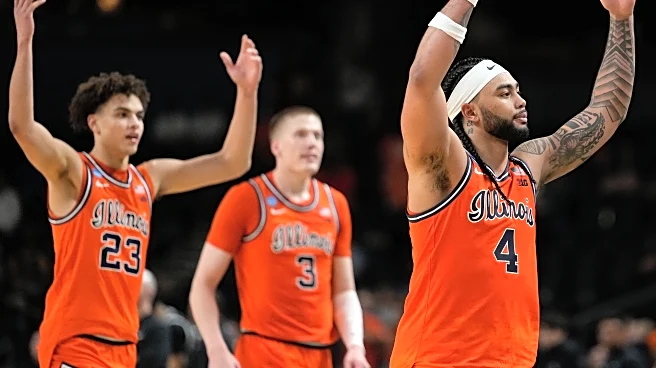
Illinois: W- Penn, W- VCU
Nebraska: W- Troy, W- Vanderbilt
Iowa: W- Clemson, W- Florida
UCLA: W- UCF, L- UConn
Ohio State: L- TCU
It’s almost like any argument made for the Big 12 can also be made for the Big Ten, at an even higher level. Top-heavy? Try four teams, all seeded 1-4, still alive and well. Deep? Only one team of the eight lost in the first round. Realistic paths to the Final Four and a natty? Without a doubt. It seems that the only bad news for the Big Ten coming out of the first weekend is that two of its’ own schools will face off in the Sweet Sixteen; in a game that some folks are calling “Farmaggedon”, between Iowa and Nebraska.

So, as we prepare for all of the action the Sweet Sixteen and Elite Eight will provide, who has the best shot of running the table to a national title? Are any of your Final Four picks still intact? Who is leading the way in our The Only Brackets competition? Here’s to enjoying another weekend of Madness.