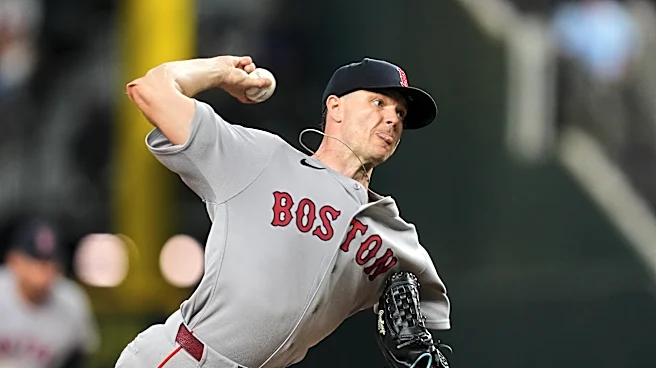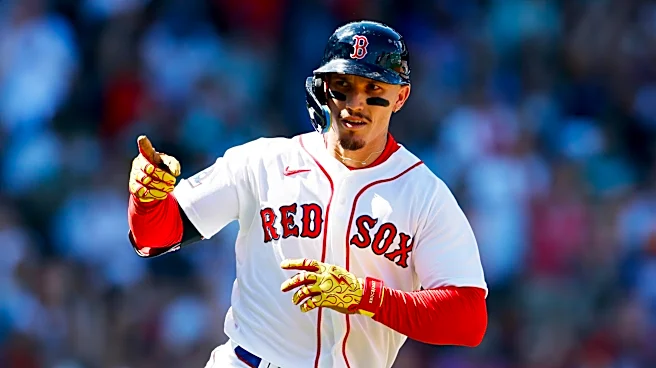

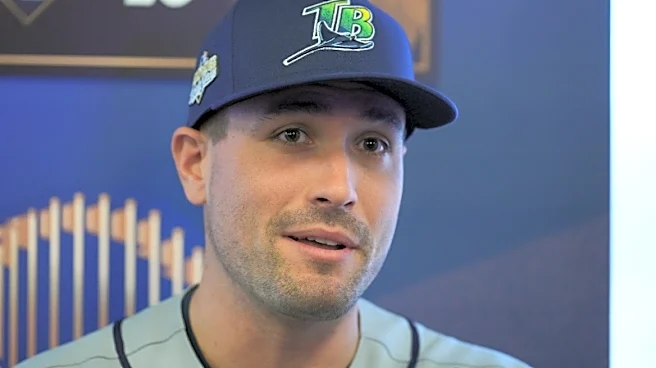
It’s time for another edition of the classic offseason game: Which guy would you rather have? On today’s edition, we’ve got a pair of players with stocks shooting in opposite directions.

Do you know who you want yet? What if I told you Player A is also cheaper? Would that sway your mind?
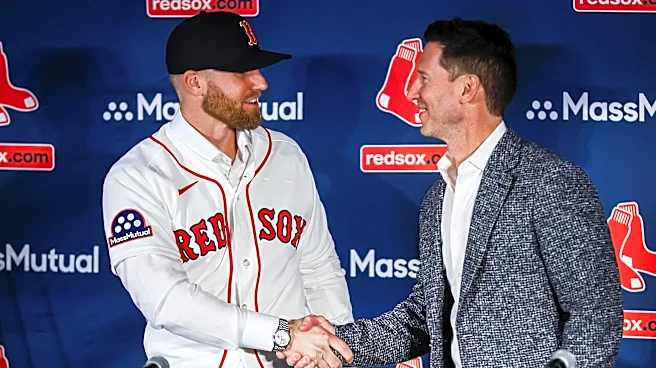
Well, if you haven’t figured it out yet based on the title of this piece, Player A is Jarren Duran and Player B is Jake Bauers —whom the Red Sox just handed a four-year, $58 million contract to mostly DH (and also
play some first base and left field if needed). So with Willson Contreras, Roman Anthony, Ceddanne Rafaela and Wilyer Abreu already on the roster, it appears the sand in Jarren Duran’s Red Sox hourglass really is running out this time.
But during this potentially brief window where both Jake Bauers and Jarren Duran occupy a 40-man roster spot (the team needs to make a decision on tendering Duran a contract by tomorrow, which could facilitate a trade), I want to step back and ask, what is Jarren Duran worth?
He’s clearly had the better career to this point, is younger, comes cheaper, and doesn’t cost a second and fifth round draft pick (which Boston gave up to ink Bauers). Excluding the ability to give Contreras the sporadic game off at first base, Duran could easily fill the same role the Sox just signed Bauers to play.
Now of course, context matters here. It’s the engine that drives reality. One player spent 2026 taking off like a rocket, and the other dropped like a boulder through Boston Harbor with a boatload of baggage attached to boot. But while these two travelers find themselves on overwhelmingly different trajectories, it’s important not to lose sight of the bigger picture, and take tabs on how much the dueling short and long-term factors work to balance the scales.
Regardless of where we land, if a Duran deal does develop in the next few days, the juxtaposition will be impossible to ignore, especially given the timing. Additionally, a trade here would go a long way in helping to answer the following question: How much does trajectory matter in MLB today? Because this really is the ultimate real world test sample.
In 2026, all teams have access to the analogous advanced algorithms, facsimiles of the same financial formulas, and are filled with front offices encompassing the same brand of brilliant people. But do you know where they differ when it comes to player analysis? The speed in which they draw their conclusions.
How quickly can they correctly identify a blossoming flower before its petals open? How fast can they offload Cinderella’s coach before it turns back into a pumpkin? And just as important, can they avoid getting fooled by jumping the gun on a fake diamond?
The Red Sox are immersed knee-deep in this game. They’ve bought into the Jake Bauers breakout. They’re relying on Curtis Mead’s power surge in 2026 to be real for the next four years, and they’re even rolling a smaller pair of dice with Jake Pineda, a minor league shortstop they just acquired in a trade for Angel Bastardo.
If they’re right about these breakouts being real, these moves become bargains and will make Breslow look brilliant. If they’re wrong, and then you also get bad news on other fronts like no more growth from Kristian Campbell and injuries taking down Garrett Crochet and Roman Anthony, then you have an unbelievably enormous pile of disastrous decisions. The line between genius and imbecile is quite fine in this industry.
But circling back to Duran, this is where his place in the story becomes fascinating, because he’s on the other side of the exact same coin as the other players mentioned. We’ll never know exactly what Breslow could have gotten for Duran 12 and especially 24 months ago, but with no trade materializing, it’s reasonable to assume they valued him heavily on the seasons that just completed. (Just as they’re valuing Bauers and Mead the same way.)
In a game where the objective is to maximize value, the Sox are dangerously close to buying high and selling low in a bunch of different areas. Either way, when the Duran decisions start dropping on Friday (they have to chose whether to tender him a contract or not unless he’s traded before then), we’re going to get quite a measuring stick when it comes to how much trajectory matters in modern MLB, and for that matter, in this front office.