
The Denver Nuggets have been ravaged by injuries this season. Nikola Jokić and Cameron Johnson have both been out since late December due to knee injuries. Christian Braun has been out for a few weeks
due to an ankle injury. And Aaron Gordon recently aggravated the hamstring strain that sidelined him for more than a month earlier this year.
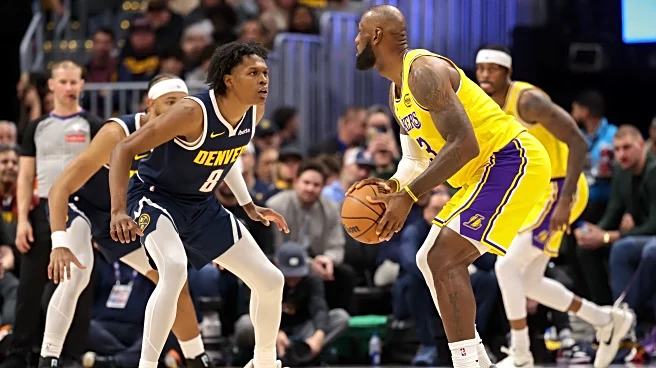
Those injuries couldn’t have come at a better time for Peyton Watson. In their absence, the fourth-year wing is averaging a career-high 14.4 points, 5 rebounds, 1.9 assists, 1.5 threes, 1.2 blocks and 1 steal in 30.1 minutes per game. He’s also shooting a career-best 49.9% overall and 41.1% from deep.
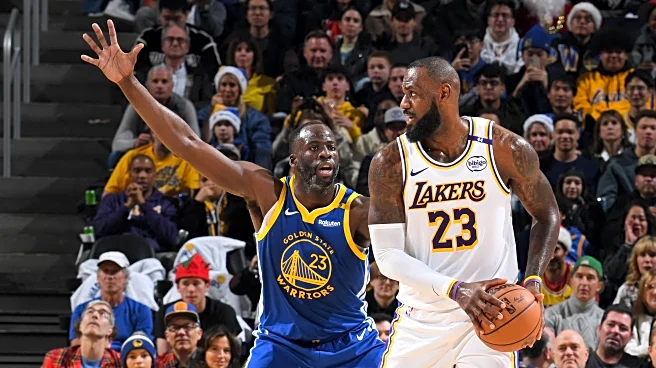
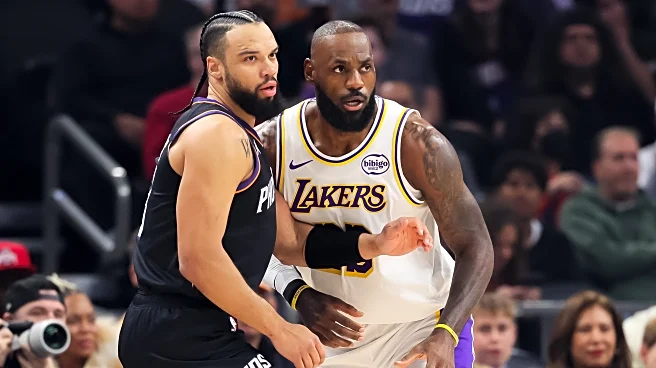
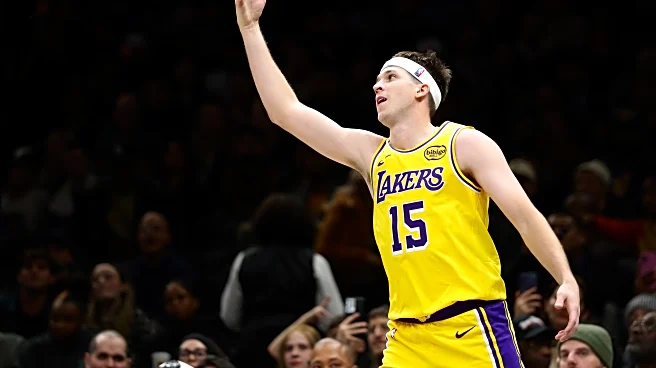
According to longtime NBA insider Jake Fischer, rival executives have become “increasingly curious” about Denver’s “likely struggles” to re-sign Watson this summer when he becomes a restricted free agent. Fischer mentioned that teams “projected to have cap space—notably such as the Lakers—are already preparing interest.”
In early January, Spotrac’s Keith Smith projected the Lakers to have roughly $55 million in cap space this offseason. To get to that figure, they’d have to renounce all of their free agents other than Austin Reaves, but including LeBron James. If Marcus Smart turns down his $5.4 million player option, they could get north of $60 million.
Either way, the Lakers are poised to be one of the offseason’s biggest spenders. And with the free-agent class getting increasingly whittled down, restricted free agency may be their best path forward.
That should put Watson firmly on their radar, particularly given the Nuggets’ upcoming financial outlook.
Why the Nuggets might not be able to keep Watson
Between Jokić ($59.0 million), Jamal Murray ($50.1 million), Gordon ($32.0 million), Johnson ($23.1 million) and Bruan ($21.6 million), the Nuggets already have roughly $185.7 million tied up in those five alone. The 2026-27 salary cap is currently projected to be $166 million, so the Nuggets will be well over that figure if they keep that core in place.
Add in Zeke Nnaji ($7.5 million), Julian Strawther ($4.8 million), DaRon Holmes II ($3.4 million), Jalen Pickett ($2.4 million) and Hunter Tyson ($2.4 million), and the Nuggets could already have $206.2 million in salary on their books for next season. That’s not counting Jonas Valančiūnas, whose $10 million salary is fully non-guaranteed.
The first apron is projected to be $210.7 million next season, while the second apron is projected to be $223.7 million. The Nuggets could re-sign Watson and go blasting over the second apron, but that would result in some harsh team-building restrictions, including the inability to aggregate contracts in trades.
The question for the Lakers or any other interested Watson suitors is how much the Nuggets would be willing to match in an offer sheet.
Over the past month, Watson has averaged 21.2 points, 5.8 rebounds, 2.5 assists, 2.1 threes, 1.4 blocks, and 1.3 steals in 35.9 minutes per game while shooting 49% overall and 42% from three. If that level of production was sustainable moving forward, he’d likely be looking at offers in the $30-plus million range.
However, a small sample size of star-caliber output isn’t always enough for a restricted free agent to break the bank. Just ask Philadelphia 76ers guard Quentin Grimes, who wound up settling for his one-year, $8.7 million qualifying offer this past offseason.
Since Watson played somewhat sparingly over his first three seasons, teams might not be swayed by his recent performance meriting high-end starter money. If anything, Nickeil-Alexander Walker might be the template other teams try to follow.
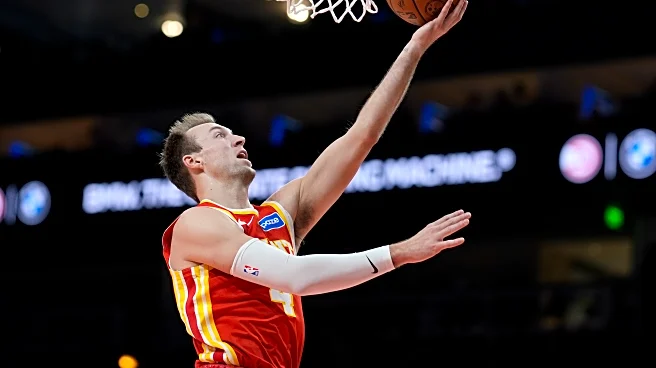
The Atlanta Hawks acquired Alexander-Walker via sign-and-trade this offseason by handing him their full $14.1 million non-taxpayer mid-level exception. He’s rewarded them by averaging a career-high 20.3 points, 3.5 rebounds and 3.5 assists in 32.9 minutes per game.
Like Watson, Alexander-Walker primarily came off the bench during the first few years of his NBA career. He had started 68 games across six seasons prior to his arrival in Atlanta, but he never had a sustained stretch of production like Watson is having right now.
The non-taxpayer MLE is projected to be $15.1 million next season. Unless the Nuggets trim salary, a contract in that range alone would push them dangerously close to the second apron. Anything worth $20 million or more would cause them to go over it.
Other suitors who are below the first apron could also offer Watson the non-taxpayer MLE, so the Lakers might have to offer him slightly more to entice him to sign with them. Even if they went into the $17-18 million range to start, they still could have north of $35 million to spend on other free agents before they re-sign Reaves.
Watson might not be the type of splashy star signing whom Lakers fans are hoping for, but the Lakers could do far worse than signing a 23-year-old forward who’s showing flashes of significant upside.
Unless otherwise noted, all stats via NBA.com, PBPStats, Cleaning the Glass or Basketball Reference. All salary information via Spotrac and salary-cap information via RealGM.
Follow Bryan on Bluesky.