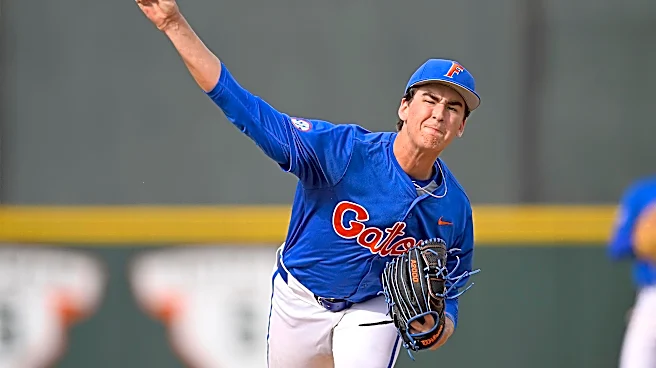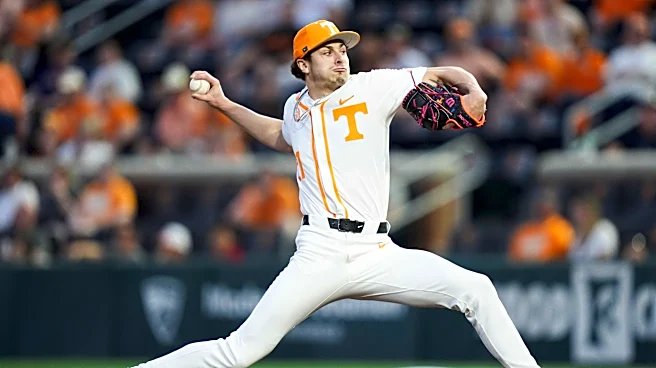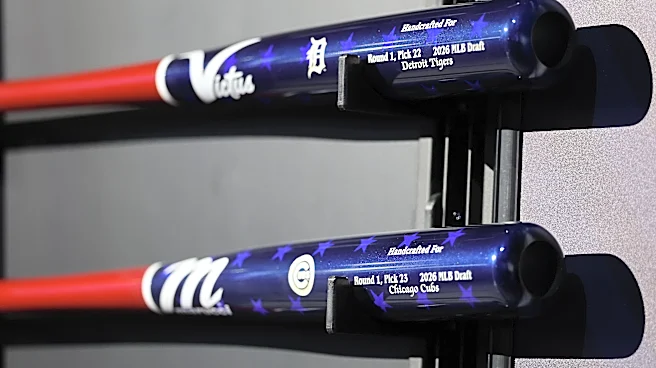




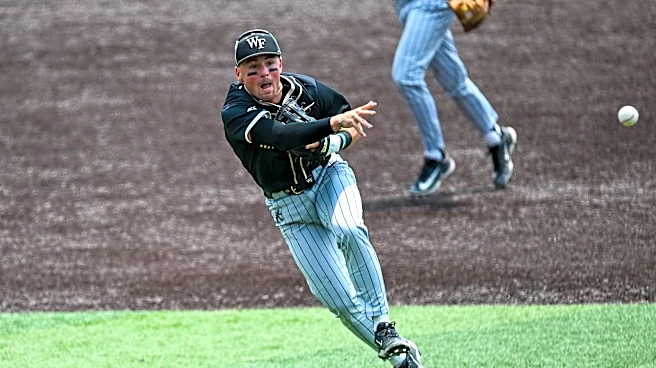
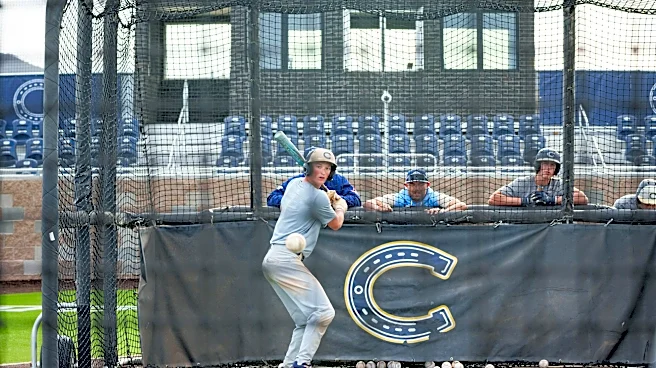
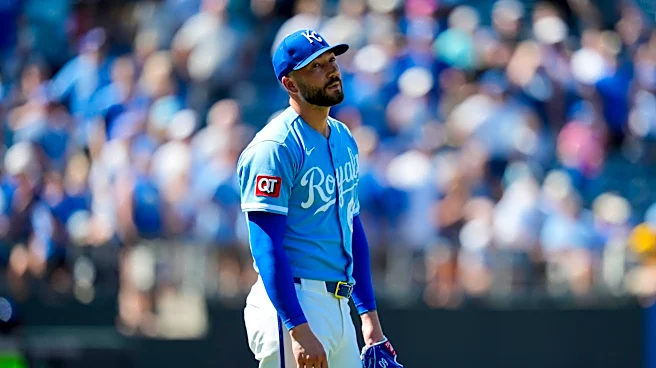
This week, Jake is joined by Nate Rasmussen of OverSlotBaseball.com. Nate is a former writer for Prospects Live, is scout school certified, and is a former pitching coach for Bushnell University! We dive into Condon, Kuhns, Maniscalco, Williamson, Montesa, Ferraro, and Kennedy. Then we touch on a few of the Day 2 picks that Nate really liked, as well as some NIL and CBA talk to finish the episode, and how those elements are shaping the future of the draft!
Spotify:
YouTube:
Transcript:
Jake Wood (00:23)
Welcome into the Viva El Birdos Podcast. As always, I am your host, Jake Wood. If you enjoy this episode, please be sure to like and subscribe to our channel. We are available on YouTube, Spotify, Apple Podcasts, and all of your favorite audio streaming platforms. We are privileged to be joined by Nate Rasmussen of Overslotbaseball.com tonight. Nate began covering amateur players with Prospects Live. He is scout school certified and is a former pitching coach.
For Bushnell University. Nate, of course, is now teamed up with Joe Doyle over at Overslot, and they do fantastic work. Please make sure you take time to go over to overslotbaseball.com and check out all of their great content.
Nate, welcome to the show. Are you ready, are you more ready to talk Cardinals draft picks or for your head to hit the pillow after a marathon of content over the last forty-eight hours?
Nate Rasmussen (01:26)
Jake, normally I would be excited to sleep, but I’m really excited to talk about the Cardinals draft. We’ll get into it a little bit later, but I’m pretty bullish on what the cards are doing here. So sleep can wait for now.
Jake Wood (01:38)
Hell yeah, brother. You know what? I’ll save the 18th-round pick, Gabe Camacho, for later in the show, so we might as well start from the top. You know, the Cardinals selected prep outfielder Trevor Condon out of Etowa High School in Georgia. For a majority of Cardinals fans who only heard of Condon’s and, you know, pretty much all of these players’ names for the first time yesterday, tell us what we need to know about the type of player the Cardinals just drafted at 13?
Nate Rasmussen (02:04)
Yeah, Trevor Condon, first of all, amazing baseball player. I had him ranked as my tenth-best prospect in the draft. A lot of people really, really liked him heading into the draft. And a big part of that was the kind of person he is. He plays with his hair on fire. Insert any of those adjectives. He’s just a gamer. And it’s so clear when you watch him play. Like it’s really, really like a fan favorite type of material. He had a lot of suitors in the ten-to-twenty range. He was a real hot ticket item in this class. He’s an aggressive player. He’s physical for for 18 year old.
It’s a very reactive, kind of unorthodox swing, which is what had some people on the fence about him this early in the draft, but it’s led to a lot of success that you can’t really question. And I think it’s gonna play very well in Pro ball. It’s a really good plate approach. He’ll put up eighty-grade runner times, 70 grade runner times, dynamic center fielder, like could be a gold glove in the future. That is how good he is at center field. It’s really, really talented in all aspects of the game.
Above-average bat speed is going to help kind of raise that floor up. The contact quality is pretty good. He’s on the ground a little bit too much right now, though. So probably the first thing we’ll look at as he matures. A couple of years in the minor leagues. I want to see that the ground ball rate decreases a little bit. Maybe start pulling the ball in the air a little bit more, as everyone wants. It gets some more power. But there aren’t too many holes to pick with him, unless you’re one of the people who are unsure about the swing. But I’m pretty comfortable with it, Jake.
Jake Wood (03:28)
You know, we’ve heard, you know, player comps of like PCA, Lenny Dykstra. I’ve even heard whispers of, like, a Kevin McGonigle. Like, is there any of those players that stand out above the rest in context to like a Trevor Condon?
Nate Rasmussen (03:42)
I would not go PCA. I think the hit tool is better than the power projection right now. Some people have put as high as a sixty-grade plus hit tool on Condon. I’m more in the fifty-to-fifty-five range. I think the power could creep up to forty-five to fifty as well. So maybe a little bit more reminiscent of let’s see here. I think that there are some shades of a guy like Max Clark in there. You know, really good defensive center fielder, pretty good plate approach. They’re both aggressive in different ways. I would say Condon definitely swings the bat. Maybe
A little bit more than Max Clark, but kind of similar in the hit-to-power ratio. Clark might have a slightly more comfortable hit tool right now, though.
Jake Wood (04:20)
You know, at pick thirty-two, the Cardinals took their third Tennessee volunteer pitcher in the last two seasons, Tegan Kuhns, after taking Liam Doyle and Tanner Franklin last season. Well, you know, what’s the skinny on Kuhns and what kind of value did the Cardinals get at thirty-two?
Nate Rasmussen (04:37)
I would say he went right around where we expected him to go. At times this year, Kuhns could have been maybe a top-twenty pick in some mocks that we did over at Overslot. But it’s a really safe pick that also has that kind of projection or upside we’re looking for. It’s a really good four-pitch mix. It’s kind of had an up-and-down season at Tennessee, including being sent to the bullpen at one point. But that Tennessee team had, by all means, had a kind of an interesting year. Really good mechanics, but it’s a lot of effort. Kind of similar to the Liam Doyle conversations of last year. Like he throws with a lot of effort. People will always be slightly scared by that, but Kuhns fills up the zone. So really nothing to worry about there. There are a ton of strikes. Really great fastball that I think analysts think that you can get a little bit more out of at the pro level, but as is right now, it’s a six-degrade pitch. The locations could use a little bit of help. I think that’s why the fastball plays down sometimes. He leaves it too low in the zone. It’s more of a carry pitch. Chase up out of the zone. Get your whiffs up there. Slider’s really good. That’s his main put away. His changeup’s actually flashed pretty well to lefties, and he has a curveball that works well. So it’s like one of the more complete four-pitch arsenals right now of almost any draft-eligible pitcher. It’s just a really projectable arm. I think he slid a little bit. This year was underwhelming at times. When you look at the season stats, it looks spectacular. Like a really great season. There were times when Kuhns just wasn’t performing up to the lofty expectations a lot of us had on him, which probably caused him to fall a little bit further in the draft than maybe we were expecting.
Jake Wood (06:05)
Would you say this is, if all things fall right, probably a mid-rotation arm-type projection?
Nate Rasmussen (06:12)
I think a number three starter makes a lot of sense as kind of the ceiling, most likely. I think you have a built-in number four starter in Tegan Kuhns, though.
Jake Wood (06:20)
Awesome. You know, moving right along to pick number fifty, Rocco Maniscalco made some waves at the scouting combine a couple weeks ago, unleashing ninety seven mile an hour rockets from shortstop. Does the upside of Maniscalco rival that of Condon’s, or do you think those two players are completely different in terms of the tiers that they fall into?
Nate Rasmussen (06:40)
Rocco Maniscalco’s in a league of his own. I don’t, it’s almost like it’s really fun to talk about. You look at this guy who’s barely like seventeen years old. One of the, I think maybe the youngest player ever drafted. You might have to help me on that. He’s so young, and he’s one of the best defenders we’ve got, which is not something you really expect from these players who are class up and are the youngest. You don’t expect them to like have these super carrying tools. You expect it all to be projection. There’s not a whole lot of projection left in the glove. Like he is going to be one of the better shortstop defenders in the minor leagues, right off the bat. You know, you look at someone like Billy Carlson, who got drafted last year, revered for his glove. Maniscalco is most likely better than that. This is really incredible stuff. And this isn’t clickbait or anything like that. I think he’s maybe the second best defender in the draft behind Roch Cholowski It’s hard to go away from Roch. There are some good outfield defenders who definitely make a case, but as far as shortstop prospects go, Maniscalco is right up there. Really big arm, like you saw at the Combine. He did struggle a lot in high school.
Jake Wood (07:19)
Wow.
Nate Rasmussen (07:40)
school games this spring. The bats coming around, but the underlying metrics aren’t super favorable for the bat. But when you draft a guy like this, you have so much time. You know, this is a guy who’s got four, five, six years in the minor leagues ahead of him to really work on that bat and just let him mature a little bit more.
Think he could reach double-digit home runs with like a middling average, like, well, maybe like a 240 average with like 12 or 14 home runs makes this like a premium player in the league. Like that might be a four or five or shortstop, just based on the defense alone and an average hitting. If you get him to 100 WRC plus, this draft pick is an absolute slam dunk. And the floor is high enough with a player that’s so far away, and just with the defense alone, if he can get to like a 45 hit and 45 40 power, it’s gonna be a really, really nice pick. Really surprised that they were able to get a guy like Maniscalco and Condon together, but by all means it looks like they’re gonna make it work.
Jake Wood (08:34)
If the thought was that four or five years down the track, they were able to move him to, say, third base and b be able to pair him on that left side with a Masyn Winn, is that would that be putting too much pressure on the bat? Do you think that the bat probably doesn’t profile that well at third base, or ’cause that’s kind of where I thought originally that they might be going with that is like, hey, this might be, you know, the third baseman of the future kind of thing. Would d you know, would it take some pretty outlier-type steps forward for him to probably fit that mold of like a future third baseman type?
Nate Rasmussen (09:10)
To develop a lot to develop for him to move off of shortstop in any circumstance. I think if the shortstop position was full, you probably wouldn’t play Rocco Maniscalco at another position, most likely. He’s one of those guys who’s just such a good shortstop that you would hate to see him play a non-premium position. Maybe you could try him in center field. You know, he’s not the worst runner ever. The arm’s incredible. But I would imagine that the plan is to keep him at shortstop for as long as humanly possible.
Jake Wood (09:35)
Interesting. Well, that’s all I mean; that’s all really good stuff. I just didn’t know that the bat was lagging that far behind, but that’s good information to know. You know, at pick sixty-eight, the first of the two picks the Cardinals received in the Brendan Donovan trade, the Cardinals selected outfielder Andrew Williamson out of UCF. tell us more about Williamson and the skill set that he’s bringing to the St. Louis organization.
Nate Rasmussen (09:59)
Yeah, Williamson’s just bringing like a lot of a lot of power, basically. You know, kind of one of those typical college outfielders nowadays. It’s like middling with numbers with really great EVs and barrel rates. He’s been a strong performer for two years at UCF. Kind of interesting that you see a guy play for like three years at a school like UCF. So I like to give him a little credit for that. He could have left and gone to any SEC program in the country last year, but he stayed at UCF. Just a really cool little thing there in this landscape of college baseball. He’s a little undersized, which makes him kind of more of an average power projection, but he’s just blossomed over the last year and a half. Struggles a little bit with fastballs up; there’s some whiff on velo in general, sometimes a little bit of chase. It’s pretty, pretty average chase rates. I’d say probably unlikely to play center field in the pros. I think the best-case scenario you’re looking at is a strong corner outfielder, like a fourth outfielder type. Maybe some DH Days mixed in there, probably gonna crush Righties, and hits the ball really dang hard. So just for context, it’s the ninety-seventh percentile, ninetieth percentile exit velocity. There are a lot of percentiles in what I just said, but one of the best power hitters in the country last year.
Jake Wood (11:05)
We love percentile conversations, so bring it all. We love the context. You know, at seventy two the Cardinals put their hiking boots on, headed out to the mountains of West Virginia, and they selected right hander Dawson Montesa You know, according to pre draft rankings, this was a bit of a reach, but you know, this could also be a below slot deal to use the savings on a Maniscalco You know, we talked about that a little bit, you know, pre showed. What’s the appeal of a Dawson Montesa for you, Nate?
Nate Rasmussen (11:07)
Ha
Think the whole appeal is savings here. You know, at Overslot, we had him ranked two hundred and sixty-ninth. So obviously a bit of a jump here. With that being said, there’s enough clay in this build to make him still an exciting underslot option, which helps pay for the prep guys at the front. He transferred from Adelphi to West Virginia this year. It’s like a mid-nineties fastball; it’s taken a big jump.
In twenty twenty six, it’s like a deception carried profile, which makes him a safer pick than a lot of others because he’s always just gonna play up a little bit because hitters just have a harder time seeing him. It’s a big, like two-plane curveball as his main secondary. I think the curveball’s kind of having a renaissance right now. So I always like seeing these pitching prospects with this really nice curveball. Fastball and changeup have a little bit of life. I think a number five starter is the hope. He’s like not a good extender, which just kind of immediately removes him from like the super high upside conversation because the release traits aren’t crazy enough to push him into like this high upside kind of mix. You hope he’s a starter, maybe a swing starter between Triple A and the MLB, but I think that serves a pretty valuable role just given the amount of money you’re probably gonna allocate to him.
Jake Wood (12:40)
Certainly. You know, I think the thing for most players and me, like, their curveball was about as fast as my fastball was. And so, like, seeing some of these guys you talk about watching a beautiful curveball. It’s my favorite thing from the pitcher’s mound, it was releasing that thing and just watching it drop off the table. So much fun. But, you know, that’s beside the point. At eighty-six, this is my favorite turn of phrase for this draft.
The Red Raider slugger turned Redbird, Caden Ferraro, was the selection. A defensive home is probably going to be his biggest question mark, you know, but the bat is special, so tell us more about the impact that Ferraro can supply.
Nate Rasmussen (13:22)
First of all, that was pretty slick. I really liked it. Caden Ferraro is gonna be a DH. All right? People don’t wanna hear it. It’s he if you DH in college, you’re most likely a DH in the pros, especially if you don’t have any kinda like movement traits that are desirable. He’s got a good arm, but he does not move well at all. This is a guy who had so much helium late in the year. People started kinda actually looking at numbers altogether and looking at, you know, chase percentage leaderboards and stuff like that, and Caden Ferraro is near the top of pretty much every single metric that we have on these hitters. It might be one of the best data profiles in the class altogether. It could be like a 55-hit, 60-power guy. You know, if someone’s a 60 hit 60 power, they’re borderline Yordan at this point. So, just saying, like, this is a DH who’s gonna hit really well. It’s a gap-to-gap approach, which limits some of the in-game power output. You would expect him to have more home runs than he had last year at Texas Tech.
He just doesn’t pull the ball in the air. You know, he’d rather take that double to the opposite field. It’s real bat speed. It’s pro-ready bat speed right now. It’s a really sound swing. It’s kind of just the perfect selection in this range. You get a hitter with such a high floor, but also so much potential. I know that the lack of defensive versatility kind of limits the ceiling, but at the same time, this is a guy who could be one of the better DHs in the league. Maybe you stick him in left field or right field, and it works out, but I’m not so sold on that. And you can’t take a positionless guy higher than you know the top sixty or seventy. This is one of the best positionless hitters in the whole draft.
Jake Wood (14:51)
Terrific. I love the sound of getting more impact bats, and you know the Cardinals are unfortunately playing in a hitter wasteland like Busch Stadium. Having dudes who can just simply rake is music to my ears. The final day one pick was shortstop Dee Kennedy out of Kansas State. You know, my favorite question I see from general fans is.
You know, why do they draft X position players? They already have players X, Y, and Z at that spot. You know, can you elaborate on Kennedy and also kind of the benefit of drafting shortstops as a strategy in professional baseball?
Nate Rasmussen (15:32)
Yeah, so shortstops are the most athletic players in the field for the most part. They’re also the best defenders. We typically don’t see outfielders be able to move into infield because it requires more technical skill, but infielders can move to outfield pretty easily because it’s a less technical position. So when you put all that together, shortstops can basically play third base, second base, shortstop, center field, right field, left field. You know, normally shortstops don’t go up to play first base or catcher. Stranger things have happened, but that’s a lot of versatility for a player. We see it with the Padres. They have what, seven shortstops on their team, and they’re playing all over the place.
Dee Kennedy actually really fits that mold. And my notes here, I have him as like more of a utility player long term. I think his value isn’t gonna be with the glove. It’s gonna be with the versatility of that glove. He’s been a real riser this year, too. This is a guy who wasn’t on nearly any radars entering the year and slowly worked himself up to this kind of first-round area. I think that there were real suitors, like the second and third rounds. I’m really surprised, honestly, that he made it this far. It’s kind of a shakier hit tool, but he showed enough impact this year to kinda blur those lines enough. He maximizes contact quality. Like one of the best players in the draft. The air pull rate, I believe, is the ninety-eighth percentile. So this guy, like, the swing is tailored to lift and pull the ball and maximize, you know, the more average raw power that he might have. he doesn’t chase a whole lot, but he whiffs, which helps the floor generally. He’s selective at the plate. The in-zone whiff is what’s gonna really be the determining factor of whether he’s a future pro or if he’s more of a, you know, guy who can never quite get over the hit tool concerns.
Jake Wood (17:06)
So let’s do this. How did you evaluate the Cardinals and the way that they did on day one overall, and then also your favorite pick of theirs from day one? Before we move on to day two.
Nate Rasmussen (17:17)
Yeah.
Yeah.
Just gotta be honest, this is my favorite draft class, and it’s not just because I’m on Viva El Birdos, it’s because they drafted players in spots that I would have taken those players earlier. You know, Condon was 10 on my board; they took him at 13. A guy like Dee Kennedy was, I believe, top 70 on my board. This is a guy that they took down the board. Every single one of these guys could have been taken much earlier, aside from Dawson Montesa, who serves a very important role in getting all of these guys. But to answer your actual question.
I really like Trevor Condon, but as far as value goes, Rocco Maniscalco is one of the sneakier picks. To get that good of a defender is just such a boost to a farm system because you just have this premium tool set that you don’t find that often at the most important position in baseball. If you hit on that pick, it might end up being the best player from this draft. If you can hit, you know, at a league-average level, it’s truly one of the more valuable players. So I don’t know how you can’t be excited about that, especially since he’s so young.
Jake Wood (18:09)
Right.
Yeah, the Cardinals did something similar last season with their selection of Ryan Mitchell, too. You know, they took that really high upside prepster right in the middle of the that fifty I think it was fift it’s fifty two overall, somewhere in that range, but you know, this seems to be kind of where the Cardinals are are wanting to really hit on that that high upside prep, you know, range of player, and we’re seeing that now two years in a row with the addition of Maniscalco. You know, let’s quickly highlight some of the day two picks. You know, who are some guys that stood out to you from the Cardinal selections today?
Nate Rasmussen (18:51)
Yeah, without a doubt. It’s hard not to talk about Cal Randall, first of all. It might be the best fastball in the class, which just has, you know, an exciting feel to it. It’s like a guy you could probably put in a big league bullpen in a year, and he’ll succeed right away. He really doesn’t have any even average breaking stuff for secondary pitches right now. He is an okay changeup, but the breaking balls are really bad. If you can get this guy to just one more usable pitch, you know, some kind of slider that’s about average, he’s gonna be one of the best relievers in the league. It’s just right now, guys can kind of kind of predict his fastballs coming because it’s it’s not it’s not a great secondary. So being able to get a guy like that who could be a future nearer is always really fun. Going down the board a little bit more, Owen Henne is this D2 guy that you guys got from Seton Hill. Didn’t know it existed until today. He’s a high zone contact, good EVs. he’s a Draft League standout. So I did want to highlight that you guys took about four or five different players today that were all playing in the MLB Draft League, a feeder summer ball team. think just like the Cape Cod League MLB Draft League serves a really similar purpose. But we have a lot of advanced data, and it’s more public in the draft league. The Cardinals took a surprising number of guys from the Draft League. It’s a popular league, but you guys like truly used it to your advantage this year. Just going up and down the board. So many of these guys were playing this summer in the draft league. So just an interesting thing that I saw.
As I go down the board a little bit more, Nick Bonn from Cal Poly has thrown 100. That’s always fun. Jacob Haley from South Alabama has been up to 97.
I think that you guys are gonna try him as a starter in the minor leagues. It’s a good slider. There’s deception in the delivery. All the things you want to see from a small school pitcher that might signal better things are on the way. The last guy I truly, truly want to highlight is Drew Horn, a right-handed pitcher from Middle Tennessee. This is a guy whom I interviewed back in the fall; I got to know him a little bit, you know, playing at the small D1 school. He had a phenomenal 2025, but he’s a sophomore and couldn’t get drafted. He had a tough 2026. By all means, he took a big step back this year. A lot of pressure on him. He added a bridge pitch breaking ball. He’s a shorter frame, so the fastball plays up in the zone a little bit better. He’s got these really high-spin breakers that have performed well every single year. His changeup’s showing flashes. He wins with locations. If this guy can get back to his 2025 form pretty soon, he’s just gonna be a slam-dunk reliever. You could try him as a starter as well. I just believe in the person a lot, and coming from a smaller school in Middle Tennessee, they’ve done a really good job developing their pitch in the last couple of years. So I wouldn’t be surprised if he’s someone that opens some eyes in about a year or two.
Jake Wood (21:23)
You know, on the Cal Randall front, we saw the Cardinals last year take Tanner Franklin out of Tennessee, a reliever converted to a starter. You know, the way that you were describing Randall sounds a lot like Liam Doyle, whom they took last year. Big fastball, you can rely on it heavily. He could be a reliever in a year. Had that splitter that was a workable secondary, but really had no quality, you know, breaking pitch to speak of. And we’ve seen this season that they started Doyle at double A and allowed him to just kind of spam that breaking ball over and over again to really get that good feel for it. Do you think that we could see a similar track for a guy like Cal Randall? Would you try it as a starter just to see what that could do? Or do you think that guy is probably just reliever straight out the gate and like that’s that’s all he’s gonna be?
Nate Rasmussen (22:13)
It’s definitely within the realm of possibility. When you have that good of a fastball, it would almost be stupid not to try him as a starter because of the value you can extract from him. I would say it’s pretty unlikely just because of the lack of secondary pitches at this point. Like, even if he adds one pitch, it’s probably not gonna be enough to start and get past the fourth or fifth inning very often. So I would lean on maybe they try it out, but you’ll have to do a lot of work. The player development team, you know, has a project ahead of them trying to add some secondaries in a pretty short turnaround before next spring. So, we’ll see!
Jake Wood (22:43)
And then, of course, I have to go back to my guy out of the eighteenth round because I promised. Gabe Camacho. Let’s talk about Gabe Camacho. What are the Cardinals getting? You did the background, you teased that somebody, some show you were gonna go on, was gonna ask you about the eighteenth round pick. Let’s get into Gabe Camacho.
Nate Rasmussen (23:01)
The quick context for the listeners here. I put out a tweet just trying to be a silly guy. Said I go on a lot of podcasts this week, and they always ask me about the 18th round pick that I’ve never heard of. Some guy who wasn’t anywhere near my board, never saw him play. And Jake has taken that and run with it, and I love it. I’m ready for Gabe Camacho. Outfield/first base type from San Diego. He maximizes his contact. A really good air pull bat, which is just nice to see. He’s gonna perform right away with that. He’s young, above-average bat-to-ball, plus raw power is what I had on him. Good first base defender. It might be more average raw power at this point. We’ll see. Loud and aggressive swing at times. The video had me a little bit concerned. There weren’t a whole lot of super clear angles for me to fully dissect it. Looked like a lot of barrel tip, so we’ll see. Definitely a bit of a project. 18th rounder, not a whole lot of expectations, but for an 18th rounder, this guy has the underlying skills, you know, the percentile rankings to maybe say that there’s something there in the future. We’ll see. He’s gonna have to hit a lot to continue playing at first base, most likely.
Jake Wood (24:01)
And then let’s just talk real touch real quickly on Freshcorn, and who is who did they take in the twenty-three Colin Ritchie, that’s right. The two that really fell.
Nate Rasmussen (24:07)
Colin Ritchie.
Jake Wood (24:12)
that most had projected in the top ten rounds, of course. Just touch on those guys really briefly. If by some miracle stroke of luck, you know, not Richie’s already s come out and said that he’s going back, but they were somehow by a miracle stroke able to grab Freshcorn away from his commitment, what would the Cardinals be getting in that profile?
Nate Rasmussen (24:32)
Yeah, just two classic insurance picks. I think Freshcorn was unlikely to be drafted this year, just based on how much he can gain from hopefully starting next year. It’s like a talented east-to-west arsenal. So big sweepers, kind of bigger, bigger sinkers. He doesn’t walk anyone, like truly nobody. I it’s sub three percent walk rate, which is incredible. up to ninety-six. He was a reliever this year, but he should start in the future, and then his value will be even higher. But if you were to draft him, it was gonna cost some money. Probably a top two hundred-ish talent in the draft. Colin Ritchie was a guy who could have gone on day one. We were really surprised by this one at Overslot. Unlikely to sign, borderline day one talent. Plays a pretty good center field and does everything you want with the bat. Definitely, at times there are some concerns with the hit tool. This is a guy who must be getting an absolute bag to stay in college because this is one of the better players in college baseball.
Jake Wood (25:24)
My last question before we go, with the inclusion of NIL now in, you know, college baseball, how much more difficult does that make it for, you know, major league teams to, you know, sign players away from their college commitments, ’cause no longer is it kind of this, you know, under-the-table bag that these players are getting. It’s out there, it’s loud, it’s proud. Everybody knows that, like, there’s money being given to these players, like real, like, you know, bonus pool type money. Like how much more difficult does that make that for, you know, these scouting departments to try to like decipher who is worthy of trying to to sign and pull away from that and like actually being able to go with best player available as a strategy, like what is so f like often commonly referred to as like the best strategy to go for when it comes to like the major league baseball amateur draft?
Nate Rasmussen (26:21)
Yeah, so just to start, I think the C-tier prep prospect is gonna go extinct. It already kinda happened this year. The guys who are expected to sign for between a hundred thousand dollars and five hundred thousand dollars, and maybe even upwards of a million dollars, are gonna opt to go to school because they can make up a large portion of that money or make more money than they were expected to get when signing, and then they also have another shot at the draft, to you know, prove it and go even higher in the future. So this year, like, there is a real lack of, like, $500,000 prep players that we’ve seen, you know, in the 12th round and in the 10th round and in previous years. And that’s because they all have these college commitments. You know, if I’m gonna make a hundred, a hundred fifty thousand dollars a year at my college over, you know, in one year, that’s gonna be close to my signing bonus after three years, and I get another shot at this thing. I can double dip. So we’re gonna see, you know, only the best prep players are gonna are gonna get drafted at this point. It’s just gonna be it’s gonna be interesting to see how it plays out, you know.
Just with the CBA coming up and stuff like that, a lot’s probably gonna change with the draft, so not too confident in how this is all gonna turn out. But right now it’s kind of a scary thing. You know, more college players are probably gonna keep getting drafted.
Jake Wood (27:34)
I wanted to I as a quick follow-up, I did want to ask you about that because as the C B A is is coming up and we’ve heard like the first proposal, which we always know is just absolutely flat out ridiculous, that they’re eliminating high school players altogether, prep players from like the talent pool. Like what what would that do for the major league baseball draft if it were, like, essentially a college-exclusive and, like, in a way, I guess you would look at college almost as if it were single A?
Nate Rasmussen (28:03)
Yeah, you’re just offloading the development. You know, college is better than single A at this point, like a lot of college baseball. You can say the SEC might be better than a high A, so you’re just off its lazy. You’re offloading development, you’re taking the fun out of the draft, you’re taking the the scouting, the the full scouting experience out of the draft. You know, having you know, being having a range of scouting from 17-year-olds to twenty-four year olds in the draft allows for unpredictability and allows for, like, your scouting department to gain real edges with your team. If you have a really good scouting department right now in baseball, you can win. We see it with the Dodgers. It’s incredible. Yeah, they buy players, sure. They also scout, and they put a lot of money into their scouting department, and it pays off for them. That’s why they’re so good. So I, and as you can see, this is kind of getting me going right now. You’re taking the parody out of the draft. Not all of it, because you can still you still have to sign the right college guys and stuff like that, but you’re just taking so much of the unpredictability that makes this game so great and allows teams to go from bad to good. The White Sox, for example. Amazing draft. They’ve drafted really well for multiple years now, and it’s gonna turn this franchise around. That’s gonna be harder; it’s just gonna be harder to do if they pass rules like that.
Jake Wood (28:51)
No, please go for it, yeah.
You know, you look at teams like the Rays, like the Guardians, like the Brewers, for example, when you were talking about the Cardinals, and it sparked this thought in my brain. You know, the thing about the Brewers in the last few years, how they’ve really gained an edge, is the JUCO players. They’re really hitting that market really hard. And I’m wondering if the Cardinals are looking at the Draft League as their way to kind of, you know dive into that specific pool and try to maximize that and leverage that area of the draft. I, you know, it when you said that I was like, Epiphany moment, like that’s what they’re talking about. That’s probably what Chaim Bloom has been referencing so much: they’re looking for every available edge, every opportunity, and every margin to try to get themselves back to where they believe they’re supposed to be at the top of the mountain. And, you know, if the MLB draft league is where they’re looking to go for that next available edge, then that’s incredibly intelligent, in my opinion, for what they’re trying to do. And using the Brewers’ kind of, you know, map to kind of follow on that.
Nate Rasmussen (30:22)
Definitely interesting. Yeah, I haven’t heard anyone talk about the draft league stuff, but there’s a good number of guys, especially after round 10, that you guys took, like half of them are playing in the draft league. And the D2 player Eddie, I believe. Yeah, I mean, the Draft League’s awesome because it just adds more data points, adds more security. You know, scouts can recommend players to the draft league as well, so you can put two guys on your board head to head, watch them both play against each other, and see who’s better right in front of you. Kind of one of those things. So just expanding summer ball options as well is incredible.
Jake Wood (30:50)
Yeah, it’s really interesting ’cause nearby here, the Alton River Dragons are a team that is involved in the Draft League, so like I could, if I had the time, go pop over and see some of these players. Unfortunately, between the day job, this job, and raising a family. I really don’t have time to go watch, you know, Draft League Baseball, but if I did
Nate Rasmussen (31:07)
Yeah.
Jake Wood (31:12)
I would certainly be over there. Nate, thank you so much for your time tonight. You know, for coming on the podcast and giving us all this great draft insight. We really appreciate it. You know, real quickly before we go, where can fans go to find your great work and find you on social media?
Nate Rasmussen (31:27)
Yeah, go check out all my work at overslotbaseball.com. You know, the incredible Joe Doyle and our team over there have been pumping out a bunch of content lately. My Twitter is @RasmussenBase, so you can all say hi to me over there. And a shout out to Cardinals fans. Thank you so much for having me, Jake. You guys should be really excited about this draft. Truly, truly an awesome, awesome experience for your team.
Jake Wood (31:46)
Well, now, for the last from twenty sixteen to twenty twenty three, twenty twenty four, there was what we like to call the long dark period, but I think we’re starting to come out of that now with all of what Chaim Bloom has started to implement and do and the, you know, the drafting and the development they’ve brought along. The brighter days are certainly ahead. It’s very easy for Cardinals fans to see what is what is coming up, and I think that, you know, we’re as much looking forward as we are, you know, enjoying what’s happening in the moment now with the unexpected play that’s come from this young, exciting team.
Thank you so much for joining us for this episode of the Viva El Birdos Podcast. Don’t forget to rate, review, and hit that subscribe button so you’re notified every Monday morning when our newest available episodes are dropped. We will talk to you all next week and bring you more great Cardinals content. Have a great day, St. Louis, and let’s go Cards!