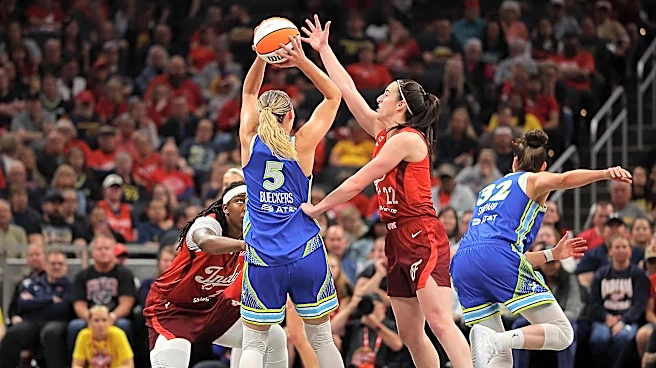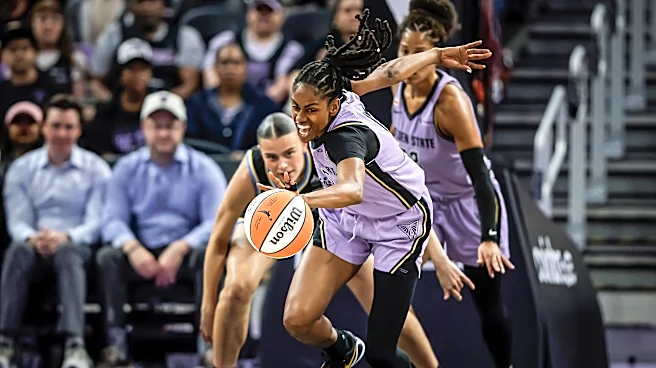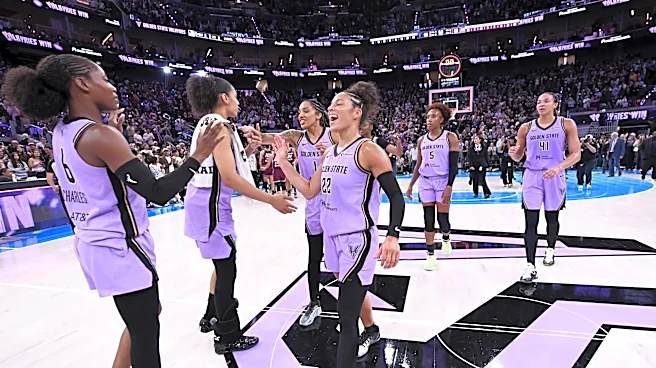


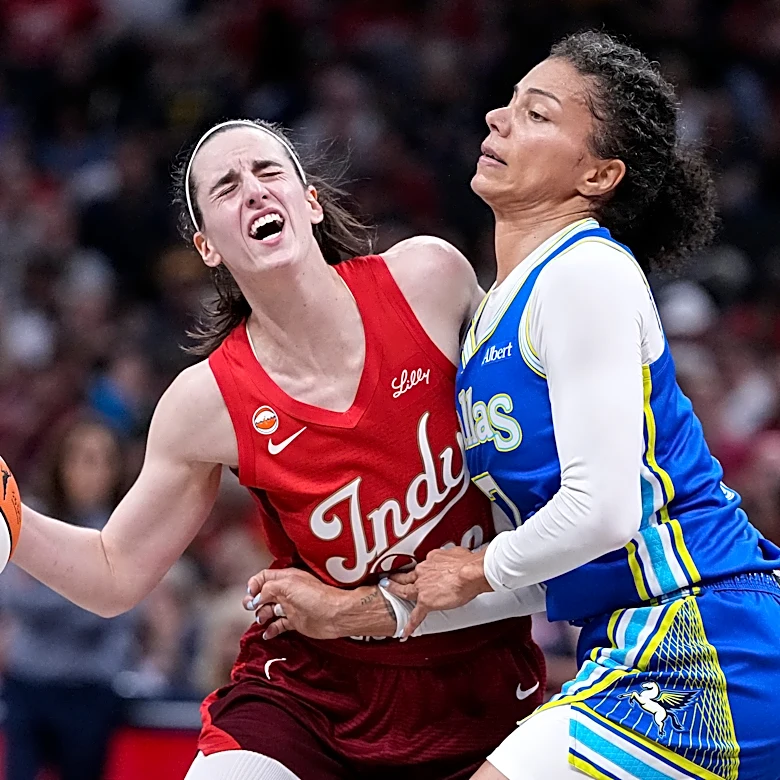


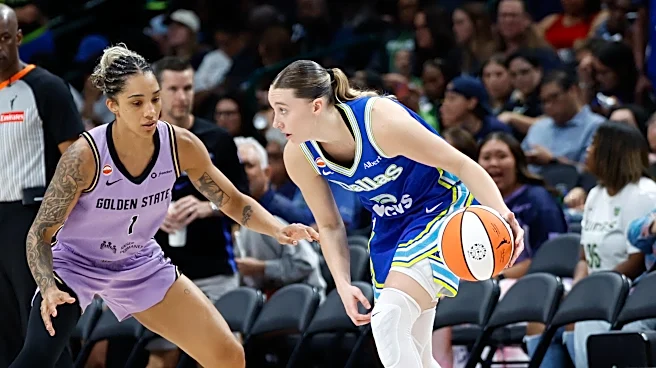
Don’t look now, but the Golden State Valkyries (24-9) have become one of the best teams in the WNBA.
After a shockingly successful inaugural season in 2025, it was more or less assumed that Golden State wouldn’t be sneaking up on anyone in 2026. The defensive-minded, “we-before-me” approach instilled by rookie head coach Natalie Nakase took hold almost immediately, and the cohesion with which the Valkyries played as an expansion team caught a lot of opponents off guard, but they’ve been on everyone’s
scouting reports for a while now.
So how have the Valkyries responded in their second WNBA season? They’ve gotten better, and considerably so.

With 11 games remaining in the regular season, Golden State is No. 2 in the standings, ranking only behind the Minnesota Lynx (28-7). That means they’re also currently ahead of teams like the Las Vegas Aces, Atlanta Dream, Indiana Fever and several other preseason favorites to win it all.
But are the Valkyries legit?
We’ve seen them handle the rigors of the regular season with few issues, especially since the start of July—a period during which they’re 11-2. But during the playoffs, they’ll be tested to a different degree. Let’s discuss how the Valkyries stack up against the rest of the WNBA’s top teams.
Defense remains Golden State’s calling card
Here’s one thing that probably won’t ever change: The Valkyries are the best defensive team in the WNBA.
They’re allowing 101.4 points per 100 possessions—the lowest defensive rating in the league by a decent margin—and rank a close second to the Washington Mystics in opponents’ effective field goal percentage (48.8 percent).
While Golden State has been above-average at forcing turnovers (19 percent opponents’ turnover percentage), the Valkyries’ real strength on defense is limiting high-efficiency shots, particularly those around the rim. No team allows fewer points in the paint than the Valkyries (32.7 per game), and by taking away those easy shots, they’ve forced teams to beat them by hitting long jumpers—something that hasn’t happened very often.

Another indicator of a solid team defense is when opponents have a difficult time getting assisted shots. Golden State excels in this area, too; the Valkyries allow the fewest assists per game in the WNBA, consistently keeping opponents from getting the shots they want.
This is where the Valkyries truly show their teeth; with high-energy ball hawks like Veronica Burton and Gabby Williams (who has been gaining traction as a Defensive Player of the Year candidate), Golden State wears down opponents and gets them to settle for contested, low-efficiency looks.
Nothing comes easily against the Valkyries and that’s the kind of defense no one likes to play against.
Ball security gives Golden State a solid offensive foundation
Golden State will always be known as a defensive-minded team, but there are several reasons to like what the Valkyries are doing on the other end of the court, too.
Yes, they’ve cooled off a good amount since the last time we checked in on them. The Valkyries are still leading the WNBA in 3-pointers attempted per game (30.5) and percentage of field goals attempted from 3-point range, but have fallen to No. 6 in accuracy (35.5 percent).
That’s not to say that they can’t get hot again.
Williams and Burton are capable shooters, and in Janelle Salaün and Cecilia Zandalasini, the Valkyries have a pair of wing players whose only job is to fire away without conscience. Salaün, in particular, has been even more effective since getting moved to the bench; she’s averaging 13.1 points and 2.5 3-point makes per game, both up from her rookie season, and her overall level of productivity is making her a strong candidate for Sixth Woman of the Year.
Still, the strongest aspect of the Valkyries offense remains something they don’t do: turn the ball over.
Despite the shoot first, ask questions later mentality of several of their players, the Valkyries do a remarkably good job of valuing possessions. They’re playing at by far the slowest pace in the league, averaging 75.86 possessions per 40 minutes, and this intentionality has both helped keep their turnovers low (15.1 percent turnover rate; No. 2 in the WNBA) and stay in the defensive-minded, grind-it-out mentality they’re most feared for.
So, do the Valkyries have enough to beat the WNBA’s best?
As great as this all sounds, there’s still the simple fact that the Valkyries haven’t performed well against the WNBA’s better teams.
The proof is in the pudding: Against the other top-four teams in the league (Minnesota, Las Vegas and Indiana), Golden State is a combined 2-6.

Against the rest of the WNBA’s playoff-caliber teams (for the sake of this article, let’s say everyone else above .500) the Valkyries have performed much better. They’re a combined 9-1 against Atlanta, Washington, New York, and Dallas.
So, no, the Valkyries aren’t “bum-slayers.”
They’ve just matched up better against some teams than others, and that’s not exactly a unique data point; you’d be hard-pressed to find a team—besides the Lynx, who most would agree are a cut above the rest of the championship hopefuls—that matches up well against everyone else. They key for Nakase and her staff will be to identify which of their likely playoff opponents would theoretically give them the hardest time, and make the necessary adjustments ahead of time to give themselves the best possible chance.