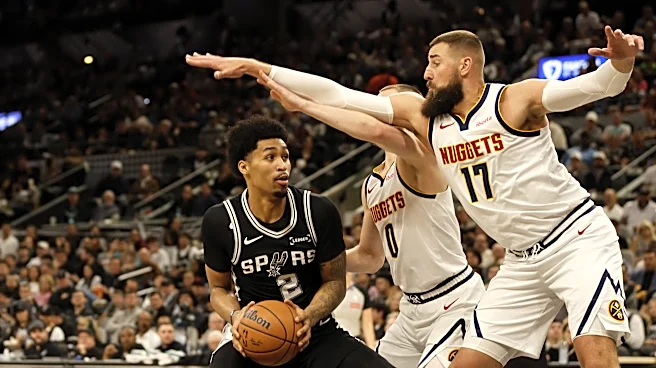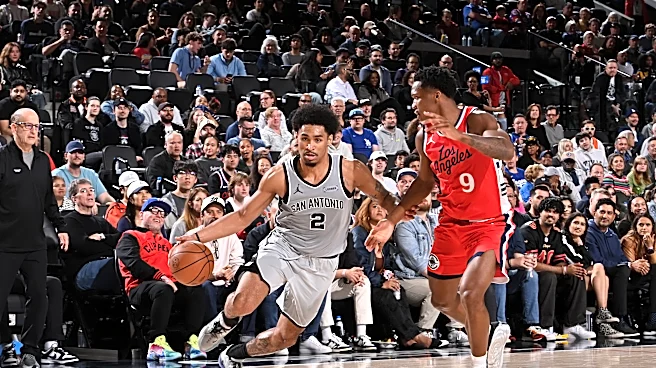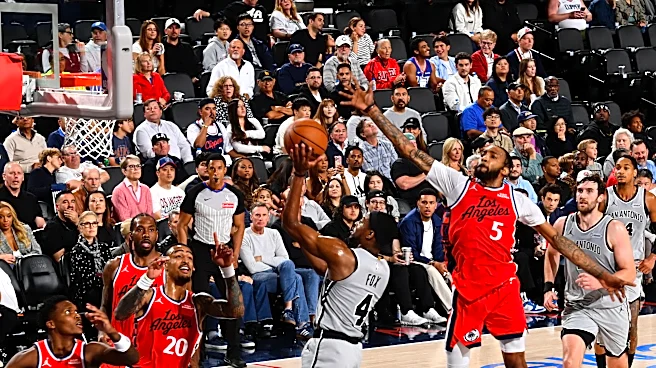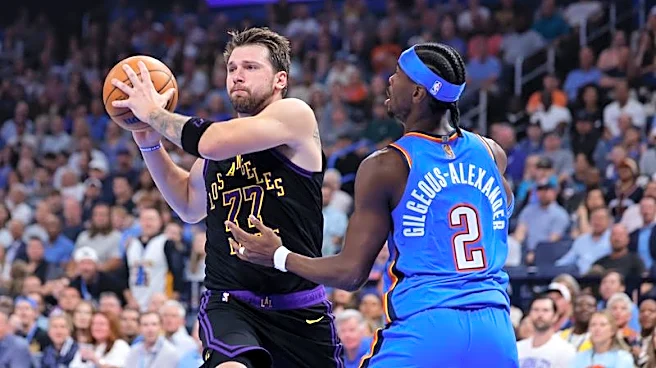




I’m not going to lie, I came into this game a bit disgruntled. First, I found out that Victor wouldn’t be playing in the team’s first contest against a competent opponent in some time. Second, the OKC-Lakers game had started, and it was already abundantly clear that the Spurs weren’t going to be gaining any ground in the standings via this game. Put simply, I found myself reflecting on the real possibility that San Antonio could lose against the Clippers, which – together with OKC’s win over the Lakers – would have
just about slammed the door on any chance of the Spurs securing the #1 seed.
Thankfully, this iteration of the Silver and Black is exceptionally deep came to play last night despite their best player being out. As a result, San Antonio mostly cruised to yet another blowout victory. On top of that, they managed to produce a box score with a number of interesting gems:

- The Spurs failed to win several potentially critical battles in this game, as evidenced by their +6 turnover differential, +3 foul differential, and +0 offensive board margin. Since the start of 2012-2013, this is just the 46th time in 16,817 regular season games that a team has won by 19+ points while recording margins as bad or worse in all of these three areas.
- Largely due to the extra fouls and turnovers, San Antonio also faced deficits in FGA (-5) and FTA (-4). While these are not severe disadvantages, they certainly don’t tend to produce easy wins either.
- However, all of these deficiencies were swept away by the Spurs’ dominance in shooting efficiency, including FG%, 3P%, and FT% differentials of +10.4, +20.19, and +7.94 percentage points, respectively. 208 other regular season winners have met or surpassed all three of these differentials since the start of 2012-2013, and the average margin of victory in those games was nearly 29 points.
- The three-point battle in this game deserves some more attention. First, the total volume of threes attempted (58 across both teams) was quite low by modern standards. In fact, only 69 other regular season games have had a 3PA total at least that low in 2025-2026 (that’s about 6% of games played in the season to date). As you might expect, you don’t have to go too far back for this story to change dramatically. As recently as the 2017-2018 season, an absolute majority of regular season games had a 3PA total of no more than 58, and just a few years prior to that 58+ 3PA totals in individual games were relatively rare.
- The second interesting thing about the three-point battle is how comically bad Los Angeles was. In going 5-of-27 from distance, the Clippers allowed the Spurs to earn a +7 3PM margin on just 31 three-point attempts. Winning teams have achieved this combination in 695 other regular season games since the start of 2012-2013, but the vast majority of those cases came in the earlier part of the period. So far this season, it has only happened four other times.
What are Team Graded Box Scores?
Very briefly, these box scores grade winner-loser differentials for basic box score statistics, with the grade being based on the winning team’s differential relative to other NBA winners during a defined reference period. Think of it like a report card for understanding how a given winner performed relative to other winners. The reference period used runs from the start of the 2012-2013 season to the latest date of play, including only games in the same season category (i.e., regular season and playoff games are not compared to each other).
Data Source: The underlying data used to create these box scores was collected from Basketball Reference. In all cases, the data are collected the morning after the game is played. Although rare, postgame statistical revisions after data collection do occur and may affect the results after the fact.