
We might b in the middle of free agency, but the NFL draft is not that far away. We’ve compiled a list of the six biggest ‘buyer beware’ players on offense and defense, and the reasons why people should be cautious heading into the draft.
Offensive draft prospects with issues
TE Kenyon Sadiq, Oregon
He’s being priced like a premier tight end, but he carries questions in terms as a separator in the NFL. The issues lay in whether he can consistently win contested catches, how his frame and anchor holds up against stronger pro athletes, and whether his coverage
dissection is developed enough. That’s a lot of projection for a player valued this high.
WR Zachariah Branch, Georgia
The danger is role-capped value at an uncapped price. He has a limited wingspan and catch radius, contested-catch limitations against tight man, and teams could view him as slot-only, which narrows target volume and matchup access. Teams looking to draft him expecting an outside-threat ceiling are buying the wrong outcome.
WR Chris Bell, Louisville
This is a medical and separation risk stacked together. There’s a late-season torn ACL in 2025 which could crater his stock, and he’s not a natural hands-catcher either with press-release rigidity, and needs to improve separation against physical man corners.
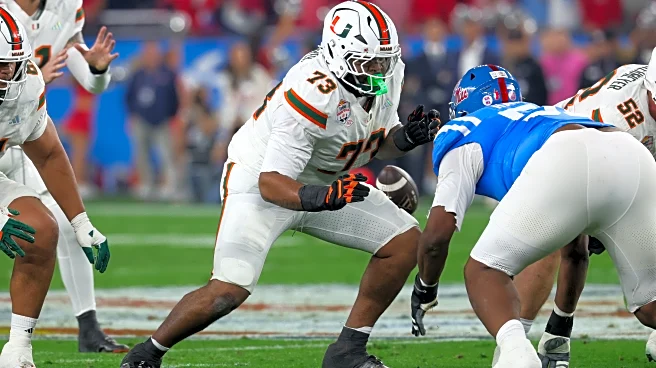
OT Markel Bell, Miami
The size is intoxicating at 6’9” and 345 pound, but that size comes with a clear downside. He plays with an upright style that makes him vulnerable to defenders getting underneath his pads, plus he’s susceptible to quick movements that can get him off-balance. Big tackles can work, but leverage integrity are non-negotiable, and the failures here will get team’s quarterbacks hit fast.
RB Kaytron Allen, Penn State
He’s top-100 on the board, but the problems come in the form of being a limited athlete that lacks breakaway speed. He is limited receiving beyond checkdowns, and offers little value in the passing game, and this makes him an early-down back type. Those are useful players, they’re also the exact archetype teams regularly find without spending top-100 capital.
OT Caleb Tiernan, Northwestern
This is a classic looks like a tackle, plays like a guard issue. The sawed-off frame for his height gives evaluators a size concern, but the issues are foot movement and hand placement. If a team drafts him expecting stable tackle play versus NFL counter plays, they may be buying more positional transition than you planned.
Defensive draft prospects with issues
Keldric Faulk, DL, Auburn
The valuation assumes you’re getting a consistent pass-rush threat, but his own areas of improvement read like a projection to that outcome. He lacks twitch and overall athleticism, so he isn’t explosive off the ball to threaten tackles with speed, and his pass-rush hand usage are still underdeveloped. So teams may be buying a high-end versatile 4i/5-tech run and length piece suited best at stopping the run, over a true difference-making rusher at his current cost.
Gabe Jacas, EDGE, Illinois
The consensus board has him as a top-50 type, but the warning here is he’s best suited as a designated pass rusher. He’s a below-average run defender who is not not very physical at the point-of-attack and has anchor issues setting the edge. He lacks the explosion to consistently threaten tackles with speed while his pass-rush hand work is still a work in progress. If the run-defense piece doesn’t come, he’s a sub-package pick masquerading as a full-time edge at top-100 cost.
R Mason Thomas, EDGE, Oklahoma — The combine buzz can hide the structural downside. He has short arms (31⅝ “ arm length) which limits his extension and shedding technique, he’s also often late and inaccurate with his hands, has subpar lower-body strength to anchor, and there’s a flagged injury history (high-ankle sprains in both ankles). In the NFL, that combo can turn high-motor rusher into gets stuck on blocks and becomes matchup-dependent.
Domani Jackson, CB, Alabama
The tools say starter, the warning label is penalties and consistency. He can be overeager in off coverage, biting on fakes and giving up double moves, and then he gets grabby downfield with late ball location leading to flags and losses in isolation reps. That’s exactly the profile NFL offenses hunt with layered route stems and penalty fishing.
Darrell Jackson Jr., DL, Florida State
He’s in the top-80 on the consensus rankings, but the profile screams two-down run plugger more than interior disruptor. The key problem is simple, he isn’t very quick. Jackson lacks athleticism, he’s slow off the ball, plays high, and has little as a pass rusher with only seven sacks in five seasons. If teams spend top-100 capital expecting pressure value, they’re likely buying into the wrong ceiling.