






Since drafting Josh Allen as the team’s franchise quarterback, the Buffalo Bills seldom found difficulty in turning short-yardage situations into huge conversions in the field of play or at the goal line prior to the 2025 NFL season. A physically imposing runner, Allen’s dominance while carrying the is well documented. That, of course, has played into Buffalo’s success while playing chess with the game’s longest yardage.
Yet, all wasn’t well with Buffalo’s offense in every goal-to-go situation last
season. Specifically, two-point tries got the best of the Bills. If it seemed as though the offense never converted a two-point try, the truth of the matter wasn’t much different.
Warren Sharp recently shared some eye-opening stats about the Bills’ struggles in the two-point game, noting that Buffalo “went 2-0f-9 (22%) on 2-point conversions last year.” That leaves Buffalo with the worst conversion rate of any NFL team since at least the 2000 NFL season.
Worse yet, is that the Bills attempted zero rushing attempts during tw0-point tries last season. This, despite Allen and a truly dominant rushing attack that featured the NFL’s leading rusher in James Cook III.
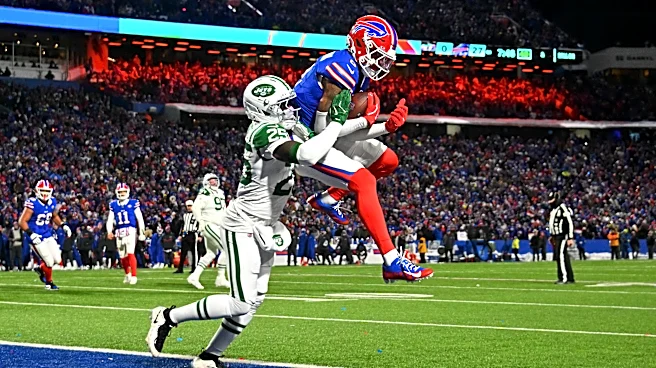
For his efforts, Allen completed just one two-point pass in eight attempts, while also throwing a try-killing interception. The team’s other successful conversion came during the mostly meaningless Week 18 game against the New York Jets. Wide receiver Keon Coleman hauled in a pair of points off a pass from backup quarterback Mitch Trubisky.
The season couldn’t have begun much worse in regards to two-pointers. Buffalo attempted three two-point tries in Week 1, with the Baltimore Ravens denying each one. The miss that sticks out most though came in Week 17, when Allen failed to connect with wide receiver Khalil Shakir for what would have been the game-winning points against the Philadelphia Eagles.
We can’t know for sure where the bulk of responsibility lies with these results, but there are plenty of suspects to consider: Be it then-offensive coordinator Joe Brady, audibles by Allen, or even just ineptitude out of the team’s pass catchers. It’s clear to anyone who watch the Bills during the 2025 season that the weakest link on offense was the wide receivers room. The unit’s overall inability to create separation doomed the offense in key situations, and their troubles finding space were never more apparent than in plays close to the line of scrimmage.
Yet in one of any game’s most important moments, the go-to move was to involve that group, often above all other options. It’s no wonder why Buffalo failed on 78% of their two-point tries, and why they were left chasing points later in games.
One could imagine how concepts that utilized a pair of running backs alongside Allen may have produced better results. Having three capable runners on the field among a group that included Allen, Cook, Ty Johnson, and Ray Davis reads a bit like a cheat code. Furthermore, all carry the true threat of goal-line receiver (even Allen, who caught a touchdown pass in a playoff game against the Houston Texans).
It’s true that attempting a two-point try can often be a last-minute decision (that’s perhaps a discussion better-left for another article), which leaves a lot of cooks in the kitchen making last-second decisions. Why, then, wouldn’t one simply stop overthinking the moment? Why not just run the football and increase the odds of success utilizing the offense’s most talented players?
Last season is firmly in the rearview, but the key players and coaches remain. Now, of course, Brady is Buffalo’s head coach. He will remain the game-day play caller, but we have yet to learn if the offense will look different with Pete Carmichael Jr. now the offensive coordinator. Carmichael will play an integral role during the week leading up to games. It would be wise for both Brady and Carmichael to devote meaningful time to establishing a better two-point offensive threat.
Failing to do so could also find the Bills struggling to succeed in other areas of the field where a yard or two means the difference in winning or losing.