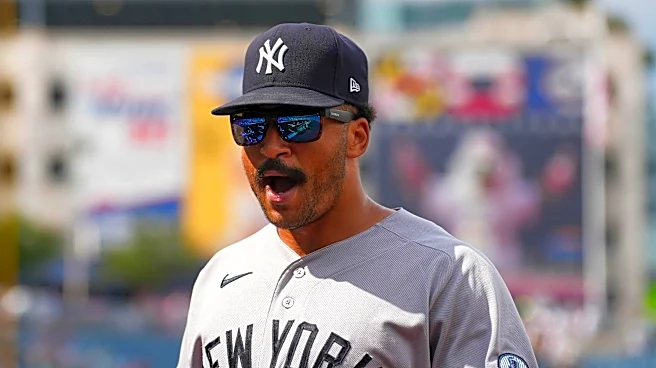


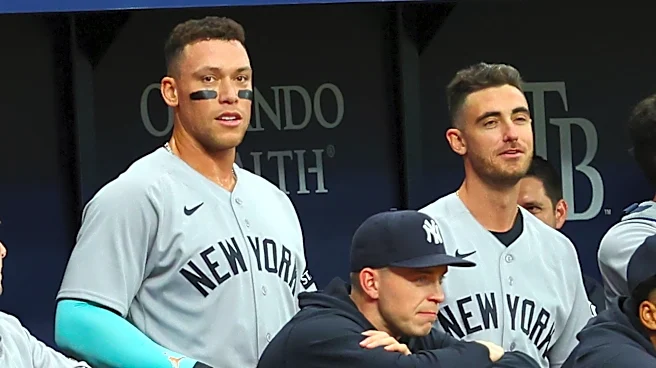


Nobody could’ve ever imagined that Trent Grisham would be where he is right now when the Yankees acquired him as a partial salary dump in the Juan Soto trade during the 2024 Winter Meetings. After all, the team planned on him being the fourth outfielder while Alex Verdugo manned left field. And even when spots opened up in the outfield after Verdugo and Soto both walked (with varying levels of interest), he was referred to as a non-tender candidate who, if he stayed, would once again be the fourth outfielder after the team acquired Cody
Bellinger and got star prospect Jasson Domínguez back healthy.
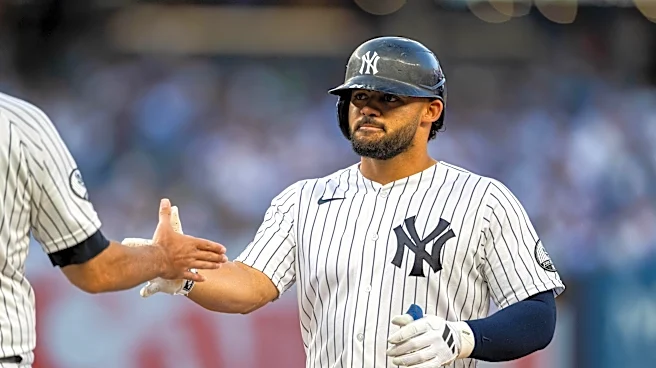
But funny things happen when opportunity arises. Minor injuries and struggles opened up playing time for Grisham early in 2025. In an opportunity sport like baseball, sometimes people just need a little daylight to force their way in. That’s exactly what Grisham did, becoming the team’s everyday center fielder and leadoff hitter for much of the season.
Despite emerging into a borderline All-Star bat at a very important position, a lot of fans were willing to bid him adieu in the offseason. With Bellinger as more of a priority, most were willing to give Domínguez more of an extended run or even give a look to Spencer Jones while using Grisham’s money to shore up the bullpen or improve the offense in the infield.
But those thoughts didn’t last long. The Yankees extended him a $22 million qualifying offer, which he surprisingly accepted. We’ll never know if his market was depressed because of the contract year effect or if he viewed it as best for himself in the short term, but it quickly tied up a lot of money in what ultimately was a quiet offseason for the Yanks. As such, he drew the ire of the fanbase as the poster boy for not meaningfully improving a roster that crashed out in the ALDS.
The Yankees believed they had the core to do it, and whether they truly wanted Grisham back for that $22 million or extended him thinking he’d decline (the former is more believable), they were adamant that his 2025 wasn’t a fluke. After all, how often does a guy meaningfully improve all around as a hitter in his physical prime and just revert out of nowhere?
Right away in 2026, things didn’t look great. He was hitting well below the Mendoza Line and wasn’t slugging nearly as much as he did in 2025. While his walk rate remained elite and his peripherals looked just as good as before, the dissenters grew ever louder as he entered May continuing to struggle. The Yankees don’t spend like the Dodgers or Mets, so that kind of money needs production.
That production came, and everyone is slowly realizing that Grisham is, in fact, a good MLB hitter. And for a Yankee team that’s missing Aaron Judge and Giancarlo Stanton for at least another month-plus, he’s a stabilizing force for a lineup that’s been in the doldrums. He’s their rock.
His defense is still regressing considerably. He doesn’t have long for center field due to declining athleticism and recurring lower-body injuries, but he still can be a leader in an outfield that now often has a guy like Domínguez or Max Schuemann to his right. Even if his future is likely in a corner himself, he’s nowhere near a liability.
At the plate, he remains pivotal. He’s still sporting an elite 13.7 walk rate and .337 on-base percentage despite spending much of the season below the Mendoza Line. In 122 plate appearances since mid-May, he’s hitting .333 with a 163 wRC+. Before going down with a minor hamstring ailment in June, he kept the offense afloat after Judge’s injury at the end of May.
But when he did go down, the offense completely fell apart. In the 18 games played with him on the injured list, the team topped five runs only three times, all initially during the Paul Goldschmidt heater. After he cooled off, the team was the worst offense in the sport. When he was out, the team had an 80 wRC+. Since he’s returned? Back to 109, a top-10 figure in baseball.
Bringing him back into the fold brought two critical things for the offense: clutch hitting and plate discipline. The Yankees, usually an elite walk team and a mediocre strikeout team, have been among the worst in the sport in both categories since Grisham’s injury. Those two things are what the 29-year-old excels at, and while his plate discipline has slipped since his return, it’s an improvement over the guys he’s taking at-bats from.
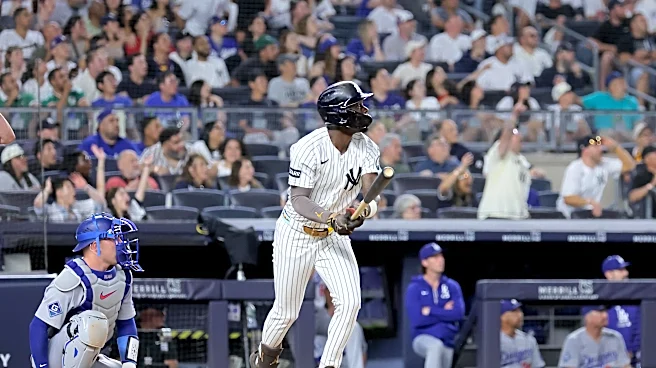
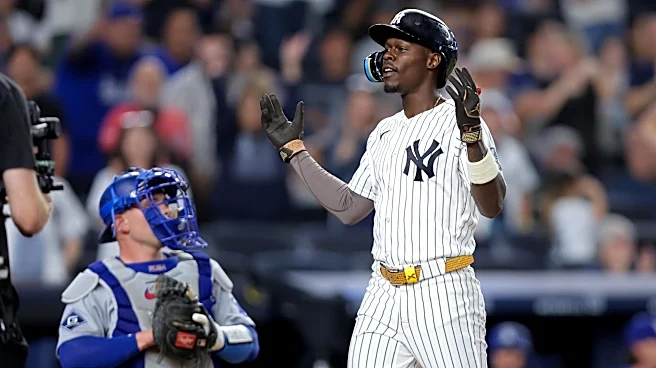
The clutch hitting is where the Big Sleep is most important. He was one of the most clutch players in the sport last year and has delivered timely swings all season long for the team, regardless of how he’s performed at times overall. He was a pivotal part of the three come-from-behind wins in Washington, hitting a go-ahead homer last Saturday and scoring the go-ahead run on Ben Rice’s triple on Sunday.
His impact also extends to providing protection for the guys behind him. Rice in particular was struggling mightily without Grisham, but has improved massively since his return:
Ben Rice
6/13 to 7/1 (w/o Grisham): .197/.260/.408, 27.3 K%, 81 wRC+
Since 7/3 (w/Grisham): .361/.465/.917, 18.6 K%, 271 wRC+
Leaving Rice on an island left him vulnerable to getting every pitcher’s best stuff. After all, he was one of the only guys teams were circling in the pitchers’ meetings before the game. Now, with Grisham back, his ability to see pitches, grind at-bats, and give Rice protection is allowing the young first baseman to re-emerge as an MVP candidate.
All of what he’s doing makes the Yankees’ decision to tender a qualifying offer to him one of the best moves by any team last offseason. What would the Yankees have done if they hadn’t? Would they have used Bellinger’s money to get Kyle Tucker or Bo Bichette, who are both mightily underachieving with $60 million salaries? Would they have signed a reliever like Brad Keller, who’s undergoing Tommy John surgery? What would a full season of relying on Domínguez and Jones have looked like with the injuries? Thankfully, we won’t have to find out.
We may have even reached a point where he and the team negotiate a multi-year extension in the offseason. The free agent market for outfielders is incredibly bleak, and there’s a case to be made that two of the top three hitters overall hitting the market will be Yankees. If that’s the case, with neither Domínguez nor Jones showing they can contribute to winning the way Grisham has, why not consider it?
His offense isn’t a fluke, and Judge’s age will slowly push him to being the DH down the road anyway, especially when Stanton’s contract expires. Why can’t he settle into a favorable Yankee Stadium right field as he enters his early 30s while Bellinger continues to be a rock in left field? I’m sure these discussions are happening internally, which is incredible considering where he was not too long ago in his career.