
They did it. The Utah Jazz front office pooled its expansive war chest of assets and took aim at a game-changing, contribute-today type of player. From my home in Japan, I woke up to a vibrating hailstorm
of NBA alerts, which made my 7:00 alarm entirely obsolete. Much better to be awoken by good news than just another typical day of work, eh?
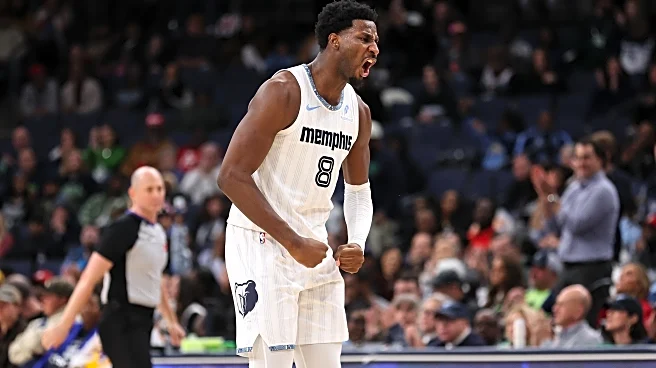
Jaren Jackson Jr, a versatile and acclaimed 6-foot-10 forward, had spent the first seven years of his NBA career in Memphis. Snagged with the fourth overall pick out of Michigan State back in 2018, JJJ is the second pillar of the Grizzlies’ core to fall, following Desmond Bane, who was jettisoned to Orlando in the offseason.
By dealing Jackson, the Grizzlies have enacted a rebuilding policy upon themselves, discarding the original game plan to start anew. No bear tracks in the freshly laid powder snow.
The bear is in Utah. He is called the Jazz Bear. And his arrival indicates a change in pace for the slow-building Utah Jazz, who marked the path for self-destruction and new beginnings back in 2022, when they sent their once-championship-contending core of Rudy Gobert, Donovan Mitchell, Mike Conley, and company across the National Basketball Association (but mostly to Minnesota, eventually) in the hopes of sprouting new hope from the rubble.
That torch is now carried by the Grizzlies. From this exchange, Memphis adds experimental pieces of Utah’s young core ripe for in-house development, and some draft picks for good measure. Utah, exporting some of their filler youngsters in favor of more experienced and proven imports, has shifted up a gear by adding Jackson. His arrival carries a promise that the Jazz have little intention of losing in the future.
This trade includes eight players and three draft picks, and I’ll break down each piece of the deal right here, right now.
To Utah, From Memphis:

Jaren Jackson Jr | 6’10” 242 lbs | Forward/Center
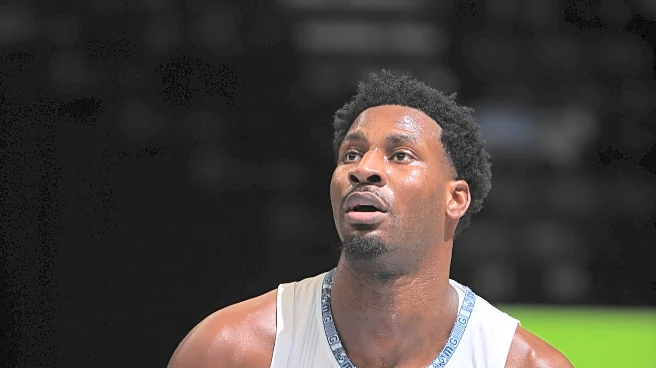
Here’s the big one. The king of the pond. The great fish from which fishing tales are orated. Jaren Jackson Jr is the headliner of the trade, and for good reason. The 2022-23 Defensive Player of the Year, a two-time All-Star, two-time block champion, and three-time All-Defense team member, Jackson is a defensive stalwart who just as naturally spaces the floor on the offensive end, shooting 35% from distance in his career.
Pairing alongside Walker Kessler (assuming Utah doesn’t fumble in restricted free agency), Jackson and Kessler would be the best rim-protecting frontcourt in basketball by a galaxy’s length, ranking second and third for opponent field goal percentage within the restricted area over the past five seasons, both at 52.3%. That’s just ahead of Rudy Gobert, 52.4%.
Speaking of Gobert, time is finally unveiling what came of his blockbuster trade back in 2022, as the assets gathered in that exchange have now actualized into Walker Kessler, Keyonte George, and Jaren Jackson Jr. It’s Billy Beane’s dream — the Utah Jazz have recreated Gobert in the aggregate, and tacked on some offensive firepower in the process.
For the Jazz, who might be the worst defense in the entire NBA, adding a legitimate all-world level defender with actual offensive ability is a major net positive. All that, plus the fact that Jackson is just 26 years old, should have the atmosphere buzzing in SLC (but try not to think too long about his $50 million price tag in a few seasons).

John Konchar | 6’5” 210 lbs | Guard
The pride of Purdue University Fort Wayne, John Konchar quickly became a fan-favorite in Memphis after being snagged in undrafted free agency in 2019. And how could anyone not love Konchar? His number 46 jersey, his hustle-first, think later mindset, and positional versatility are all reasons why Memphis fell in love with Konchar, though his production and involvement in the Grizzlies’ lineup have taken a bit of a dip in recent years.
With the Jazz, Konchar’s role will likely be similar to that in Memphis: the glue-guy, energizer off the bench who lives to light a fire on the floor and under the feet of his teammates.

Vince Williams Jr. | 6’4” 205 lbs | Guard
Williams was taken out of VCU in the second round back in 2022 as a versatile, switchable defender who can space the floor on offense and hit the occasional three-pointer. In practice, he’s a bit more of a defensive specialist. Horribly inefficient in his fourth NBA season with 35% field goal shooting and 30% from distance, what Williams lacks in reliable shooting, he adds in defensive know-how. For a team like Utah, which has been without competent perimeter defense for far too long (not you, Cody, you’re doing great), Vince Williams’ role is set before him.

Jock Landale | 6’11” 255 lbs | Center
Landale is another product of the Randy Bennett Aussie pipeline out of Saint Mary’s College. He’s a lifetime bench big who saw his career take an upward turn after joining the Memphis Grizzlies. This season, Landale’s averages have doubled in nearly every category since his inclusion in the starting lineup (courtesy of Zach Edey’s crumbling body).
Landale began his professional career as an artist, playing in the paint. With a wide array of hookshots and old-man-style footwork in the paint, he carved out a niche in the NBA. But in recent years, he’s made a Brook Lopez-esque improvement as a three-point shooter, knocking through 38% of his attempts beyond the arc, of which he’s shot nearly three per game this season. Challenging the 40% threshold is a remarkable improvement, considering the first three years of his career were much closer to 25%. He also shows promise as an offensive rebounder, nearly matching his count of rebounds on the defensive end. Still, that means he collects just six boards per night.
The Utah Jazz are stuffed to capacity at the center position, unfortunately, so the 30-going-on-31 Landale will have to fight for minutes among established giants like Kessler, Nurkic, and now Jaren Jackson Jr.
To Memphis, From Utah:
Three First-Round Draft Picks
These are what the Grizzlies were really after. Dumping your core of three former All-Stars (unless they can’t part with Morant) is a questionable decision without a plan for the future, and Memphis collected some promising future draft picks from a team looking for ways to lighten their load. From Utah’s collection of draft picks, the Grizzlies come away with optimism for the future.
These are the draft picks heading to Memphis:
2027 first-round pick via Utah or Minnesota or Cleveland (most favorable)
2027 first-round pick via Los Angeles Lakers (top-four protected)
2031 first-round pick via Phoenix
The Jazz gave away the most favorable of their many draft picks next year, so it’s official: there is no reason to tank in ‘26-’27. The Utah Jazz have returned to the straight and narrow way of ethical basketball. The social media tanking police can finally stand at ease; Utah is trying to win basketball games again.
Utah is far from pushing all its chips into the center for this one, however, much like they did the last time they ushered an Earth-shaking trade with the Memphis Grizzlies, giving up a large portion of their future for Mike Conley Jr. back in 2019. They still hold at least one first-round pick in every draft from 2026, with fingers crossed that this year’s pick falls below the eighth pick, keeping it out of Oklahoma City’s white-gloved grip.
Utah obtained the Lakers’ 2027 first-rounder before divine intervention delivered Luka Doncic on a silver platter in Tinseltown. It was with zero tears that this pick was dealt.
It’s with similar dissociation that the Jazz parted with Phoenix’s 2031 first-rounder they worked so hard for last season. Prior to Phoenix’s resurgence this season, Matt Ishbia’s reign seemed self-destructive, with the core of Beal, Booker, and Durant imploding with very little to show for it. But credit to the Suns, they dug themselves out of that hole and managed to acquire Dillon Brooks and Jalen Green from Houston for a 37-year-old Kevin Durant. Phoenix no longer appears destined to scrape the bottom of the standings, and Utah sees more value in JJJ today than they project in a first-round pick five years from now.
This trade is a trailhead for two exciting transitions. For Memphis, a clean slate and all the patience in the world to obtain a franchise cornerstone through the draft. For Utah, the pendulum swings toward competitive basketball. Finally, the Jazz will be gunning for a playoff position again, and a saving light has appeared above the heinous concourses of basketball hell.

Walter Clayton Jr | 6’4” 195 lbs | Guard
Of all the players given up in this deal, Utah will miss Clayton the most. A player they traded up to grab in this year’s draft, the former national champion and Final Four Most Outstanding Player entered Utah in hopes of developing quickly and fighting for minutes at point guard.
He has yet to break through as an NBA player, though, buried beneath the supernova of Keyonte George and the steady playmaking of Isaiah Collier. Clayton flashed passing upside in his first 45 games as a pro, but his trademark three-pointer has struggled to catch up, coming in at just 30.8%.
The book is not closed on Clayton as a pro, of course, and with a more straightforward backcourt in Memphis, Walt could see more consistent burn and find his rhythm with the Grizzlies.

Taylor Hendricks | 6’9” 215 lbs | Forward
The Taylor Hendricks experience did not go according to plan in Utah.
Selected ninth overall in 2022, Hendricks was the first draft pick of the Jazz reconstruction. Injuries and inconsistent play plagued Hendricks since entering the NBA, unfortunately, and he never really found his place with the Jazz.
It’s never fair to judge a player’s career when injuries occupy so many chapters, and Taylor Hendricks was a victim of horrific luck in his first two and a half seasons of pro basketball. His broken leg suffered as a sophomore sidelined Hendricks until 2025, and he never quite found his place in Will Hardy’s lineups. The letters DNP have been stamped on Hendricks’ box score a discouraging number of times this season, especially recently. He’s appeared in just 33 games this season.
Given time and patience, Hendricks could develop into a serviceable rotation-level player in the NBA. That potential never materialized with the Jazz.

Kyle Anderson | 6’8” 230 lbs | Forward
Slo Mo is an NBA journeyman who, hilariously enough, enjoyed the best years of his career with Memphis back in ‘18-‘24. Anderson joined the Jazz through a trade with Miami that posted the forward in a veteran role, and he played the part very well for the youth movement in Utah, however briefly.
Anderson, now 32 (going on 50), will likely fill a similar role in Memphis that he did in Utah. He does a bit of everything — scoring, passing, rebounding, defending — despite potentially being the slowest professional athlete on the face of the Earth.

Georges Niang | 6’6” 230 lbs | Forward
Few things have been more disappointing this season than the fact that we never got to witness Georges Niang back in a Utah Jazz jersey after all these years. I wrote a tear-jerking reunion story (historical fiction) before the season about Niang’s return to the Salt Lake Valley, and it brings me great despair that Niang never set foot on the floor.
After being drafted to Indiana in 2016, Niang spent the first five seasons of his career in the Beehive State before bouncing from Philadelphia to Cleveland to Atlanta and back to Utah before, of course, now being dealt to Memphis. Now 32 years old, Niang lands with the Grizzlies as a three-point specialist, who will be ready to plug-and-play in the near future, as his most recent injury update posted Niang as week-to-week.
Player Retained in Utah
Perhaps the most important wrinkle for Utah’s end of the trade is the players they were able to retain while adding Jackson. Truth be told, though the Jazz were hopeful that Clayton and Hendricks would pan out, Utah gave away very little from a personnel standpoint.
The Jazz still have Keyonte George in a breakout season, Ace Bailey, who is seen by many as a foundational piece in Utah’s future, former All-Star Lauri Markkanen, and Walker Kessler, currently out with injury and pending restricted free agency.
But the Jazz didn’t even have to part ways with their most promising youngsters outside the starting lineup, either. Cody Williams, who is finally showing signs of life in his sophomore season, will remain in Utah. As will Brice Sensabaugh, Isaiah Collier, and Kyle Filipowski, all of whom are gradually developing into rotational players in Will Hardy’s depth chart.
Jackson’s addition to the starting lineup makes Utah’s roster one of the most fascinating in the league. A starting five of Keyonte George (6’4”), Ace Bailey (6’9”), Lauri Markkanen (7’1”), Jaren Jackson Jr (6’10”), and Walker Kessler (7’2”) is gargantuan and could be formidable with a few years to mesh.
2026 marks the end of the line for Utah’s tank, and that is worth celebrating. In this deal, the Jazz lost three first-round picks, while maintaining a spot in every single first round moving forward. They gave away two non-foundational youth who still have a long journey of growth before they’re ready to contribute at a high level. Utah will not suffer from the loss of Anderson, and couldn’t possibly miss a player who never even suited up to play.
Whether this version of the Jazz will be competitive in the coming years is yet to be determined, but few can deny that this is a franchise finally moving in the right direction.
Calvin Barrett is a writer, editor, and prolific Mario Kart racer located in Tokyo, Japan. He has covered the NBA and College Sports since 2024.