







The NBA season is officially over, and the rest of the league is finally catching up to where the Phoenix Suns have been for the past month and a half: the offseason.
We currently find ourselves in that two-week window between the conclusion of the NBA Finals and the start of free agency, a period in which teams can begin conversations with their own restricted and unrestricted free agents as they lay the groundwork for the 2026-27 season. For the Suns, that means turning their attention toward roster
construction and determining which players they want to retain as they continue navigating a challenging financial landscape.
This year’s free agent class isn’t particularly noteworthy, but that’s become the norm in today’s NBA. Star players rarely reach unrestricted free agency anymore, choosing instead to sign extensions with their current teams or force their way to preferred destinations via trade. As a result, the available talent pool is often thinner than it once was. That reality creates additional value for teams that already possess productive players entering free agency.
The Suns find themselves in that position with several players whose futures remain unresolved. Whether it’s restricted free agents, unrestricted free agents, or players the organization has various rights attached to, Phoenix has decisions to make and negotiations to begin.
One interesting perspective on that value comes from John Hollinger of The Athletic, who annually publishes his Top 25 NBA Free Agents list. What makes Hollinger’s rankings unique is that they aren’t simply based on reputation or box score statistics. He uses a valuation system of his own creation to quantify a player’s market value and expected contract value based on production, age, role, and projected impact.
I developed a player valuation system called BORD$ (short for “Big Old Rating Dollars”) that uses analytics and playing time data from the last two seasons, projects values for the coming season based on a player’s age and performance and then converts the projected performance and playing time into a salary estimate based on the projected cap in 2026-27 of $165 million. (More on the methodology from this story five years ago.)
It’s an interesting exercise, especially when evaluating some of the Suns’ internal free agents and determining where they might fit in the broader landscape of this offseason market.
On Hollinger’s list this year, two of the Suns’ four notable free agents made the cut.
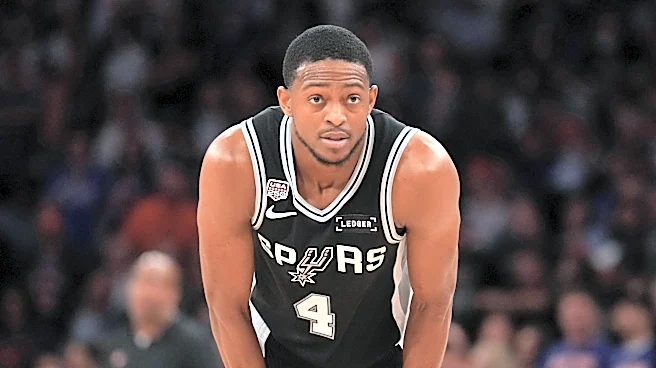
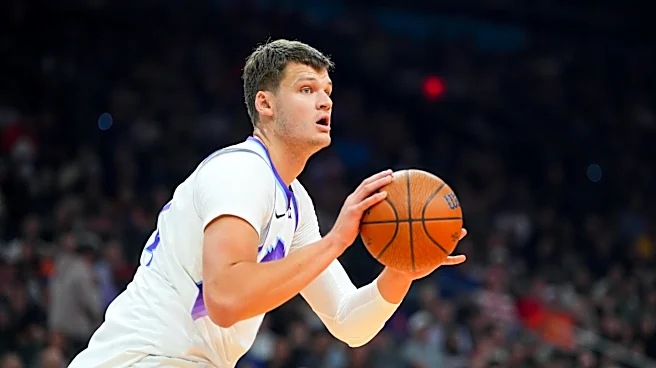
Jordan Goodwin and Amir Coffey did not crack the top 25, but Collin Gillespie landed at No. 10 while Mark Williams checked in at No. 23. Using his BORD$ valuation system, Hollinger views both as players who carry significant market value entering free agency.
Collin Gillespie: $21,472,942
Obviously, if $21.5 million is what Collin Gillespie is worth and somebody is willing to offer him that kind of money, I don’t think the Suns bring him back. That’s a lot to pay for a backup point guard.
This valuation may sound pretty extreme because Gillespie’s career had little traction until he blew up in his age-26 season, but he was fantastic last year. He’s also a career 40.5 percent 3-point shooter on serious volume, holds his own on defense and can run an offense. Paying him fifth-starter money isn’t crazy.
Obviously, if $21.5 million is what Collin Gillespie is worth and somebody is willing to offer him that kind of money, I don’t think the Suns bring him back. That’s a lot to pay for a backup point guard.
Make no mistake about it, as fantastic as Gillespie was last season, and understanding that he faded a bit down the stretch, he’s not a starting caliber point guard. Or perhaps he is, but not in a Phoenix Suns ecosystem that already features both Devin Booker and Jalen Green. And that’s the decision facing Phoenix this offseason.
Gillespie or Green?
One path involves moving on from Jalen Green, who is ultimately a duplicate of Devin Booker in many ways, and attempting to acquire assets that fortify the roster. In that scenario, Gillespie and Booker become your starting backcourt, allowing you to build differently around them.
The other path is to retain Green and pay Gillespie to come off the bench. At that point, the question becomes simple: how much are you willing to pay a reserve guard?
I think the answer lands somewhere in the middle.
My guess is that the Suns and Gillespie ultimately settle in the $12 million to $14 million per year range. If that happens, I could see it being a four-year deal with a team option attached to the final season, giving Phoenix some flexibility as it continues navigating its long-term cap situation. But that’s only my guess.
Mark Williams (restricted): $16,190,218
As we can see, Hollinger’s system has a little inflation built into it. I don’t see Mark Williams commanding $16.2 million annually in free agency. That said, I don’t think it’s wildly off either.
Williams helped answer questions about his durability by playing a career-high 60 games for the Suns, and now he seems set for a raise. His qualifying offer of $9.6 million is inexpensive enough that Phoenix surely will tender it to make him a restricted free agent.
The trick for Phoenix is having enough room below the first apron to bring back both Williams and Collin Gillespie, which may require the Suns to trade one of their 19 shooting guards.
Yes, the Suns do have a shooting guard problem, don’t they? Still, I’m not sure that is the issue. Because the Suns may not be prioritizing being under the first apron, as Hollinger suggests. What they do have to battle is the open market. There are plenty of teams around the league that could view Williams as worth something in that $16 million neighborhood.
The Lakers immediately come to mind. Yes, they’re the same team that failed Williams on his physical and voided the trade. But they still have a glaring need at center, and it wouldn’t be surprising if they revisited him this summer. All it takes is one team to believe in the talent and be willing to overlook the injury concerns.

The question then becomes whether the Suns would match. The center position is arguably the most important storyline of Phoenix’s offseason. You have a lottery pick waiting in the wings in Khaman Maluach, but is he ready to handle that responsibility from Day 1? Or is it smarter to fortify the depth around him and allow his development to occur at a more natural pace?
Personally, I’m all for bringing Williams back. I loved what I saw from him during his time in Phoenix. Yes, the health concerns are real and should not be ignored. But he plays with a high motor. He’s constantly sprinting the floor, running in transition, attacking the glass, and putting pressure on defenses simply through effort. That’s the kind of player you want around a young center.
You want Maluach to watch that every day and understand that success in this league isn’t solely about talent. It’s about energy. It’s about effort. It’s about consistently doing the little things. Hustle, running, and perhaps most importantly, catching the damn ball.
Of course, the Suns could let Williams walk and take their chances in unrestricted free agency. There are some intriguing names available, and some of them would likely come at a lower price point. But are any of them good enough to help fortify the development of your young center? That’s the question Phoenix has to answer. The price, obviously, has to be right.
We’ll know more in the coming days as negotiations begin and the market starts to reveal itself. That’s when we’ll get a better understanding of what these players are actually worth and where they may ultimately end up. For now, all we have are projections, evaluations, and educated guesses.
Still, the fact that the Suns have two players ranked among Hollinger’s top 25 free agents speaks to the value they’ve created internally. Whether you agree with his exact dollar figures or not, the underlying point remains the same. Collin Gillespie and Mark Williams have established themselves as legitimate NBA players with real market value. And that’s exactly why Phoenix should be focused on bringing them back.
The Suns aren’t operating from a position of financial strength. They don’t have the cap space to replace productive players on the open market, nor do they possess a treasure chest of draft assets to quickly replenish the roster. Continuity matters. Internal development matters. Retaining players who have already proven they fit within your system is a must.
That’s why this offseason feels so important. The Suns have spent the past year trying to establish an identity, build a culture, and find players who complement what they’re attempting to become. Gillespie and Williams appear to check those boxes. Now comes the hard part. Figuring out what it costs to keep them.