



Over the last few months, we’ve been breaking down all undrafted free agents signed by the Jets. We continue today with former Virginia Tech linebacker Jaden Keller.
The 23-year old Keller is listed at 6’3” and 235 pounds and started 17 games in his five-year college career. He led the Hokies in tackles in 2024.
Background
Keller was a three-star safety prospect as a high school recruit and headed to Virginia Tech in 2021. In his first season, he didn’t record any stats in four appearances before opting
to redshirt.
As a redshirt freshman in 2022, he started two games and ended up with 25 tackles, a sack and a forced fumble in 11 appearances. He then posted similar numbers in 2023 with 23 tackles and two tackles for loss as he started two of 13 games.
His role increased significantly in 2024, as Keller led the team with 83 tackles in 13 games, seven of which he started. He added a pass defensed and two fumble recoveries.
2025 saw him starting six of 11 games as he ended up with 50 tackles, 2.5 tackles for loss, half a sack, a pass defensed and a forced fumble.
Keller was not invited to the scouting combine and wasn’t considered likely to be drafted. Having been unable to secure an undrafted free agent contract, he attended the Jets’ rookie minicamp on a tryout basis but the Jets signed him after that.
Let’s move onto some more in-depth analysis of what Keller brings to the table, based on in-depth research and film study.
Measurables/Athleticism
Keller has decent size and length and posted excellent athletic numbers at his pro day workout. He ran a 4.51 in the 40-yard dash with excellent explosiveness and agility numbers, including a sub-seven second three-cone drill. He also posted 21 bench press reps.
Usage
Keller played in an off-ball role with the Hokies, often covering a receiver in the slot or out wide. They usually played with four-man fronts and two off-ball linebackers.
He primarily played as the will linebacker but did practice for a potential mike role as well.
Run defense
Keller was productive against the run, but his grades according to analysis sites such as Pro Football Focus tended to be average.
His quickness and athleticism can be useful on run defense, as he can cover plenty of ground from sideline-to-sideline and closes fast on ball carriers.

He is at his best when he is able to avoid blockers getting their hands on him, but can take false steps and hesitate while making his initial reads. This can also mean that he is sometimes out of control when pursuing downhill which can lead to overpursuit or being angled off due to his momentum being used against him.

Coverage skills
Keller’s coverage role typically saw him working close to the line of scrimmage and limiting yardage on short passes. He was usually employed more in zone coverages than man-to-man assignments.

Over the course of his career, he gave up a catch on over 80 percent of his targets at an average of less than 10 yards per reception. He didn’t give up many big plays and only one touchdown.
As a high school defensive back, you would expect more on-ball production from Keller, but he had no interceptions and just two pass breakups in college.

Tackling
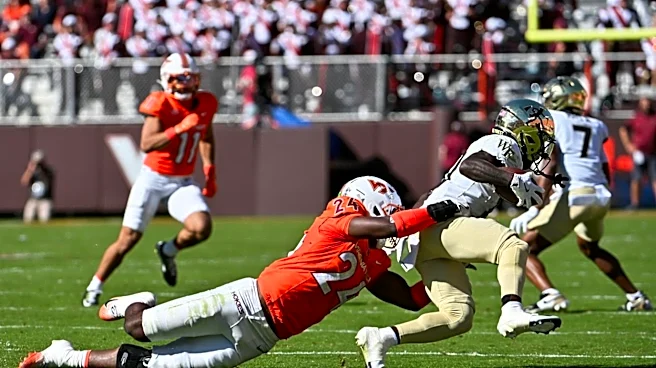
Keller was a productive tackler at the college level, but his missed tackle percentage was higher than you’d like to see and actually went up in his last season.

His closing speed and range are impressive, and once he lines up his man he can stop a runner in his tracks.
Blitzing
Keller didn’t blitz very often but his pressure percentage was solid when he did. He had 1.5 sacks in his college career.

His timing on blitzes was good, and he was effective in a spying role.
Special teams
Keller saw action on every special teams unit apart from the placekicking unit in his college career. He was credited with five special teams tackles with no penalties.

Physicality
Keller comes downhill aggressively but there were times where he got caught up in traffic or taken out of a play by a blocker.

He has proven capable of making some big, but clean hits at times during his career.

Instincts/Intelligence
Keller’s coaches at West Virginia described him as very smart and praised his understanding of the game, especially in light of the fact that he was new to the linebacker position when he arrived.
As noted, there are times when he shows initial hesitation and he can sometimes let players leak in behind him in zone coverage. However, when he makes a decisive read, he looks good.

On this play, his rush is repelled but he reacts well to get his hands up for the deflection.

Attitude
Keller developed into a good leader with the Hokies and played with an unselfish “we not me” attitude. His coaches praised his dedication in the weight room.
His on-field discipline was excellent with just one defensive penalty in his entire career, although that was for unnecessary roughness.
Injuries
Injuries weren’t a major concern for Keller in his college career, but he did miss a game last season with a lower body injury.
Scheme Fit
The Hokies changed their system in 2025 and this saw Keller’s production slipping. He was required to play more coverage and shoot gaps more, in a defense that was designed to be more attacking.
He might fare better in the Jets’ defense if the linebackers are relied upon to play more of a disciplined role, as this should align better with the defense he played in prior to last year.
Conclusions
Keller, along with Chase Wilson, was a late addition to the roster and the pair will likely play extensively alongside one another in preseason. Wilson has more experience as a middle linebacker, so he will presumably wear the headset, while Keller is the better athlete so he can fly around and get a chance to make some plays.
As long as Demario Davis and Jamien Sherwood are healthy, there won’t be many linebacker reps to go around, so the Jets may be compelled to carry backups who excel on special teams rather than needing everyone in the rotation to be experienced.
It’s therefore not impossible that an undrafted rookie like Wilson or Keller could get onto the main roster at some point, especially if they prove themselves as useful special teams contributors in preseason. It’s a long-shot though, and Keller will likely have a more realistic goal of showing enough that New York will want to keep him around on the practice squad so he can learn on the job and try to compete for a role next season.