



After hitting running backs and tight ends yesterday, we’re moving on to less interesting position groups given the Denver Broncos are fairly well set in 2026 at both. For both the quarterback and wide receiver position groups, I wouldn’t rule them out entirely, but I would say it is likely going to be a late round pick in both areas if at all.
These are players that AI believes could be on whatever big board George Paton and Sean Payton will be working on ahead of the 2026 NFL Draft. Full breakdown
of the methodology at the end of the article.
Note: Prospects scored against the empirically-derived Payton/Paton Fit Score (PPFS) rubric. Tier 1 (A, Bullseye: 85-100) and Tier 2 (B, Strong Fit: 75-84) prospects shown in full. Tier 3-4 listed at end of each section. All descriptions of prospects are AI generated as part of its reasoning and ranking. Round projections based of Dane Brugler’s The Beast draft board.
Broncos Big Board: Quarterbacks
No Tier 1 quarterbacks listed — Denver almost certainly will not spend early capital on a QB in 2026. Bo Nix is under contract through 2027 with a 5th-year option after an AFC #1 seed in Year 2. The only realistic QB target is a Day-3/UDFA developmental pocket passer to grow behind Jarrett Stidham as long-term QB2/QB3 insurance.
Joe Fagnano, UConn, QB, Projected Round: 7th
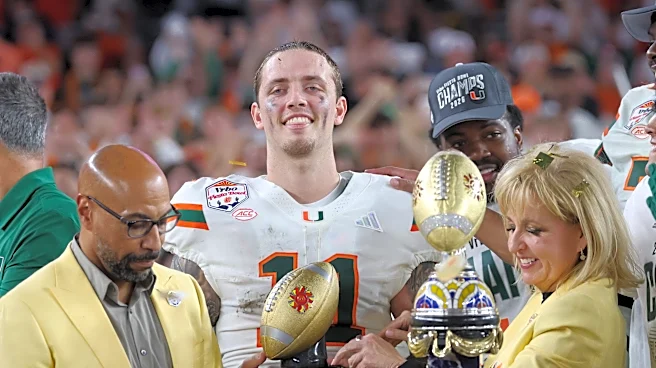
A 6’3”/226 pocket operator with a fluid, rhythmic release and veteran poise — the only FBS QB with 210+ dropbacks to throw fewer than 2 INTs in 2025 (28 TDs, 1 INT). An East-West Shrine Bowl attendee whose NFL scouting review read “guys respect his work,” Fagnano processes quickly from clean pockets, layers throws to all three levels, and takes care of the football. The Broncos would value his on-time decision-making, command of the huddle, and willingness to operate inside structure — a classic Payton-style developmental passer who can sit behind the starter, learn the scheme, and run it credibly on short notice. Age (25 as a rookie) and a shoulder medical flag are the only real knocks on a Day-3 profile that matches exactly the kind of backup QB Denver tends to target.
(Tier 2, PPFS ~78)
Behren Morton, Texas Tech, QB, Projected Round: UDFA
A 6’2”/218 three-and-a-half-year Texas Tech starter and two-year captain with a 26-10 career record (11-1 in 2025). Morton played through a Grade 3 AC joint tear and a hairline leg fracture without complaint in 2025, posting 76.2% between-the-numbers completion and a 13-to-1 TD-INT ratio. He is an anticipatory pocket thrower with an elastic arm who is comfortable releasing from varied angles, stands in under pressure, and is visibly trusted by his teammates as the leader of the huddle. For the Broncos, the captain/toughness profile at priority free-agent cost is the cleanest Payton-style developmental-passer fit in the class — exactly the kind of cheap, high-character, pocket-operator bet Denver makes at the back of its QB room. Shoulder and leg medical history plus modest pocket mobility keep him at Tier 2, but the passing traits and leadership floor are real.
(Tier 2, PPFS ~76)
Tier 3: Mark Gronowski, Jack Strand, Luke Altmyer, Sawyer Robertson
Tier 4: Fernando Mendoza, Ty Simpson, Garrett Nussmeier, Drew Allar, Cole Payton, Carson Beck, Taylen Green, Cade Klubnik, Haynes King, Joey Aguilar, Athan Kaliakmanis, Diego Pavia, Jalon Daniels, Maverick McIvor
My Analysis: Quarterback is not a need at the top end due to Bo Nix goatness, but the position could be a need in later rounds. This big board reflects that reality, so take the tiered rankings into that type of context.
Broncos Big Board: Wide Receiver
After trading a 2026 R1, R3, and R4 for WR Jaylen Waddle, Denver’s first pick at R2 #62 is almost certainly not a wideout — the Waddle trade WAS the 2026 WR investment. That said, the Broncos still hold two 4th-round picks and a full Day-3 board, so a Day-2/3 WR is very much in play. The realistic target lanes are (1) a vertical-X/size-and-speed developmental body and (2) a return-specialist/gadget burner who brings real special-teams value.
Kaden Wetjen, Iowa, WR, Projected Round: 6th
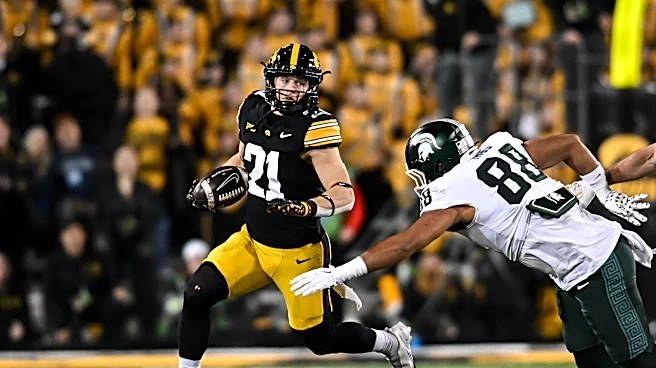
A 5’9”/193 slot and return specialist, two-time Jet Award winner (2023 and 2024) with 6 career return touchdowns. A team captain in Iowa’s demanding culture, Wetjen plays a physical, sure-handed, high-IQ style that shows up on third down and in the return game. For a Broncos offense that leans on jet motion, rub concepts, and layered short-to-intermediate routes, he’s a plug-and-play Day-3 contributor: an immediate return-game weapon with enough route feel and toughness to earn offensive snaps as a gadget/manufactured-touch option. The combination of elite special-teams value, true slot ability, and Payton-friendly intangibles makes this one of the cleanest late-round fits on the board at any position.
(Tier 1, PPFS ~86)
Zavion Thomas, LSU, WR, Projected Round: 7th
A 5’10”/190 jet-sweep burner clocked at 4.28 with 3 career return TDs, Thomas is a legitimate home-run threat the moment the ball touches his hands. He turns reverses, fly-sweeps, and quick screens into explosives with one missed tackle and has the special-teams production to earn a Day-3 draftable grade on that alone. For a Payton-led Broncos offense that loves designed speed touches and manufactured explosives, Thomas offers a cheap late-round path to vertical juice and return-game value. A thin route tree limits his early offensive role to specialist work, but the raw speed and ball-in-hand creativity are rare.
(Tier 2, PPFS ~82)
Barion Brown, LSU, WR, Projected Round: 7th-FA
A 5’11”/177 burner with 6 career kickoff-return touchdowns, placing him among the most productive returners in recent SEC history. Brown is an elite straight-line athlete whose return ability alone justifies a late-Day-3 flier; any special-teams coordinator would know immediately what to do with him. Route-running rawness and drop issues limit his early offensive role, but his return floor and vertical upside make him a compelling fit for a Broncos team that habitually drafts return/ST value late on Day 3 and lets it translate to offensive snaps over time.
(Tier 2, PPFS ~80)
Caullin Lacy, Louisville, WR, Projected Round: UDFA
A 5’9”/183 slot and return specialist with 4 career special-teams touchdowns and an explicit Rondale Moore pre-draft comp. Lacy is violently quick in and out of breaks, plays bigger than his size at the catch point over the middle, and is a legitimate punt-return weapon. For the Broncos’ short-and-intermediate passing game — heavy in option routes, manufactured touches, and quick rhythm concepts — his skill set fits cleanly. An older profile (24+ as a rookie) and a priority free-agent projection cap his overall value, but at PFA cost he is a high-value returner-plus-slot bet.
(Tier 2, PPFS ~79)
J. Michael Sturdivant, Florida, WR, Projected Round: 6th
A 6’3”/207 vertical X-body with 4.40 speed and a Broncos legacy bloodline — the great-nephew of Ring of Fame legend Floyd Little. Sturdivant plays with a vertical-stretch mindset, wins at the catch point down the field, and showed in 2025 that he would do the dirty work on special teams. The production never quite matched the tools at Florida, and that is the main drag on his grade, but for a team hunting Day-3 size-and-speed outside depth he checks a rare combination of boxes: frame, long speed, organizational narrative, and a Day-3 price tag.
(Tier 2, PPFS ~78)
Josh Cameron, Baylor, WR, Projected Round: 6th
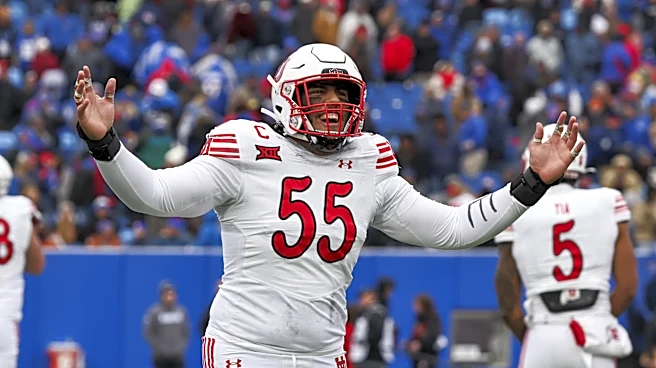
A 6’2”/220 former walk-on, team captain, and Freaks-List strength standout with real possession-X traits — size, punch, catch-point strength, and an uncompromising work-ethic profile Paton has consistently prioritized. Cameron also took legitimate punt-return reps and contributed on core special teams, giving him the position-blurring Day-3 flexibility Denver covets. His ceiling is limited by modest long speed and a late-starter developmental curve, but the captain intangibles and size/strength combination fit the team’s template for late-round swings on outside receivers.
(Tier 2, PPFS ~77)
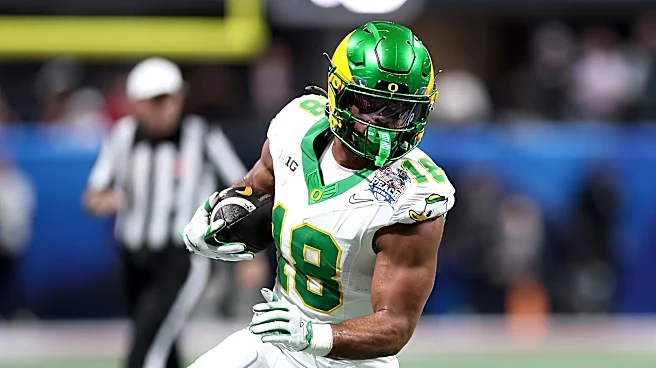
Malik Benson, Oregon, WR, Projected Round: 4th-5th
A 6’0”/189 deep Z-receiver and kickoff returner with an Oregon pipeline background, a Senior Bowl invite, and a JUCO-to-Alabama-to-Oregon path that reflects serious player-development investment. Benson takes the top off a defense vertically, tracks the deep ball well, and offers real kickoff-return value as a dual-utility piece. Denver holds two 4th-round picks, so the capital fit for a Day-2/3 vertical athlete lines up cleanly, and the Oregon tie is a connection the front office has actively leaned into in recent drafts. Exactly the kind of athletic, pipeline-credentialed Day-3 speed athlete Denver’s board consistently rewards.
(Tier 2, PPFS ~77)
Kendrick Law, Kentucky, WR, Projected Round: 4th-5th
A 5’11”/203 slot/gadget with 537 career snaps as a special-teams gunner — an elite Day-3 coverage-team marker. Law is a physical slot who runs hard after the catch, wins on crossers, and punches above his weight as a blocker, a profile Payton has used repeatedly in the slot and on manufactured-touch concepts. For a Broncos staff that prizes positional flexibility and proven special-teams production, Law is a strong multi-phase Day-3 fit — and with two 4th-round picks available, the capital and role line up naturally.
(Tier 2, PPFS ~76)
Kevin Coleman Jr., Missouri, WR, Projected Round: 5th-6th
A 5’10”/178 slot and punt-returner with a Senior Bowl invite who has stuck the program test at four schools — a resilience and adaptability marker evaluators respect. Coleman wins with quickness out of breaks, tracks the ball well vertically from the slot, and brings legit punt-return ability to the return-game competition. His twitchy, quick-game skill set slots directly into the Broncos’ short-area and manufactured-touch concepts on Day 3, where capital and role fit are both clean.
(Tier 2, PPFS ~75)
Emmanuel Henderson Jr., Kansas, WR, Projected Round: 7th-UDFA
A 6’1”/185 vertical threat with a kickoff-return TD and real gunner reps on coverage teams. Henderson is a long-strider who eats cushion on go-balls and can flip the field on returns — a classic late-Day-3/UDFA profile for a Broncos team that regularly bets on deep speed plus a special-teams floor. Cheap capital, a clear developmental role, and a meaningful coverage-team contribution line him up as a logical name at the end of Denver’s Day-3 board.
(Tier 2, PPFS ~75)
Tier 3: Chase Roberts, Cyrus Allen, Harrison Wallace III, Vinny Anthony II, Reggie Virgil, Dillon Bell, Eric Rivers, Will Pauling, Lewis Bond, Trebor Pena, Devonte Ross, Tyren Montgomery, Jalen Walthall, Zachariah Branch, Caleb Douglas, Jeff Caldwell, Romello Brinson
Tier 4: Carnell Tate, Makai Lemon, Jordyn Tyson, KC Concepcion, Omar Cooper Jr., Denzel Boston, Germie Bernard, Chris Bell, Malachi Fields, Antonio Williams, De’Zhaun Stribling, Elijah Sarratt, Ted Hurst, Brenen Thompson, Bryce Lance, Chris Brazzell II, Deion Burks, Skyler Bell, Colbie Young, Ja’Kobi Lane, Jordan Hudson, Anthony Smith, Eric McAlister, CJ Daniels, Donaven McCulley, Aaron Anderson, Chris Hilton Jr., DT Sheffield
My Analysis: Despite the Jaylen Waddle trade, I think this position could still be on the teams radar on Day 3. It seems the uncertainty around Marvin Mims Jr. and his contract ending after this season and the aging of Courtland Sutton has sorted out most of the Tier 1-2 players here. Mims could be a strong trade candidate on draft day too, so that is something that might bear watching.
PPFS (Payton/Paton Fit Score) Methodology
What it is: An empirically-derived scoring system that measures how well 2026 draft prospects align with the historical drafting patterns of Sean Payton and George Paton.
6-Step Process:
- Catalog historical drafts: 7 draft classes (2020-2025) analyzed. Joint Payton/Paton Broncos picks (2023-2025) weighted 3x; individual pre-partnership classes weighted 1x.
- Research player profiles: Pull pre-draft scouting reports for every historical pick to capture what scouts said at draft time.
- Extract tendencies across 8 dimensions:
- Physical thresholds (size per position)
- Athletic testing (40, 3-cone, broad jump, etc.)
- Production profile (starts, snaps, PFF grades, dominator rating)
- School/conference preferences
- Experience level (age, years starting)
- Injury history
- Character profile (captains, culture fit)
- Archetype tells (position-specific patterns)
- Derive the rubric from the data: Weights come from what Payton/Paton actually picked, not assumed importance.
- Score 2026 prospects against the position-specific rubric (0-100 scale).
- Group into tiers: Tier 1 through Tier 4 based on PPFS scores.
Two key refinements:
- Role-based assessment: Prospects scored by projected NFL role, not just raw position (e.g., situational pass-rusher vs. base-end)
- Medical sliding scale: Graduated injury severity rather than binary injured/healthy Important distinction: PPFS measures organizational fit, not absolute player quality. A great player can score low if they don’t match Payton/Paton’s documented patterns.
Roster Analysis in the PPFS Pipeline
The roster analysis sits between the historical tendency extraction (Steps 1-3) and the scoring rubric (Steps 4-5). It answers: “Given what Payton/Paton like, what does this team actually need right now?”
What it does:
- Breaks down each position group’s current players, ages, contracts, archetypes, and injury status
- Identifies complementary gaps (what’s missing) and duplication risks (what they already have)
- Assigns draft urgency per position (HIGH, MODERATE, LOW)
How it modifies scoring (two mechanisms):
- Roster Complementary Fit dimension: A 0-10 scoring dimension where:
- Prospect hits a proven archetype lane AND fills a roster gap = 10 pts
- Hits a proven lane but roster-neutral = 6 pts
- Off-type but fills a gap = 5 pts
- Off-type and roster-neutral = 3 pts
- Modifiers:
- +3 bonus for filling an explicit complementary gap (e.g., complementary power RB next to Harvey’s speed)
- Graduated duplicate penalties based on how entrenched the existing player is (e.g., drafting another speed scatback when you have three = penalty)
- Hard gate at 60 for direct duplicates of high-investment starters
I feel like something is brewing. The Aqib Talib coy remarks and draft day trades always being a thing… it just feels like something is going down behind the scenes. It would not surprise me to see one of the Broncos wide receivers moved on draft day, which would make wide receiver on Day 3 a position that could get attention.