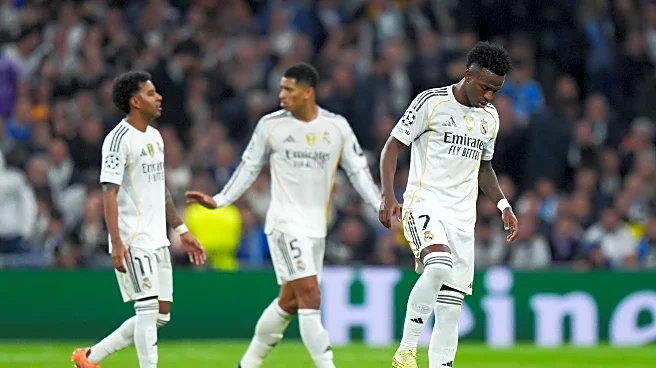


Two years ago, Real Madrid were being praised for something unprecedented: transitioning from one golden generation to another without suffering “transition years.” The formula looked revolutionary. Sign the best 16–21 year-olds in the world, develop them internally, and let elite talent sort itself out. It felt like modern squad-building perfection. In June of 2022, I wrote a piece called, “Real Madrid’s Youth Transfer Policy has been a Resounding Success”. The model made a lot of sense — and hard
to argue when it lead to two Champions League titles (2022,2024).
But, that same model may also be the root of the current decline.
From 2021–2024, the transfer strategy apeared airtight: elite youth profiles, long contracts, asset value protection, internal development instead of market risk. Madrid moved on from Ronaldo, Ramos, Varane, Isco, Casemiro, Benzema and just kept winning. The narrative became that the club had “cracked the code.” But the praise focused on who arrived, not what kind of culture was forming. The underlying assumption was that talent density solves everything. The thought process from the board was if we have overbought in one area, we can sell and keep the best players. In other words, “the cream rises to the top”.
That Darwinism-like mentality only works in squad building if you take the hard decision to remove excess and define clear roles. Madrid accumulated stars with overlapping skillsets and unclear hierarchy, trusting internal competition to self-organize solutions. Instead, there is congestion on the field and visible frustration with roles. Profiles blurred. A team was never constructed, instead managers were forced to put square pegs in round holes.
In fact, the youth project may have ended up coddling the players. Signed at 16–18 and multimillionaires before any real adversity or any maturation process as an adult. The previous Madrid core weren’t just elite, they had perspective. Many were players who had something to prove, who had lived different football lives, who understood how thin the margins are at the top. Contrast that with the “Baby Galacticos” — players who arrived as teenagers and have spent six or seven years inside the Madrid bubble, where privilege can dull your perspective. It creates a different psychological profile. It means the squad did not undergo a simple change in personnel, they also changed the type of professional dominating the dressing room and it happened gradually as more and more veterans were phased out of the team.
Take Joselu. Youth product who left and became a journeyman across his career. Stoke City, Newcastle, Espanyol, Alaves, Deportivo La Coruna, Eintracht Frankfurt, Hoffenheim. A career spent on the margins before returning to Madrid as a veteran. That journey produces perspective. Humility. Role acceptance. It’s the difference between “I’m at Real Madrid” and “I made it to Real Madrid.” You can’t quantify that on a spreadsheet or code it into an algorithm. But it’s vital to the dynamic within a squad, particularly a club like Real Madrid.
Here’s the uncomfortable question: would Luka Modric be signed under today’s policy? A 27-year-old from Tottenham. Expensive. No resale upside. Not a “generational prospect.” The current model likely says no. Yet Modric became one of the five most important players in club history. He spent over a decade with the club and is the most decorated player in Madrid’s history. The policy designed to build for the future would have rejected a key pillar of the past. In all the adulation of the youth policy, Madrid became too extreme and too stringent on their recruiting parameters.
Layers of veteran leadership have been removed. Leadership that helps set the standards and keep players in check — including the super-stars. Kroos, Modric, Nacho, Joselu, Lucas Vazquez — one could even argue the long term injuries to Carvajal and Alaba — all accelerated the lack of hierachy in the locker room. Once gone, the imbalances surfaced: talent without role clarity, youth without a model of excellence. Yes, there are tactical issues. Yes, you can point to frustration with the choices that various coaches have made. But there is a part of the team’s decline that isn’t tactical. For years, elite leadership helped masked some the structural weakness.
The defense of Madrid’s transfer strategy is straightforward. This model delivered a historic double in 2024. It protected the club financially. It ensured a pipeline of elite talent. It helped the club compete with state-funded clubs like City and PSG. All true. But success can mask risks, especially when veteran leadership helped paper over cracks.
Madrid still have elite pieces. It is true that some of these players simply are not as good as intiailly thought. Or as good as initially projected given their early career exploits. But many within the squad remain among the most talented in the world. This is salvagable. There needs to be a recalibration on the sporting front. Squads require profile diversity: different technical skillsets, different age curves, different psychological journeys, different role expectations. That means valuing hardened professionals again. Late bloomers. Players who understand how difficult it is to stay at the top. And it also means confronting the reality that some big players need to leave. Easy decisions are selling depth players or players that are not as “commercially attractive”, for lack of a better term. Hard decisions means defining hierarchy among stars and taking a definitive stance. Structure demands choosing balance over accumulation. Madrid don’t need to abandon the model, they need to evolve the model and add back some missing variables.