







The announcement of WNBA All-Stars, what should be a moment of celebration, often becomes one of consternation.
The immediate instinct is not to applaud those selected, but to fixate on those who were not. The snubs become the center of attention, as teammates, coaches, fans and analysts air our their grievances about who was slighted by the selection process.
Here, we’re not immune to such activities.
However, fairly adjudicating snubs requires also identifying their swap.
Sure, players not named to
the All-Star team might have an All-Star-worthy resume. But, is it superior to that of a player actually named to the team? And if not, can the All-Star-adjacent player really be considered a snub?
Here’s how I see it. Jump in the comments to share your snubs, as well as who you are swapping them in for.
Snubbed WNBA guards have strong, but not strong enough, All-Star cases

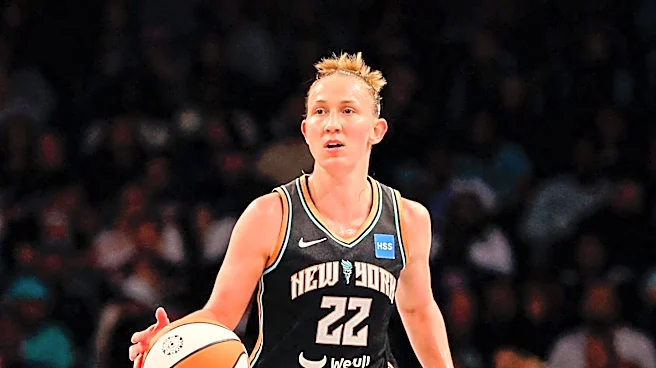
Sonia Citron, Rhyne Howard, Marina Mabrey, Kelsey Plum, Courtney Williams and Jackie Young were chosen as the All-Star reserve guards, leaving the likes of Brittney Sykes, Kahleah Copper, Veronica Burton and Azzi Fudd on the outside looking in.
As Edwin Garcia noted in his instant reaction to the reserves, the Toronto Tempo, after sharing their celebration for Mabrey, took to the social media streets to express their dismay about Sykes’ snubbing, while Mercury head coach Nate Tibbetts voiced his support for Copper during his pregame presser.
If not for injury, Sykes might have had a very solid case. Just before she was sidelined, Beckett Harrison advocated that Sykes should be the Tempo’s first-ever All-Star. But, Sykes since has missed six games with injury. And in her absence, Mabrey has blossomed, with her 53-point performance serving as the exclamation point.
While Sykes averaged over 20 points per game in her 15 games played, she was not efficient, shooting barely 42 percent from the field and slightly better than 27 percent from 3. While her high-volume scoring might have been valuable for Toronto, that doesn’t make her an All-Star. Compare that to Mabrey, who’s up to 21.1 points per game and is shooting 45.5 percent from the field and almost 40 percent from 3.
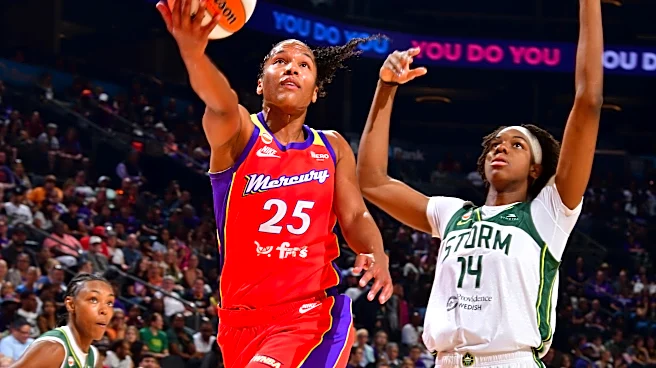
Scoring inefficiency also sinks the candidacy of Copper. While trending in the right direction, Copper’s still getting her 20.8 points per game by shooting 41 percent from the field and 27.1 percent from 3. Her value, even more than Sykes, who brings some defensive playmaking, is derived from her scoring, making it imperative that she do so efficiently.
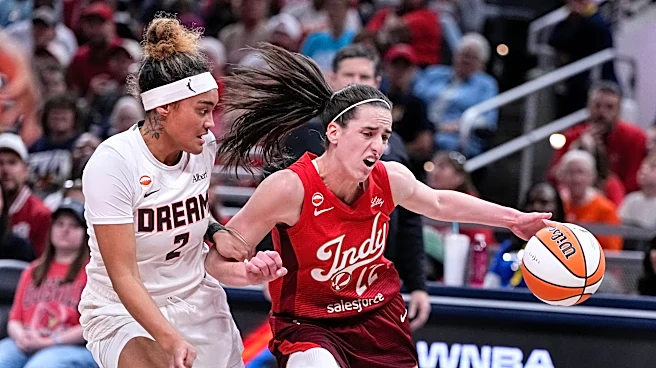
Still, one could browse the numbers of Gray—18.5 points per game on 43.3 percent shooting from the field and 30.1 percent from 3—and question why Sykes or Copper shouldn’t supplant her. In this case, the numbers and percentages might be similar, but the team success is not. Gray has a per-game plus-minus of +4.9 for the 12-9 Atlanta Dream, while both Sykes and Copper have negative plus-minuses for teams under .500.
So, if impacting winning matters, why not Burton, from the third-place Golden State Valkyries, or Fudd, from the fourth-place Dallas Wings? Of the reserves, Citron represents the .500 and eighth-place Washington Mystics, while Plum’s Los Angeles Sparks are in 9th place and two games under .500.
Burton may have generated some early All-Star buzz, and the Valkyries are better than expected. But, her overall production has remained modest and her efficiency is poor. Plus, as Zack Ward recently chronicled, the Valkyries’ excellence is a byproduct of contributions from up and down the roster. An All-Star honor often is earned from bearing a heavy load, something both Citron and Plum have had to do.
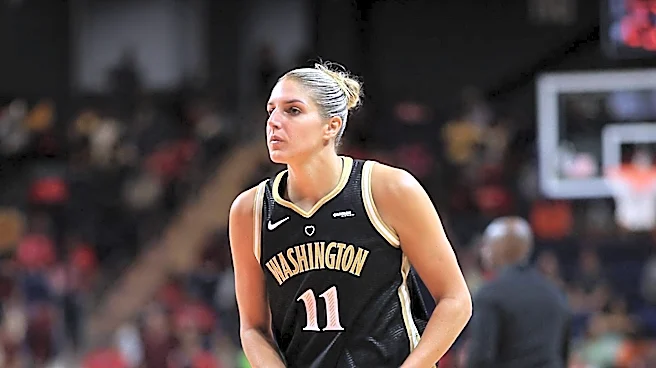
Plum, in particular, has been too electric and too efficient offensively for her All-Star berth to be denied, even with the Sparks’ underwhelming season and her recent injury absence. Although Citron’s 3-pointer, the skill that earned her a trip to All-Star weekend as a rookie, has been off this season, she otherwise has improved and expanded her game across the board, becoming the offensive engine for the Mystics.
Speaking of rookies, Fudd, in fact, might have the best case of these snubs.
There’s no way to nitpick her efficiency, as she’s scoring her 13.2 points per game on close to 48 percent shooting overall and nearly 38 percent from 3. And, the impact is there, as her 5.7 per-game plus-minus is the best on the Wings by nearly two points.
Her role is comparable to that of Williams, as both are the tertiary offensive option on a very good team. Williams, deservedly, got the nod, as she not only is the more productive scorer, but also bring significantly more as a rebounder and playmaker.
However, if an All-Star guard, possibly the still-injured Plum, needs to be replaced due to injury, I think I would favor Fudd, and her effectiveness in her role on a good team, over Sykes, Copper or Burton.
Yes, Alyssa Thomas was snubbed. So, who should she replace?

If the WNBA head coaches got it right in naming their All-Star guard reserves, there was a big snub among the bigs.
While there’s been a lot of uncalled for and out-of-line nonsense (and worse) around Alyssa Thomas this season, AT has been AT.
She’s going to play hard as heck every night, doing whatever she can, busted shoulders and all, to drag her team to victory. That last part—wins—hasn’t been part of the Thomas experience this season. As Zack recently wrote, Thomas, so often the leader of overachieving teams, is at risk of missing the playoffs for the first time in 10 seasons.
Yet, both Nneka Oguwmike’s Sparks and Dominique Malonga’s Seattle Storm are likewise outside of the playoff picture, and Thomas arguably has been better.
Thomas is scoring 14.2 points per game, averaging 6.9 rebounds per game and leading the league with 8.3 assister per game. With the exception of her rebounding, all those numbers compare to her All-Star seasons with Connecticut Sun, as well as last season with the Mercury.
Ogwumike averages 16.1 points per game on comparable efficiency to Thomas, albeit with a superior 8.6 rebounds per game. Thomas, however, provides more defensive playmaking, Both on uninspiring single-digit-win teams, Thomas has a per-game plus-minus of -1.8; Ogwumike’s Sparks are getting outscored by 5.2 points per game in her minutes.
As Thomas’ team has performed better with her on the floor with her than Ogwumike’s has with her, on top of the fact that AT is leading the league in a major statistical category, I think she has the stronger All-Star case. Nneka, however, does have the All-Star moment with her game-winning triple in the 30-year anniversary game.
Both vets are on more solid All-Star ground than Malonga.
While the eagerness to elevate Malonga is understandable, the second-year Storm star just hasn’t played enough. She’s missed eight games and logged 379 minutes on the season. Thomas has played 670 minutes, and Ogwumike has totaled 597 minutes. In addition to her missed time, Malonga’s high highs have been offset by some sophomore struggles. There’s a 37-point game and numerous double-doubles, but also too many single-digit nights.
The All-Stars are going to come for Dom. Just not yet.