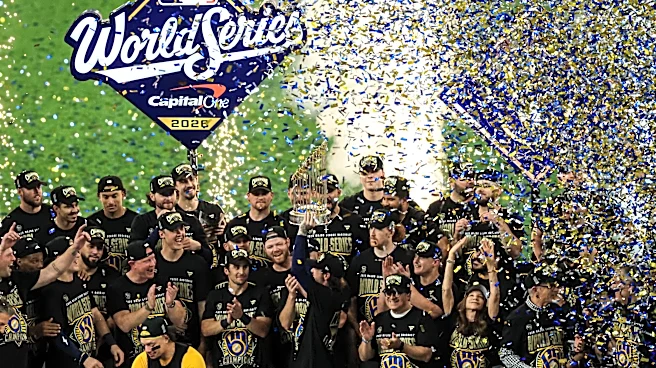




As has been foreshadowed all year, the current collective bargaining agreement (CBA) between Major League Baseball (MLB) and the Major League Baseball Players Association (MLBPA) is set to expire on December 1, 2026.
Initial negotiations throughout the 2026 season have failed to result in a framework that both sides can agree to. This means that, unless something very unexpected occurs over the next month, MLB will be initiating a lockout when the current deal expires.
Now that the offseason is imminent
and the lockout still seems inevitable, it’s time to set expectations for how this all works and what will differ about this offseason from a standard one.
What is a lockout?
A lockout is, essentially, the league forbidding teams from engaging with players in any way until a new CBA is agreed to.
Importantly, a lockout is distinct from a strike. In the latter, the players would be the party initiating the work stoppage whereas it is the league’s decision whether or not to enact a lockout.
A lockout is not required. The two sides could continue to operate normally while negotiating if they chose to. In 1994, the league did not enact a lockout, and the offseason operated normally as did the start of the season. It was not until mid-season that the players’ union authorized a strike after having seen no willingness from the owners to budge from their position about a salary cap. That mid-season strike and subsequent loss of the 1994 World Series was devastating for the owners and ultimately led to them dropping their demands for a salary cap.
Since then, the owners have not been willing to risk repeating a mid-season work stoppage.
Instead, if initial negotiations do not look like they will be easily resolved, MLB initiates a lockout the day the CBA expires. When that occurs, the following happens:
- Major League games can not be played.
- Teams are not be allowed to contact players on their 40-man rosters.
- Teams are not be allowed to make any transactions (signings, trades, etc.) involving Major League players.
- Players will not be paid their standard base salaries. The only money moving between teams and players during a lockout is from deferred contracts or signing bonuses that happen to be due during the lockout.
- It is important to note, however, that the base salary of MLB players is only paid during the season even under normal circumstances. The players’ union will not feel the effect of a lockout on their wallet unless it drags into the start of the season.
- Players are not allowed to use any team-affiliated facilities regardless of the purpose.
- Any normal offseason activities that involve Major League players (notably the Major League portion of the Rule 5 Draft and spring raining games) will be delayed or cancelled depending on the length of the lockout.
- MLB.com and all official team websites will have all references to specific active players removed.
Essentially, MLB as a whole must stop operating during a lockout for as long as it lasts.
Minor Leagues
The restrictions above only apply to active members of the MLBPA.
Players that are either not on a team’s 40-man roster or a Major League free agent are not subject to the same CBA as the others are. This means that a lockout does not apply to minor league players unless they are on their organization’s 40-man roster.
Teams will be able to continue communicating with their minor league players throughout the offseason as well as signing minor league free agents. Should the lockout extend into spring training, minor leaguers will be able to participate in team workouts. Should the lockout extend into the regular season, the minor league season will begin as normal, with the exception of any players on their organization’s 40-man roster being barred from participating.
Timeline
December 1 is the most important date to remember as it is the final day of the current CBA. At midnight EST, the league is expected to initiate a lockout, just as they did in 2021.
This means that, just like in 2021, once the mandatory five-day waiting period following the end of the World Series concludes on November 2, teams will be able to make normal offseason transactions for roughly a month. They will be able to sign free agents, make trades, designate players from their 40-man roster for assignment, etc. until the lockout begins on December 1.
This dynamic led to an extremely busy November in 2021. Teams rushed to get as much certainty about their rosters as they could before the lockout officially went into effect. It is very possible that a similar frenzied month of transactions will occur again this November.
The lockout will almost certainly last until both sides agree to a new CBA. There is no strict timeline on this process completing. It could happen before the end of the 2026 calendar year (unlikely) or continue well beyond March 24, the currently scheduled Opening Day.
During the last CBA negotiations, the lockout lasted until March 1o. At that time, the two sides were able to agree to a deal that included a delay to Opening Day to allow for three weeks of spring training, but salvaged a full 162 game regular season by rescheduling the opening week games for later in the season in addition to some double-headers.
How does it end?
Essentially, once a lockout is initiated, everything MLB related comes to a halt until either the two sides agree to a new CBA.
The only other way that the lockout would end is if the league decides to end it without a new contract agreed to. In that unlikely scenario, the MLBPA would have the option of formally striking or returning to normal operations under the old agreement while negotiating the next one.
For a new CBA to be ratified requires the approval of both the MLB team owners as well as the MLBPA.
- The league must pass a majority vote among the 30 team owners on a proposed CBA. With 30 total teams, the owners need a minimum of 16 yes votes on any proposal to ratify it.
- The Players’ Association must pass a majority vote between the player representatives for each of the 30 teams and the eight-player Executive Subcommittee. This means that the total voting body for the MLBPA is 38 and requires 20 yes votes for a majority.
- It is worth noting that while the current CBA was ratified by the MLBPA with a 26-12 margin, the entire Executive Subcommittee at the time voted no on the proposal.
Until both sides vote to accept a CBA proposal, the lockout is expected to continue.
What it means for the Rockies
The above context about the impending lockout is equally relevant for all 30 teams in MLB. For the Rockies specifically, the lockout brings with it some interesting wrinkles and context.
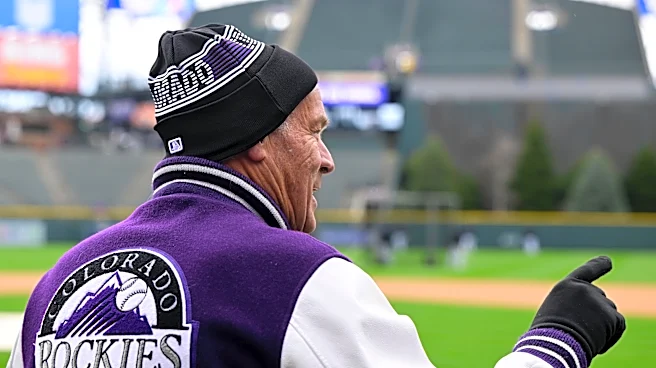
- Rockies owner Dick Monfort is on the negotiating committee for the owners and has been a vocal advocate for a salary cap. Whether he gets his wish or not, it will be very telling to see how the team operates in the wake of whatever eventual agreement is made.
- Monfort was also on the negotiating committee during the last round of CBA negotiations in 2021-2022. The Rockies were not particularly active during the initial transaction frenzy in November before the lockout but after the deal was struck Monfort gave the green light to the largest free agent contract in franchise history. There is no guarantee a similar thing will occur this time around, however, it would be an understandable for Monfort to want to make a show of confidence in whatever deal is eventually agreed to.
- In his post-season press conference, Rockies President of Baseball Operations Paul DePodesta said that in terms of a lockout the team just needs to be “prepared for any eventuality.” He mentioned specifically being ready to act aggressively in a way that the team was not in a position to early last offseason. Perhaps that portends to the Rockies being busy in November before the lockout is initiated.
- For his part, team President Walker Monfort stated that while losing games due to an extended lockout “would have a negative impact” that the team would operate as if they were planning for a standard regular season. It is possible that the impact of losing games, while large for all teams, would be less dire for a team deep in a rebuild like the Rockies than for those teams that have pushed their chips in for 2027.
- There was speculation all of last season that the Rockies were attempting to keep Charlie Condon (No. 2 PuRP) off the 40-man roster, despite a strong season at Triple-A, specifically so that he would not be subject to a lockout this offseason. Regardless of whether Condon was kept down in Albuquerque with this in mind or not, the net effect is that the third overall pick from the 2024 draft will be able to communicate with team personnel and participate in minor league games no matter how long the lockout lasts.
When all is said and done, the Rockies (and the rest of the league) are in for an unpredictable winter.
The basic framework of what’s coming is in place, but the specifics of how things play out will entirely depend on how negotiations progress once the threat of losing games becomes more immediate. Now we simply need to wait and see whether the two sides are able to find a compromise that both find acceptable.
Join the conversation!
Sign up for a user account and get:
- Fewer ads
- Create community posts
- Comment on articles, community posts
- Rec comments, community posts
- New, improved notifications system!
Download the SB Nation app on iOS or Android.
Please keep in mind our Purple Row Community Guidelines when you’re commenting. Thanks!