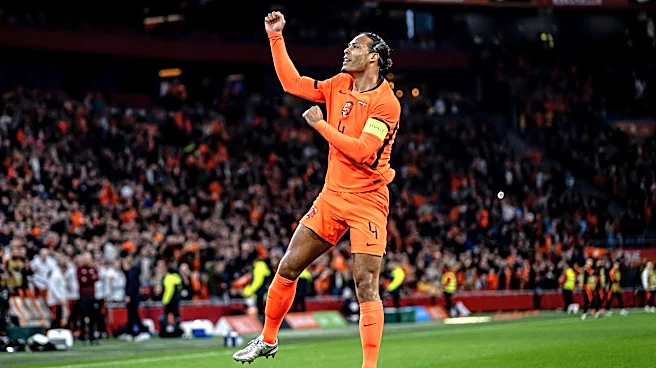




Nobody expected Virgil van Dijk to become the best centre-back of his generation and one of the all time greats of the Premier League.
Late into his teens, the son of a Dutch father who divorced his Surinamese mother before abandoning Van Dijk and his two siblings at 11 years of age worked as a dishwasher while continuing to train at boyhood club Willem II. The club never gave him a senior contract, they didn’t see a future for him in the first team, but he refused to give up on his dream. At 19,
he joined FC Groningen and managed to impress enough to break into the first team.
Even with a club and contract, though, nothing came easy. At 20, a case of appendicitis went undiagnosed by team doctors. By the time it was identified it was so severe Van Dijk came close to dying, signing a will at hospital before undergoing a surgery many thought he wouldn’t survive.
He lost 35 pounds in the ordeal and was unable to walk for ten days but eventually healed, rebuilt himself, solidified his place at Groningen, and earned a move to Celtic the summer he turned 22.
The young Dutchman from Breda impressed over two seasons in Scotland, but still the biggest club that came calling was mid-table Premier League side Southampton. Two years later, at 26, the football world had finally taken notice and Liverpool spent £75 million ($101M), then a record for a defender, to sign him.

The best in the Premier League
John Terry, Rio Ferdinand, Vincent Kompany, Nemanja Vidic. Virgil van Dijk.
These are the five players on almost every list of the top centre-backs in the history of the Premier League. For most, Van Dijk is battling it out with Terry and Ferdinand for the top three.
For Liverpool under manager Jürgen Klopp, he became the cornerstone of a defence that pushed higher up the pitch than nearly anyone—and in doing so left two centre-halves and a defensive midfielder with more space to cover than nearly anyone.
With any other centre-half it would have been an impossible tactic, allowing the opposition to run freely at only a few defensive-minded players so far from their goal. Van Dijk made it possible, and in doing so instantly justified the hefty price Liverpool had paid.
His reputation grew quickly, as did an air of invincibility. Part of being the best at the highest levels of sport is having an aura. The best, by nature of having proven to their peers time and again that they are in fact the best, begin to succeed in part because of their aura. Because opponents are afraid of them.
“Van Dijk has aura. He’s the boss. He commands everything. You can feel he’s scaring strikers away.” — Arsenal and France centre-back William Saliba
“I remember running in behind and all I can hear is that man’s footsteps. He’s six foot four, six foot five, and he is fast. Like, he’s got presence. You can hear him coming. I’m trying to focus and get my shot and he puts me off completely. His aura just puts me off.” — Manchester City winger Antoine Semenyo
“I hate him. He’s too big, too strong, too quick, too good on the ball, he loves fighting and he’s got a good head of hair. He’s one of those guys who sprays on his top as well so he smells lovely.” — former Watford striker Troy Deeney

The last chance
Expectations have been high for the Netherlands throughout Van Dijk’s time as captain, but so far the only thing he and his country have to show for a decade of trying is a runners-up medal in the 2019 Nations League.
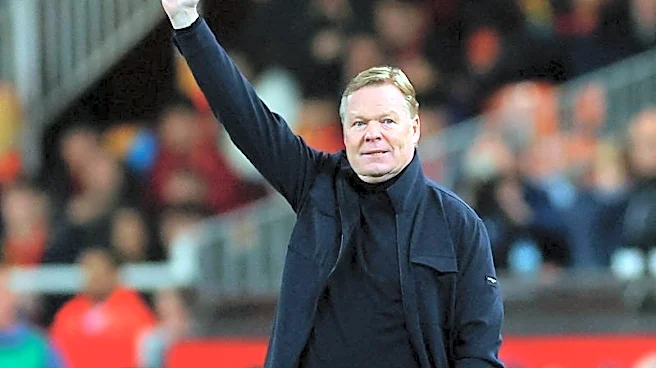
Since head coach Ronald Koeman was appointed in 2018, the Dutch have looked consistently dangerous on paper—and consistently failed to live up to expectations once the games kick off.
Van Dijk is now 34. He turns 35 during the World Cup. He has a year left on his Liverpool contract and his once impregnable aura appears fading. He remains an elite centre-back, one of the best in the game, but he is perhaps no longer truly world class.
While it’s not inconceivable Van Dijk could continue at a high level, and while he might even play in another World Cup, 2026 is the closing of his window to make a real impact. However, the Netherlands won’t be anyone’s favourites, and in a group with Sweden and Japan they seem one of the few top nations that could conceivably fail to advance.
In an expanded World Cup, though, advancing from the groups will be the absolute minimum expectation, and on paper they’re a solid side. A little light in attack, perhaps, but if Van Dijk is on top form they’ll be hard to beat—and hard to beat can get you a long way in a short knockout tournament.