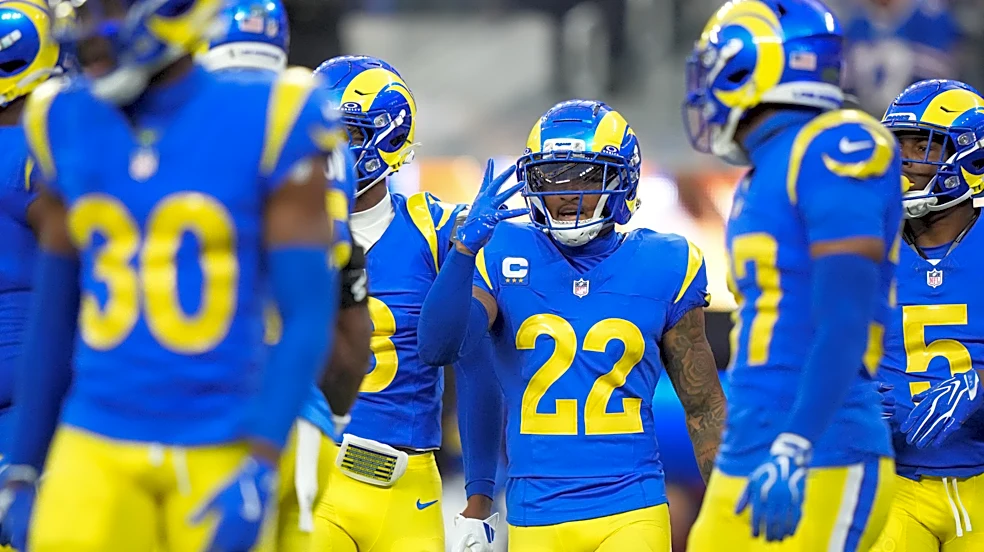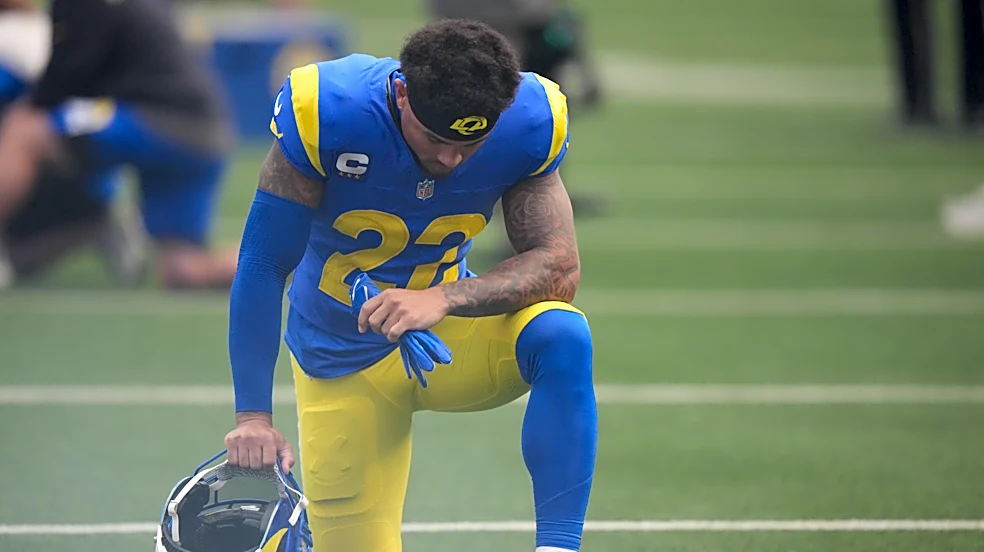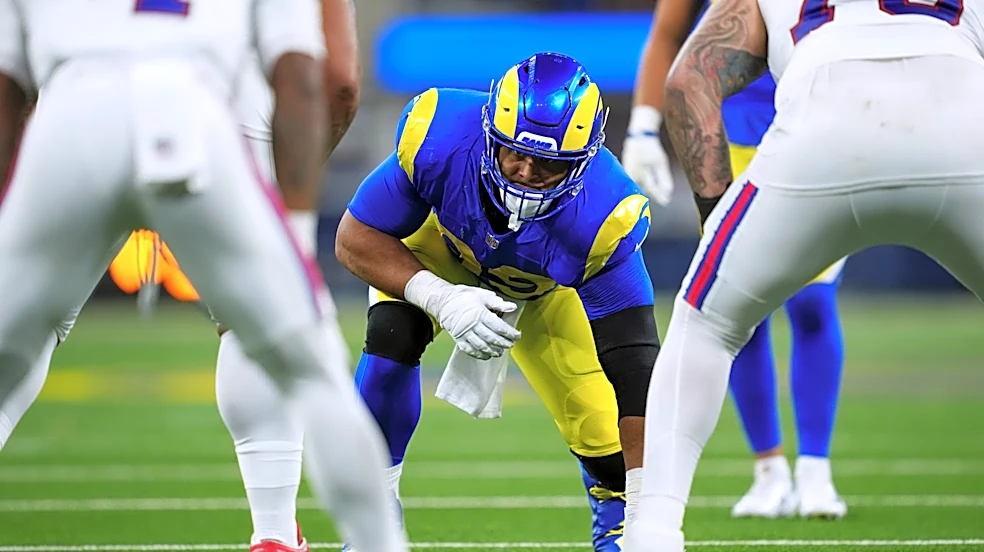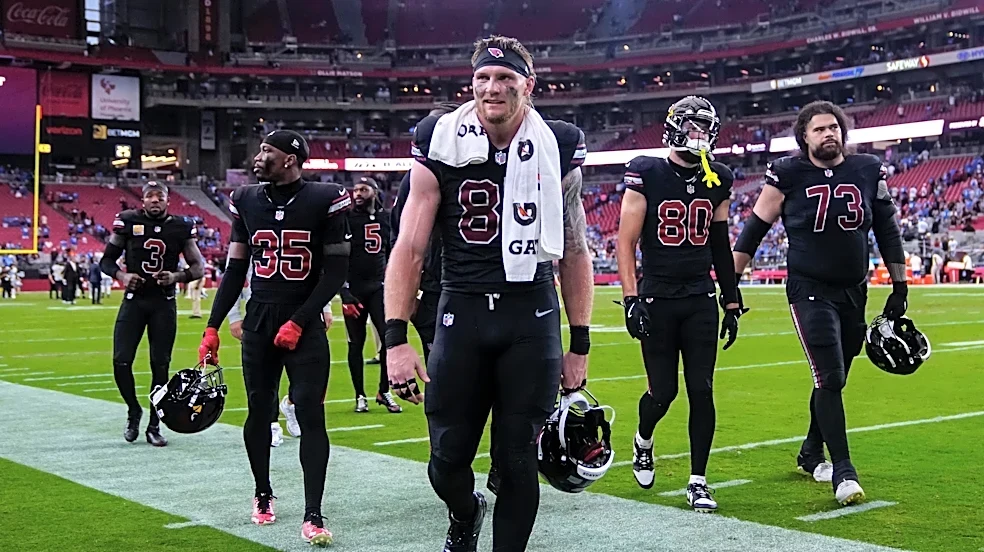





There are no automatic wins in the NFL. Still, the Los Angeles Rams are favored over the Arizona Cardinals by a heavy 12.5 points on Sunday afternoon.
Simply winning and moving to 3-3 does not clear the bar. The Rams still are not sure who they are offensively this season. Winning plus showing signs of life and clear identity are the only combined outcomes that would bring optimism surruounding the team.
LA entered the 2026 season expecting to be a heavy 13 personnel team. Terrance Ferguson, who was
healthy for a little over two games, is on injured reserve. The deep passing attack has struggled without their vertical tight end threat.
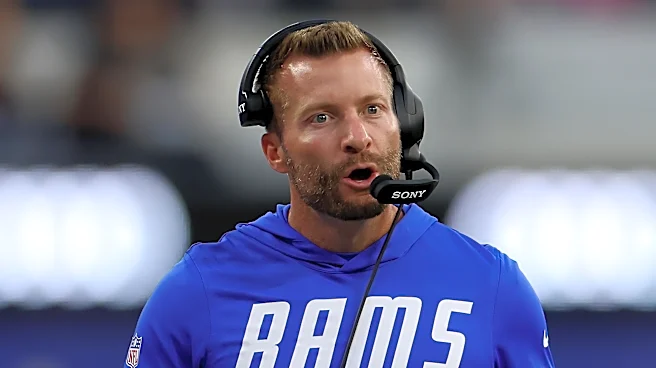
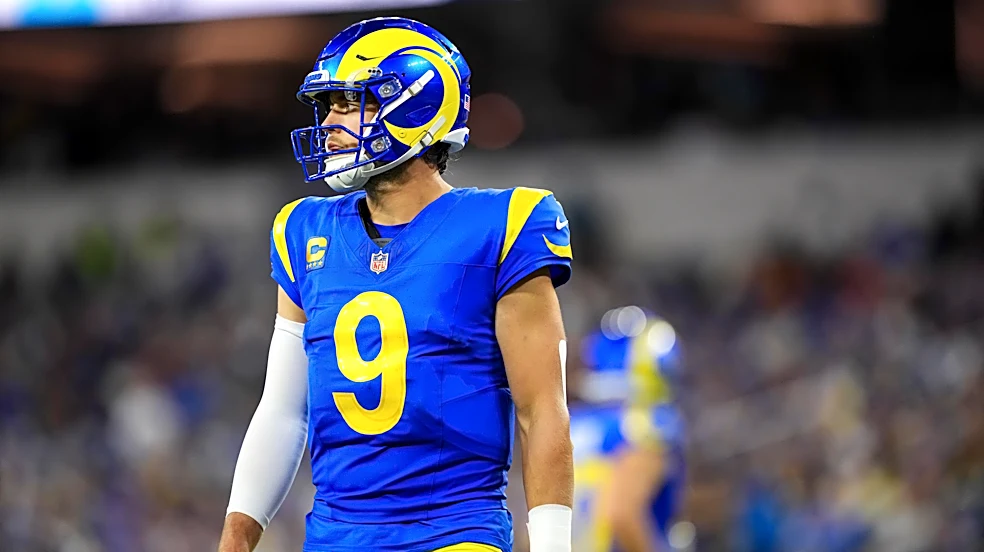
The running game is working but Sean McVay abandons it at the first sign of trouble. Matthew Stafford had 50+ passing attempts in each of the last three games, which in part is the result of coming from behind but also inexcplicable in some ways.
The Rams have an opportunity to settle in. At this time last year they hadn’t stumbled across the 13 personnel movement that took the NFL by storm. There is time to find the next stroke of offensive genius and recognizable branding.
It starts Sunday with the Cardinals. The Arizona defense is one of the least effective in football. The Rams should be able to be whoever they want, and if they can’t do it against the Cardinals then it probably isn’t feasible overall.
These are a few areas I’m keeping an eye on in order to determine who the Rams are this season:
Where did the deep passing game go?
Through five games, Stafford has attempted only 22 passes beyond 20 yards. Even worse, he’s completed just seven of those to a teammate. Four have been intercepted by the other team. Stafford has just a single touchdown on deep throws. His adjusted accuracy rate on such plays is just 36.4%.
Ferguson’s injury likely looms large in this area. No other receiver with significant playing time is capable of spreading the field vertically, except for Puka Nacua who cannot be asked to carry the team in this facet alone. Tutu Atwell seems to be on a trajectory to take over the third receiver spot, although using him vertically often is easily predictiible.
Defenses are doing everything they can to take away the deep ball. Even then, the Rams usually find ways to take the top of and creative explosive plays.
Are the Rams going to give up on pushing the ball down the field, or will they find ways to innovate?
Will Sean McVay embrace the run game?
Stafford is averaging 53 pass attempts over the last three games. In the only game where the Rams led on the scoreboard for most of the contest he attempted only 33 passes.
Meanwhile Kyren Williams has not carried the ball more than 16 times individually, although he’s been at 15 and 16 (twice) each of the last three games. Blake Corum’s season high is just 12 carries. Inversely, as Williams role has grown over the last three weeks, Corum has fallen to six, five, and six carries over the last three weeks.
Williams role as a receiver is also changing. He caught 10 passes in Week 4 against the Eagles and six versus each of the Broncos and Bills. In the Buffalo game, Williams had an average depth of target (ADOT) at the line of scrimmage. Against Denver, he was averaging a depth of 6.7 yards down the field. One version operates as an extension of the run game; the other is indistinguishable from a receiver. This mix is worth keeping an eye on moving forward.
But the bottom line is that Corum is averaging 4.8 yards per carry on the ground. Williams is at 4.9 yards. That is an efficient running game that can be built around. Game script aside, this is something McVay and the Rams can lean on more if they so choose.
Will they?