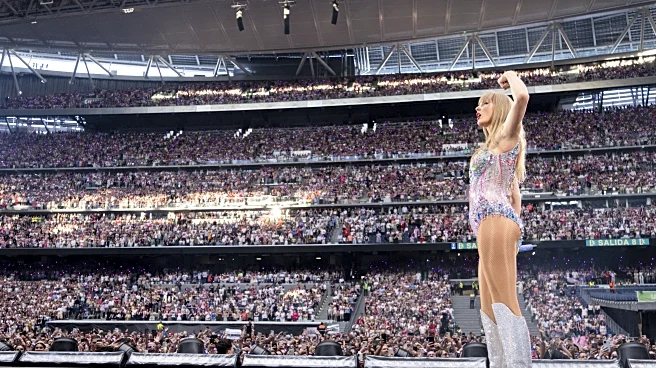



The legal battle over large-scale concerts at the Santiago Bernabéu has taken a significant turn in favor of local residents. Madrid’s High Court of Justice (TSJM) has ruled that a lawsuit brought by a neighborhood association must be heard on its merits, reopening a case that challenges whether musical events at Real Madrid’s stadium are legally permitted under current urban planning rules.
Court Sides With Residents on Procedural Grounds
According to a ruling obtained by IUSPORT, the TSJM upheld an appeal filed by the Residents’ Association Affected
by the Bernabéu. In doing so, the high court overturned a previous decision from Administrative Court No. 31 of Madrid, which had rejected the residents’ lawsuit as inadmissible.
The higher court has now ordered the lower court to formally admit the case and examine its substance. This marks an important procedural victory for the residents, who argue that concerts at the newly renovated Bernabéu are not authorized by existing planning instruments or construction permits.
What the Residents Are Arguing
At the heart of the dispute is a request the residents submitted to the Mayor of Madrid. In that petition, they asked the City Council to formally declare that neither the Special Plan for the Improvement of the Urban Environment nor the building licenses granted to Real Madrid allow for the staging of large-scale concerts at the stadium.
The City Council never issued an explicit response, effectively rejecting the request through what is known in Spanish administrative law as “administrative silence.” That silence prompted the residents to file an administrative appeal, which the lower court initially refused to hear.
The TSJM, however, has taken a different view.
Not an Informal Question, but a Formal Petition
In its reasoning, the high court made clear that the residents’ request could not be dismissed as a simple inquiry or request for information. Instead, the judges characterized it as a concrete, well-founded petition asking the City Council to officially acknowledge that concerts at the Bernabéu lack legal cover under current regulations.
The residents also went a step further, requesting that the mayor formally warn Real Madrid about the potential legal consequences of continuing to host these events if they are indeed unauthorized.
According to the TSJM, that framing gives the request sufficient legal weight to warrant a judicial review, obliging the lower court to rule on the actual legality of the concerts rather than rejecting the case on technical grounds.
Another Setback for Real Madrid and City Hall
The decision represents another legal complication for both Real Madrid and the Madrid City Council in a long-running conflict with neighbors around the stadium. For years, residents have complained about noise pollution, disruptions to daily life, and what they describe as irregularities tied to the Bernabéu’s growing role as a major concert venue.
While the TSJM ruling does not yet declare the concerts illegal, it does reopen the door to a full judicial examination of whether such events comply with urban planning law and the permits granted during the stadium’s redevelopment.