



Oral Hildebrand’s baseball story feels almost too perfect for its era. Disney could easily turn it into a coming-of-age summer classic.
Born in Indianapolis in 1907, his journey to the Yankees did not begin under bright lights. It started in the kind of Midwestern setting that shaped so many ballplayers of his generation, where imagination and a patch of open, mostly flat land could become a ballpark by afternoon. By the time Hildebrand hung up his cleats, that grounded beginning had turned into a 10-year
major league career, capped by joining the Yankees for the final two seasons of his professional life and winning a World Series.
Oral Clyde Hildebrand
Born: April 7, 1907 (Indianapolis, IN)
Died: September 8, 1977 (Southport, IN)
Yankees Tenure: 1939-40
The roots of that journey began on the family farm outside Indianapolis.
Long before Butler, before Cleveland, and before the Bronx, Hildebrand’s early mornings were spent milking cows, hauling water, and tossing hay bales, the kind of repetitive, strength-building work that quietly shaped both his body and his discipline. Somewhere between the barn chores and the open fields, he began to realize his future was not meant to stay rooted in the barnyard.
The same strong arm that could sling feed and stack hay kept finding a more natural purpose on the diamond. That arm turned him into a star pitcher at Southport High School, but the road forward was hardly smooth. After graduating, Hildebrand remained on the farm for two years because he simply did not have the money to attend college.
Then came the break that changed everything.
A summer job in a machine shop, paired with extra money earned pitching weekend games for the Indianapolis Power and Light Company team, finally gave him the chance to move forward. That team happened to be owned by Norman Perry, who also owned the Indianapolis Indians, a connection that would quietly shape the next chapter of Hildebrand’s life.
With money finally in hand, the Indiana kid stayed close to home and enrolled at Butler University. Hildebrand was far more than just a pitcher there. He was also the center on Butler’s 1928-29 national championship basketball team, a reminder of how naturally athletic he was. But his Butler story took a turn when it was discovered that, under the alias “Roy Hilden,” he had been pitching for a semipro team in Brazil, Indiana, earning $40 a game.
That side hustle cost him his eligibility. Ruled ineligible by Butler’s Faculty Committee on Athletics, Hildebrand took the most logical next step and signed with Perry’s Indianapolis professional team. It proved to be the turning point that officially pushed him toward the majors.
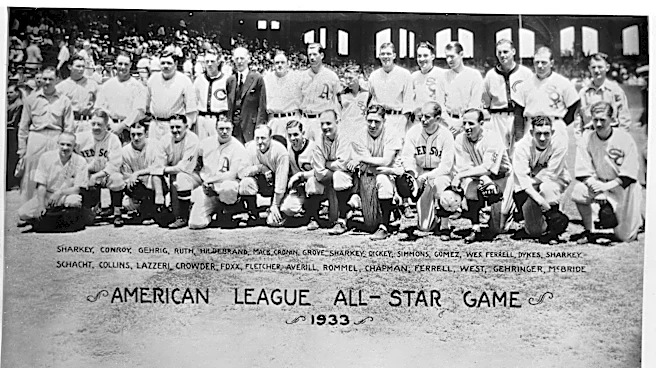
In 1931, the Cleveland Indians acquired Hildebrand, and he soon made his major league debut. His Cleveland years formed the backbone of his career. In 1933, he put together one of the finest seasons by an American League starter that year. Hildebrand won 16 games, led the league with six shutouts, earned a selection to the first-ever All-Star Game at Chicago’s Comiskey Park, and even tossed a one-hitter in a game that lasted only 82 minutes.

From 1933 through 1936, he became exactly what every good pitching staff needs: durable, dependable, and capable of eating up innings.
That reliability made him a valuable trade piece.
On January 17, 1937, Cleveland sent Hildebrand, Bill Knickerbocker, and Joe Vosmik to the St. Louis Browns. His stop in St. Louis never quite matched the peak of his Cleveland years, but he remained a veteran arm who continued to log meaningful innings, even as both the team and his numbers trended in the wrong direction.
Then came the move that changed how his career would be remembered. On October 26, 1938, the Browns traded Hildebrand and Buster Mills to the Yankees. What could have easily been just another late-career transaction instead became the defining turn of his journey. The veteran pitcher who had once dreamed of wearing pinstripes finally got his chance.
By the time Hildebrand arrived in the Bronx in 1939, the Yankees were already baseball’s standard. For a veteran entering the final chapters of his career, it represented the perfect chance to put the cherry on top. And he absolutely made the most of it. Hildebrand went 10-4 with a 3.33 ERA in 1939, giving the Yankees meaningful innings on a 106-win championship team. Perhaps the most historic game he started came on April 30, 1939, a cloudy afternoon that unknowingly would become the final game of Lou Gehrig’s legendary streak.

Then came October.
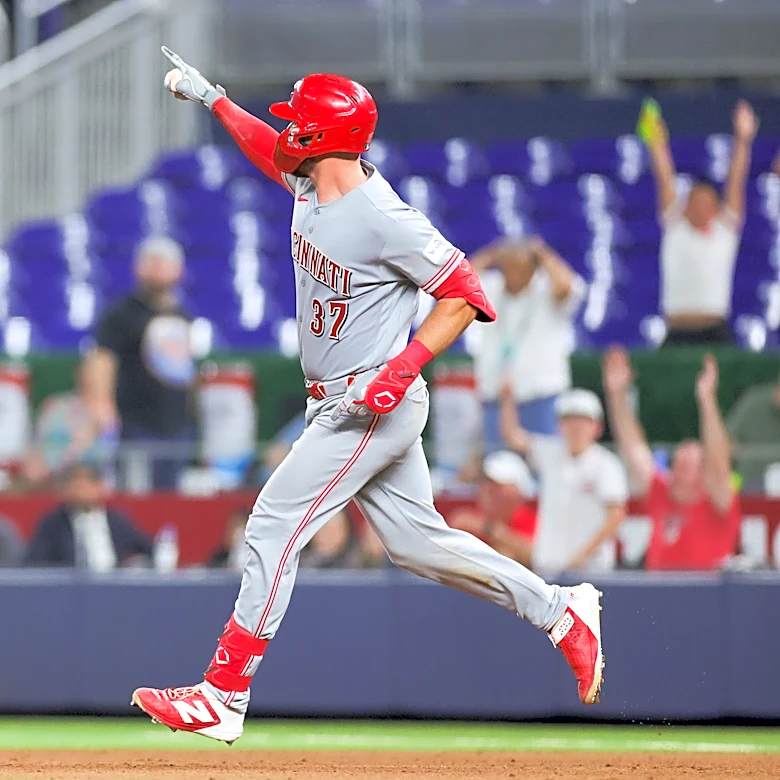
In the 1939 World Series against Cincinnati, Hildebrand took the ball in Game 4 and delivered four shutout innings, helping close out the sweep and secure the championship. For a player who had openly said he wanted to join the Yankees because of their winning tradition, there could not have been a better first season in the Bronx.
His own words say it best:
“I always wanted to be with the Yankees. When I was with the Indians, and later with the Browns, Joe McCarthy was just another manager of a rival team, in my estimation. Still, I always admired the way he ran his team, and I hoped someday I would be playing for him.”
A few days later, Hildebrand was involved in a car accident that left him with injuries to his hands and arms. He recovered enough to return in 1940, pitching in 13 relief appearances and going 1-1 in what became the final season of his major league career.
That 1939 championship became the perfect cherry on top of a decade-long journey that stretched from Indianapolis farm life to Cleveland success, through St. Louis, and finally to baseball immortality’s most famous stage. His career totals, 83 wins across 10 seasons, reflect a pitcher who kept finding ways to contribute at every stop.
But like so many of your favorite birthday pieces, it is the path that makes Oral Hildebrand memorable.
From the barnyard to the ballpark in the Bronx, his story remains one of the cleaner, more satisfying journeys in Yankees history.
Happy birthday, Oral Hildebrand.
Or maybe, just for legends’ sake, Roy Hilden.
See more of the “Yankees Birthday of the Day” series he