




Being an all-glove, no-hit player pretty much bars you from superstardom, but even then, some manage to earn a place among baseball legend by doing the right thing at the right time. Bucky Dent’s seasonal OPS never climbed above .700 during his Yankees tenure, yet his name is rightfully etched into club history because his three-run home run basically won the 1978 AL pennant and sent the Red Sox packing. However, players like Dent are the exception. Most of them fade into obscurity — and that’s far
from the worst outcome. Some are seen as emblematic of their team’s incompetence, their names becoming shorthand for a fallow era. Unfortunately, that was the fate that met Jerry Kenney.
Gerald Tennyson “Jerry” Kenney
Born: June 30, 1945 (St. Louis, MO)
Yankees Tenure: 1967-72
Born in St. Louis, Jerry Kenney was raised in Beloit, Wisconsin, and excelled at basketball as a high schooler, earning All-State honors in his senior year. However, Kenney chose to focus on baseball as a profession, and in the 1963-64 offseason he was signed by the Yankees as an amateur free agent. He rose through the minor league ranks quickly, earning a promotion to the bigs in 1967, and proceeded to hit .310/.412/.397 over 74 plate appearances.
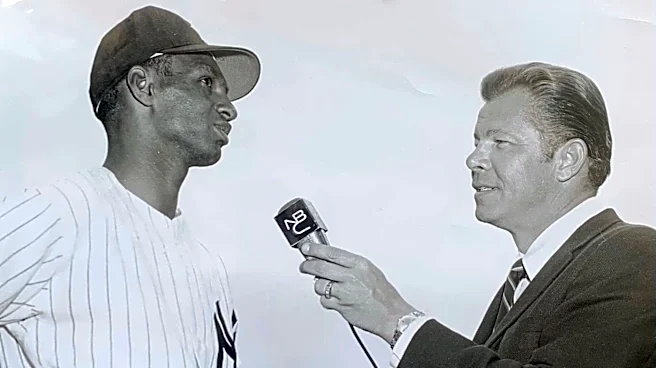
Kenney’s budding career was interrupted with a mandatory stint in the Navy, as the Vietnam War was ongoing. Fortunately, what was originally a two-year stint was shortened, and it was reported in November of 1968 that Kenney would be able to return for the 1969 season. As fate would have it, one Mickey Mantle announced his retirement on March 1, 1969. The narrative-hungry media were quick to name Kenney, who had split his time between center field and shortstop in the minors, as the heir to Mantle. Talk about setting reasonable expectations.
Suffice it to say that Kenney could not quite live up to Mantle’s standards. In his four seasons with the Yankees after he returned from military service, Kenney never hit more than four homers, and his batting average never reached the .270 mark. However, with the benefit of modern metrics, we can now see that Kenney was far more talented than the back of his baseball card would suggest. While his offensive metrics are generally mediocre, Kenney did manage to post a 103 wRC+ over 120 games in 1971, on the strength of a 14.2-percent walk rate and a .368 OBP. On the other side of the ball, the numbers paint a picture of a truly elite defender. From 1969-72, Kenney recorded 42 Fielding Runs Above Average — this despite only playing in 440 of 642 team games. On the strength of his glove, he was able to post 6.8 WAR over that period despite some terrible years with the stick. He wasn’t a star by any means, but he was a solid role player, and far from a scrub.
However, the Yankees, presumably not fully appreciative of Kenney’s defensive contributions, decided after 1972 that they had had enough of him. That offseason, Kenney was dealt to Cleveland as part of a four-player package for Graig Nettles.

OK, I know this article should be reserved for giving Kenney his deserved flowers, but this trade is so absurd that I feel compelled to spill some digital ink on it. So the Yankees dealt four players — Kenney, Charlie Spikes, John Ellis, and Rusty Torres — to Cleveland, getting back Nettles and Jerry Moses. What in the world was Cleveland thinking? Nettles had already established himself as one of the best players in the league, posting a whopping 16.2 WAR from 1970-72. And yes, I realize that WAR only meant Cold or Vietnam back in those days, but even when you account for his relatively low batting averages, Nettles still socked 71 homers over that period while playing Hall-of-Fame-caliber defense at the hot corner. It truly boggles the mind. I mean, imagine Cleveland trading Jose Ramirez to the Yankees in the 2020-21 offseason for a package of Tyler Wade, Kyle Higashioka, Mike Tauchman, and Estevan Florial. The resulting riot would have surpassed the Cuyahoga River Fire of 1969 as the most notable Cleveland disaster.
Phew. Okay, back to celebrating Kenney.
Kenney’s MLB career ended unceremoniously with just five games played with Cleveland in 1973. After his retirement, his name, along with Horace Clarke’s, became synonymous with the Yankees’ postseason drought that stretched from 1965 to 1975.
However, Kenney (and Clarke) deserve to be remembered as much more. Though it may be true that the Yankees never sniffed the playoffs during Kenney’s tenure, it’s not like he alone was the reason; far from it. As shown above, Kenney himself was a solid, if a bit one-dimensional, piece — had he found himself on more talented Yankees squads, he might have carved a name for himself with some postseason heroics, like Bucky Dent. It just so happened that his tenure coincided with a dip in the Yankees’ fortunes, and the retirement of a franchise legend in Mantle coinciding with the start of his career only served to inflate the hype around him — intensifying the scorn of fans when he inevitably failed to live up to it.
So, on this day, rather than disparaging Kenney for who he wasn’t, let’s celebrate Kenney for who he was — an elite defender, a solid role player, and a Yankee. Happy Birthday, Jerry!
See more of the “Yankees Birthday of the Day” series here.